Settle Your Nerves: A No-Fidget First Date Plan
- Arrive with a 10-minute script: greet, sit, anchor hands, set eye contact rhythm, and pace your sips.
- Give your hands a job: one stable anchor and one utility hand prevents tapping, picking, or pocket gymnastics.
- Use the 60/40 eye contact rhythm with clean breaks to the side or your drink, not down to your phone.
- Lock your base: feet planted, hips squared, elbows light on table edge—stillness starts from the ground up.
- Practice in two 7‑minute reps at home with a cup and chair to make calm movement automatic.
The 10-minute no‑fidget plan (do this first)
Here’s a simple, testable routine that stops 90% of nervous movement in the first 10 minutes. Print it in your head and run it step by step.
- Arrival (minute 0–1): Walk in at a normal pace. Phone on Do Not Disturb before you enter. Keep it in your jacket or back pocket—not on the table.
- Greeting (0–1): Smile small, shoulders down, say: “Hey, good to see you. I’m [Name].” Offer a light, single pump handshake if natural or a small wave if she’s seated. No pocket fishing, no bag shuffling.
- Seat and set (1–2): Choose the chair with a wall or corner behind you if possible. Sit once. No re‑arranging. Place your non‑dominant hand light on the table edge (two fingers touching the rim) and your dominant hand on your glass or resting on your thigh. These are your anchors.
- Open (2–3): “How was your week?” Then let her answer. Do not fill silence with straw wrapper twisting or menu flipping. Breathe out slowly once.
- Menu moment (3–5): Decide once. Close the menu fully. Place it flat to the side, not half‑open in your hands. Keep your non‑dominant hand on the table edge.
- First 3 minutes of talk (5–8): Eye contact rhythm: 4–5 seconds on, 2–3 seconds off. Off‑glances go to the side or your drink, not your lap. Add nods, not head bobbles.
- Sips and pauses (through 10): Use your dominant hand for one intentional sip every 2–3 minutes. Replace the glass in the same spot. No ice chasing, no coaster spinning.
Run this plan and you’ll feel calmer by minute 6 because your body has a job and your mind isn’t micromanaging 20 little movements.
Give your hands a job: anchors that kill fidgeting
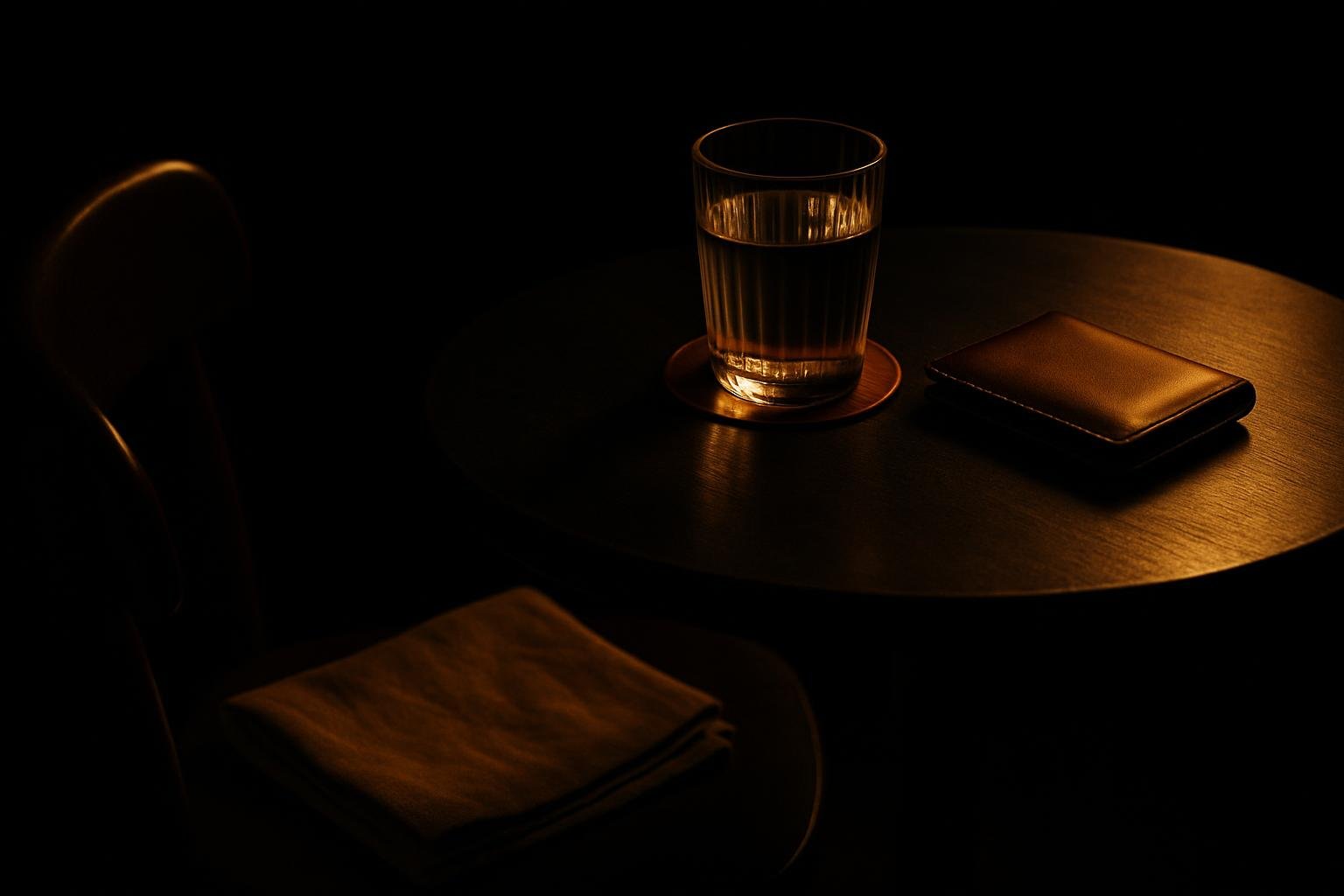
Most fidgeting is hand drift—tapping, picking, smacking pockets, shredding napkins. Solve it by assigning two clear roles: one anchor hand and one utility hand.
Simple hand roles
- Anchor hand (non‑dominant): Two fingers touch the table edge or rest flat on your thigh if there’s no table. Light contact, no pressing.
- Utility hand (dominant): Handles glass, menu, and gestures. Returns to the same parking spot (glass or thigh) after each action.
At the table
- Table edge cue: Keep your index and middle finger gently on the table rim. This stops tapping because you can feel if you start to drum.
- Glass spot: Place your glass 2–3 inches right of center. Rotate the base 90° max when speaking; return to the same spot. No label peeling, no straw stirring.
- Napkin rule: Napkin goes on lap within 1 minute of sitting. Do not fold and refold. If you need a dab: one dab, then back to lap.
Standing at the bar
- One-hand hold: Hold the glass at the stem or lower third of the tumbler with the utility hand. Keep the anchor hand lightly in your pocket with thumb out, or resting on the bar edge.
- Pocket discipline: If a pocket is your anchor, thumb out, fingers relaxed—don’t dig for coins or keys. Keys stay silenced in the other pocket.
Micro-movements to kill
- Straw or wrapper play: Ask staff to remove the straw, or toss the wrapper immediately.
- Ring or watch spinning: Set a mental rule: if you touch the ring once, move your hand to the glass. Repeat every time.
- Coaster tracing: Keep the coaster under the glass only. If you catch your finger circling, slide the coaster 1 inch and re‑park the glass.
These anchors aren’t rigid—they’re bumpers. They prevent drift without making you look stiff.
Eye contact that calms you both
Good eye contact is a rhythm, not a stare. Staring makes you fidget because your brain panics. Glancing down to your lap does the same. Use this cadence.
The 60/40 rhythm
- During your listening: About 60% on her eyes, 40% in clean breaks. Look to the side of her face, your drink, or a neutral spot beyond her shoulder.
- During your speaking: Hold 4–5 seconds, then break for 2–3 seconds. Resume. If you lose your words, break to your drink, take one small sip, and continue.
How to break eye contact cleanly
- Side glide: Move your gaze to the side or slightly up. Not straight down.
- Object anchor: Use your glass or the menu as the off‑ramp. Touch with your utility hand once, then back to her.
Small cues that read confident
- Blink naturally: If you feel a blink flurry, take a 2‑second gaze break to the side.
- Smile in micro: Corners up 5–10% when you meet eyes on your first sentence. It signals you’re present, not performing.
Practice at home: pick a spot on the wall and count to five; break for three; repeat six times. Then try with a friend and notice your shoulders drop by round two.
For more on nonverbal cues, see our guide on first date body language for men.
Lock your base: posture and stillness that sticks
Still hands start with a still base. If your feet and hips wander, your fingers will chase them. Set your base once, then keep it.
Seated setup (30 seconds)
- Feet: Both flat on the floor, about shoulder width. If the chair is high, hook a foot rung and keep the other flat.
- Hips: Scoot back until your lower back touches the chair. Sit on your sit bones, not the tailbone.
- Torso: Lean forward 5–10 degrees when listening, return upright when speaking. Avoid constant rocking.
- Elbows: Lightly on the table edge or off the table entirely—choose one and keep it for 10 minutes.
Standing setup (15 seconds)
- Stance: One foot slightly ahead (2–3 inches), weight 60/40 back to front. Knees unlocked.
- Hips and ribs: Hips square to your date, ribs down (think zipper to sternum). This kills chest puffing and shoulder bouncing.
- Shoulders: Up, back, down once on arrival. Then leave them alone.
Breath and pace
- Reset breath: Silent breath out through the nose for 4 seconds when she starts an answer. It lowers your urge to fill space.
- Gesture cap: One gesture cluster per sentence when you speak. Then hands return to anchors.
If posture is a weak link, read our playbook on posture and presence in first impressions next.
Objects that trigger fidgeting (and how to neutralize them)
Most first-date fidgeting comes from objects within reach. Control the setup and you control your hands.
Phone protocol
- Before you enter: Do Not Disturb on. Vibrate off. Screen face down in your pocket or bag.
- At the table: Do not place your phone on the table. If you must check a time-sensitive thing: say, “Give me 10 seconds to check a message I’m expecting,” check once, then put it away.
Menu management
- Decide, then close: Read once. Make your choice. Close the menu fully and set it to the side.
- Don’t cradle: Holding the menu while talking invites flapping. If the server takes it, even better.
Drinks and utensils
- Sip timing: One sip every 2–3 minutes or after a paragraph of her speaking. Replace the glass in the same spot.
- Straws and stir sticks: Ask for no straw or remove it immediately. Stir once, then park the stick out of reach.
- Utensils: Keep utensils down between bites, parallel on the plate. No fork tapping.
Clothing triggers
- Loose bracelets/keys: Leave them at home. Wear a watch that doesn’t swivel freely.
- Jacket fit: If your sleeves ride up and invite tugging, roll them once to mid‑forearm and leave them.
These small environment choices make calm the default. Remove the toy, remove the twitch.
Conversation cues that cut nervous movement

You fidget when your mouth and hands race each other. Use simple pacing so your hands don’t look for extra work.
The two-beat rule
- Before you answer: Two beats in your head, then speak. That’s about one normal breath out.
- After a punchline or point: Two beats of silence. Smile small. Let the moment land.
Question stacks that keep you still
- Open, then narrow: “What pulled you to that city?” Follow with, “What neighborhood did you like?” Then, “What would you go back for first?”
- Swap, don’t stack: Mirror her last 3–5 words, then add yours: “Took a sabbatical? I did one in 2019—best month was the third.”
Use sips as commas
- One sip, one thought: Finish a sentence, take a sip. It forces your hands to re‑park and resets your pace.
- Don’t sip to escape: If you’re reaching for the glass mid‑sentence, stop, finish the sentence, then sip.
Transitions that don’t scramble your hands
- Table to walk: “Want to check out the patio?” Stand once, push the chair in with one hand, pocket the other hand thumb‑out, and move.
- Server interrupt: Pause, hands off objects, make your order in one take, then re‑anchor.
These cues keep your words, eyes, and hands in one lane. When they line up, nerves have nowhere to leak.
Practice that makes calm automatic
You don’t need months of work. Two short reps will make anchors feel normal so you don’t think about them on the date.
The 7–7 home drill (14 minutes total)
- Setup: Chair, small table, empty glass, coaster, napkin, and printed questions (or your phone in the other room).
- Rep A (7 minutes): Sit, set anchors, and read a short article out loud. Follow the eye contact rhythm with a spot on the wall (5 seconds on the spot, 3 seconds at your glass). One sip every 2–3 minutes. Record yourself on a device off to the side if you want to review posture only.
- Rep B (7 minutes): Play a podcast. Pretend you’re in a conversation: listen 60/40, nod, then answer the host’s last question in one paragraph. Keep gesture clusters to one per sentence. Replace the glass to the same spot each time.
Dress rehearsal in the wild (20–30 minutes)
- Coffee solo: Sit for one drink. Run the 10‑minute plan once. Notice and correct the one biggest fidget you catch.
- Friendly test: Meet a friend and tell them, “If I start tapping or shredding something, tap the table.” One correction cue is enough.
Get objective eyes
If you want a blunt read on what your hands, posture, and presence are saying, Suvant gives you a free image audit. Upload three photos, get scored across eight categories with the reasons behind each number. The plan turns into quests with exact deliverables—like the posture or grooming brief you can act on this week. You can try the audit at app.getsuvant.com and decide if the full $89/yr plan with a money-back guarantee is worth it once you see your ranked next moves.
Then dig deeper with our guide on how to look confident in person for more presence cues you can stack.
Troubleshooting: fix the one thing that keeps twitching
When one habit keeps slipping, fix it with a single, specific constraint. Pick yours and run it for the first 10 minutes.
- If your foot bounces: Plant both feet flat and press your big toes lightly into the insoles for 10 seconds every time you notice movement.
- If you tap the table: Make your anchor two fingers on the table rim at all times while listening. Lift only to gesture, then re‑park.
- If you pick at labels or napkins: Remove the trigger—ask for no straw, toss wrappers, keep the napkin on your lap.
- If your eyes dart: Use the 4–5 seconds on, 2–3 off rhythm. Break to the side or your glass—never down to your lap.
- If your shoulders creep up: One reset: up, back, down. Then leave them. If they rise again, slow-exhale once while she starts an answer.
- If your phone calls you: DND on, phone away, and tell your date up front: “I’m expecting a message later. If it comes through, I’ll check it once at the end.”
One constraint at a time beats trying to fix everything. Nail the biggest leak and the rest gets easier.
If you want your anchors personalized to your face shape, hair, and overall style, the Suvant audit plus monthly re‑audits will prioritize presence moves you can actually do next. It’s built with input from barbers, wardrobe stylists, and portrait photographers—so the advice is wearable, not theory.
Get the honest audit you've never gotten.
Three photos, eight scores, the real reasons behind each number, then a ranked plan to fix them one move at a time.
Get my free audit →