Steady Signals on a First Date

- Use the 90/10 rule: 90% relaxed baseline, 10% emphasis with posture, hands, and voice.
- Plant your feet, unlock your hips, and keep shoulders down for calm, open posture.
- Aim for 4–6 second eye contact while listening, 1–2 seconds while speaking.
- Control fidgets by anchoring one hand and giving the other a job, like holding your glass.
- Practice the full date flow for 20 minutes a day for 7 days to make it automatic.
The core cues: calm, open, confident without acting fake
You don’t need moves. You need a few repeatable signals that say “I’m steady, I’m present, I’m here to enjoy this.” Use this checklist as your baseline on every first date.
- Arrival posture: Stand tall with feet hip-width, weight slightly forward on the balls of your feet, shoulders down. One easy step forward as you greet. Chest neutral, not puffed.
- Greeting: Warm smile you can hold for two seconds. If you mutually go for a hug, keep it light and brief (one beat in, one beat out). If not, a simple "Hey, good to finally meet you" works.
- Seated stance: Sit back on the chair, spine long, hips open. Keep both feet on the ground (no ankle locking). One forearm lightly on the table’s edge; the other hand in your lap or around your glass.
- Eye contact: While listening, hold for 4–6 seconds at a time, then glance briefly to the side or at the table and return. While speaking, 1–2 second contacts, then look away naturally between phrases.
- Hands: Keep palms mostly visible, gestures from the midline, no pointing. Use slow, open gestures to underline a point, then return to neutral.
- Voice: Drop your speaking pace by 10–15% from your work tempo. Finish sentences cleanly. Leave a beat of silence before your date responds.
- Exits and transitions: Stand smoothly. Shoulders down. Smile first, then speak. On goodbye, mirror her lead: brief hug or warm wave, “I had a good time.”
These signals are simple, repeatable, and honest. The goal is to remove noise—fidgets, defensive posture, rushed speech—so the real you can come through.
A one-week plan to make this automatic
You can lock this in with 20 minutes a day for seven days. Rehearse in your living room. No special gear. Use your phone’s front camera for quick checks, not perfection hunting.
Day 1–2: Posture and breath
- Set: Stand facing a wall, heels 2 inches from it. Touch the wall with your butt and mid-back; let the back of your head hover slightly off. Shoulders down and wide.
- Drill: 5 rounds of 60 seconds in this stance. Breathe in for 4, out for 6. Feel ribs expand sideways. Practice a two-step greeting from this stance: step forward, small smile, "Hey, good to meet you."
Day 3: Sit, place, and gesture
- Set a chair and table: Sit back; both feet flat; hips open. Rest one forearm lightly on the table’s edge.
- Drill: Tell a 30-second story using three slow, open gestures from the midline (palms visible), then return to neutral. Repeat 5 times.
Day 4: Eye contact timing
- Listening drill: Play a podcast for two minutes. Pretend the host is your date. Hold eye contact with the front camera lens 4–6 seconds, glance aside for one beat, repeat.
- Speaking drill: Record a 60-second story. Hit 1–2 second eye contacts, then look off between phrases. Watch once. Don’t judge—just note if you rush or stare.
Day 5: Voice and pace
- Metronome method: Set a metronome to 60 bpm. Speak a short bio: name, where you grew up, one hobby. Aim for 1.5–2 beats per phrase, slight beat of silence at the end.
- Volume check: Record in a kitchen or bathroom (more echo). Keep volume steady and clear without pushing your throat. Shoulders stay down.
Day 6: Fidget control
- Anchor habit: Choose your default: left forearm on table, right hand on glass. When you feel a fidget urge, return the right hand to the glass and exhale for 6.
- Micro-break: Every 5 minutes, shift your weight slightly, roll your shoulders once, then reset. Invisible to others. Resets you.
Day 7: Full run-through
- Simulate the date: Walk in from the door, greet, sit, order water, ask two easy questions, tell one 60-second story, handle a menu, excuse yourself, return, and close the date.
- Time it: 10 minutes, two passes. Film the second. Keep it. You’ve now built a baseline you can trust.
If you want outside eyes on posture, grooming, and photos, an audit helps. Suvant gives you a free, two-minute image audit across eight categories and turns it into specific quests—like a posture checklist or camera angles—that you can knock out before date week.
Arrival and greeting: the first 30 seconds

The first moments set your rhythm. Make them slow and clear.
- Approach: Spot your date, pause for one beat to square your shoulders, then walk in at a natural pace. Keep your phone away and both hands visible.
- Smile first, then speak: Two-second smile. Then: "Hey, you made it. I’m glad to finally meet in person." Simple beats clever here.
- Handshake or hug: If she steps in, mirror a brief hug: shoulders relaxed, light contact, release cleanly. If not, a simple handshake works. Palm vertical, firm but not crushing, one up-and-down, release.
- Walking to the table: Walk side-by-side or a half-step ahead only to lead around obstacles. Keep a comfortable two to three feet of space.
Outfit affects posture too. If clothes fight your movement, you’ll fidget. If you need a quick wardrobe tune-up that works with this posture, see what to wear on a first date over 40.
Seated posture that reads open, not rigid
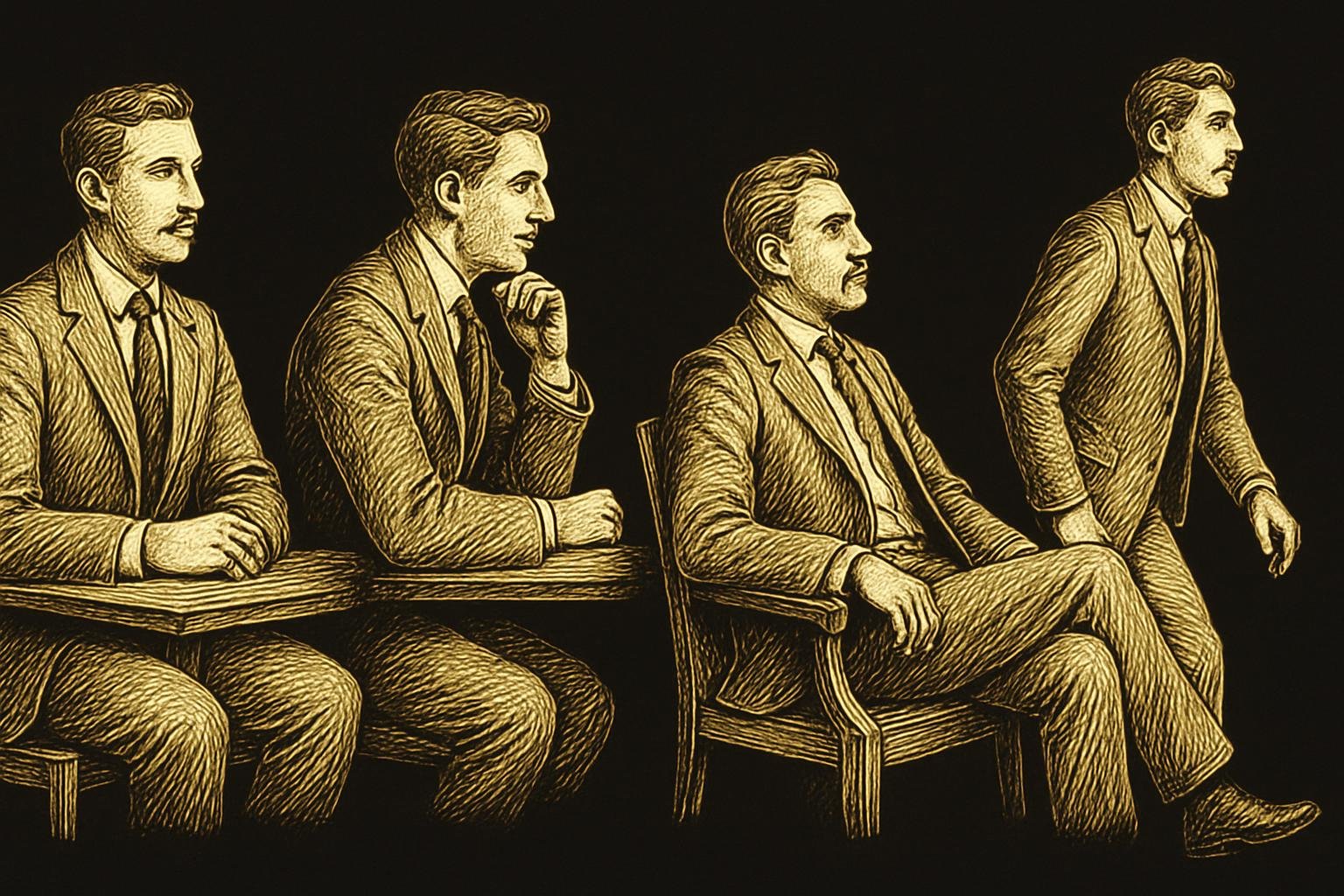
Rigid looks nervous. Slumped looks checked out. Aim for "stacked but relaxed." Use this framework and you won’t think about it again.
- Feet: Both on the floor, hip-width. If there’s a bar stool, hook the balls of your feet on the rung, not your heels.
- Hips and spine: Sit back enough to feel the chair support. Long spine, slight forward lean when listening (about 10–15 degrees), back to neutral when speaking.
- Shoulders: Down and wide. Think “shirt collar floating,” not “chest out.”
- Table contact: One forearm lightly on the table’s edge, not planted flat. This gives you a home base and keeps the torso open.
- Head angle: Neutral or a slight tilt when listening. Avoid chin-up (reads arrogant) or chin-down (reads guarded).
- Micro-movements: Every few minutes, small posture resets: inhale, lengthen, exhale, release shoulders. No big adjustments.
If posture is tough, practice with the wall drill from the plan. For deeper presence mechanics, this guide will help too: posture and presence for first impressions.
Eye contact and facial cues you can trust
Good eye contact is about timing and warmth, not staring. Your face should match the moment while staying relaxed.
Eye contact timing
- Listening: 4–6 seconds on her eyes, brief glance to the side or down to the table, return. Repeat. It reads attentive, not intense.
- Speaking: 1–2 second touches, then look away between sentences as you gather your next thought. It reads thoughtful, not rehearsed.
- Breaking a stare: If you accidentally lock eyes too long, soften your eyes, exhale, and glance to the side with a small smile before returning.
Facial tension control
- Jaw: Keep your molars from touching. Let your tongue rest on the floor of your mouth. This stops clenching.
- Brows and forehead: When listening, allow a micro-raise on a surprising detail. Avoid the single raised brow—reads skeptical.
- Smile: Use the "half-smile" baseline: corners up slightly, cheeks relaxed. Save the full smile for a genuine moment or the greeting.
If you feel your face freezing, sip water, look at the menu for one beat, then re-engage with a fresh question.
Hands, fidgets, and how to use objects

Your hands sell your calm. Give them jobs and they stop inventing bad ones.
- Default anchor: Choose it before the date. Example: left forearm lightly on table; right hand around your glass. Return to this whenever you feel jittery.
- Gesture rules: Palms visible. Gestures from the midline up to chest height. No pointing; use a whole-hand "presenting" shape if needed.
- Fidget killers: No leg bouncing, coin flipping, label peeling, or pen clicking. If you catch one, smile at yourself, stop, exhale for 6, and reset anchor.
- Objects: Keep the phone put away and on silent. Use the menu as a 10-second visual break if conversation gets hot, then put it down.
- Food and drinks: Set the glass down between sips. Napkin on your lap. Wipe once, discreetly, if needed—then back to neutral.
When walking between spots, keep one hand free and let the other rest in a pocket with the thumb out. It reads relaxed and prevents full-pocket hunching.
Voice, pacing, and reading the turn-taking cues
Confident presence isn’t louder. It’s clearer and easier to follow. Think 90/10: 90% calm baseline, 10% emphasis.
- Baseline pace: 10–15% slower than your work speed. Use short sentences, then stop. Let silence do some work.
- Emphasis: When you hit a key word, drop your pitch slightly and pause after it. Example: "I switched careers because I wanted autonomy." Beat. Then continue.
- Turn-taking: When she inhales and glances up, stop talking and lean in slightly. Ask a short follow-up: "How did you get into that?" Then listen.
- Interruptions: If you step on each other: small smile, palm out a touch, "Go ahead." It shows ease.
- Story length: Cap first-date stories at 45–75 seconds. If it runs long, cut to the punchline: "Long story short..." and finish.
Use your water as a natural pacing tool. Sip, place glass down, finish a thought, pause, invite her in.
Transitions, boundaries, and closing the date
Moving between moments smoothly is part of body language too. Use these small moves to keep the night easy and respectful.
Mid-date transitions
- To the bar or a walk: "Want to grab a seat over there?" Step half a beat after she agrees. Walk side-by-side; match her pace. Keep shoulders relaxed.
- Bathroom break: "I’m going to wash my hands—back in a minute." Stand, slight smile, shoulders down. No phone check in front of her; do it briefly in private if needed.
Setting gentle boundaries
- Unwanted physical contact: Step back half a foot, soften your eyes, and say, "Let’s slow down." Keep tone warm, posture open. Return to neutral conversation.
- Over-sharing or intense topics: Tilt head, nod once, then pivot: "That’s a lot. Let’s save that for another time—tell me about your weekend plans."
Closing body language
- At the door or curb: Face her fully. Smile first, then speak. "I had a good time. I’d like to do this again." If you’re unsure, "This was fun. Let’s check our weeks."
- Goodbye contact: Mirror. If she leans in, brief hug. If not, warm wave. Keep it simple and clean.
- After you part: Walk away at a steady pace, shoulders down, phone still away for a minute. It keeps the moment intact.
If you like having structure for what comes next, this helps: what to text after a first date. And if you want a straight read on your overall presence—not just on dates—Suvant’s audit at app.getsuvant.com gives you scores and specific quests across face, hair, skin, body, style, grooming, photos, and presence. The full plan is $89/yr with a money-back guarantee.
Get the honest audit you've never gotten.
Three photos, eight scores, the real reasons behind each number, then a ranked plan to fix them one move at a time.
Get my free audit →