Calm the Reflex Laugh and Lead the Conversation

- Slow your body first: a 5-second exhale and grounded posture cut the urge to fill space.
- Use the Pause–Label–Answer method to replace a laugh with a confident beat and clear words.
- Practice daily: 5-minute breathing, 2-minute metronome speaking, and one voice memo role-play.
- Pre-plan micro-resets for dates: water sip, foot plant, and a short ownership line if needed.
- Silence isn’t danger. It’s a tool. Let two full seconds pass before you speak.
The fix in one minute
Nervous laughter is a pressure valve. Your body rushes to fill space so you seem easy and harmless. On a date, it muddies your message. Here’s exactly how to stop it the next time it shows up.
- Lower pressure with one breath: Exhale through the nose or pursed lips for five seconds. Tiny pause. Inhale for three. Repeat once. Exhale doubles as your built-in pause.
- Set your stance: Plant both feet flat under the table. Sit tall. Uncross legs. Rest forearms lightly on the table or your thighs. Grounded body = slower mouth.
- Use a two-second beat: When you feel the chuckle climb, close your lips, tongue on the roof of your mouth, and count “one… two…” in your head. No smile inflation. Just a relaxed face.
- Swap laugh for words: Replace the reflex with a plain label or bridge: “That gave me a pause,” “Interesting,” or “Let me think about that for a second.” Then answer.
- Keep a neutral smile: Corners soft, no teeth. Smiling is fine. The difference is you’re choosing it, not leaking it.
That’s your on-the-spot sequence: exhale, plant, two-second beat, label, answer. The rest of this guide builds the habit so it shows up when it counts.
Reset your baseline before the date

If your engine idles high, laughs spill out. Drop your baseline 10 minutes before you leave.
- Breathing ladder (3 minutes): Do 5 rounds: inhale 3s, exhale 5s. Then 5 rounds: inhale 4s, exhale 6s. Sit or stand tall. Mouth closed if comfortable.
- Body set (90 seconds): Roll shoulders back and down 5 times. Lengthen your neck like a string pulling up. Plant feet hip-width, knees unlocked. Hands rest on thighs. Take one 6-second exhale.
- Speech warm-up (90 seconds): Read a paragraph from your phone at a calm pace. Focus on short sentences and clean stops at periods. Record 30 seconds so you know your pace.
- Intention line (20 seconds): Say this out loud: “I’m allowed to take two seconds before I answer. Clear over quick.”
- Choose a calmer fuel: If you drink coffee late-day, halve the dose after 2 p.m. and sip water before you leave. Dry mouth nudges awkward laughs; hydrated beats that.
Walk into the room already slower. Then your pauses won’t feel like slamming the brakes.
Use Pause–Label–Answer on the date
This is your in-conversation replacement for nervous laughs. It gives you a beat, shows you’re listening, and moves the conversation.
Step 1: Pause (2 seconds)
Close your lips gently. Inhale through the nose. Count “one… two…” in your head. Keep eye contact or glance down briefly to the table edge, then back. No smile creep.
Step 2: Label (3–7 words)
Use a neutral label so your mouth does something other than chuckle:
- “That’s a good question.”
- “I’m thinking about that.”
- “Interesting—there’s a few angles.”
- “I appreciate you asking that.”
Step 3: Answer (one clear sentence first)
Lead with your headline in one line, then expand if needed. Example: “I’m happiest near water. I grew up fishing with my dad, so weekends on a lake feel like home.”
If you catch a laugh mid-sentence, stop, breathe out for three seconds, and restart with, “Let me say that cleanly.” That single line resets you without drama.
This same sequence also steadies you when she shares something heavy or very funny. You can smile and say, “That really got me,” instead of spraying filler chuckles.
Drills that retrain your pace and tone
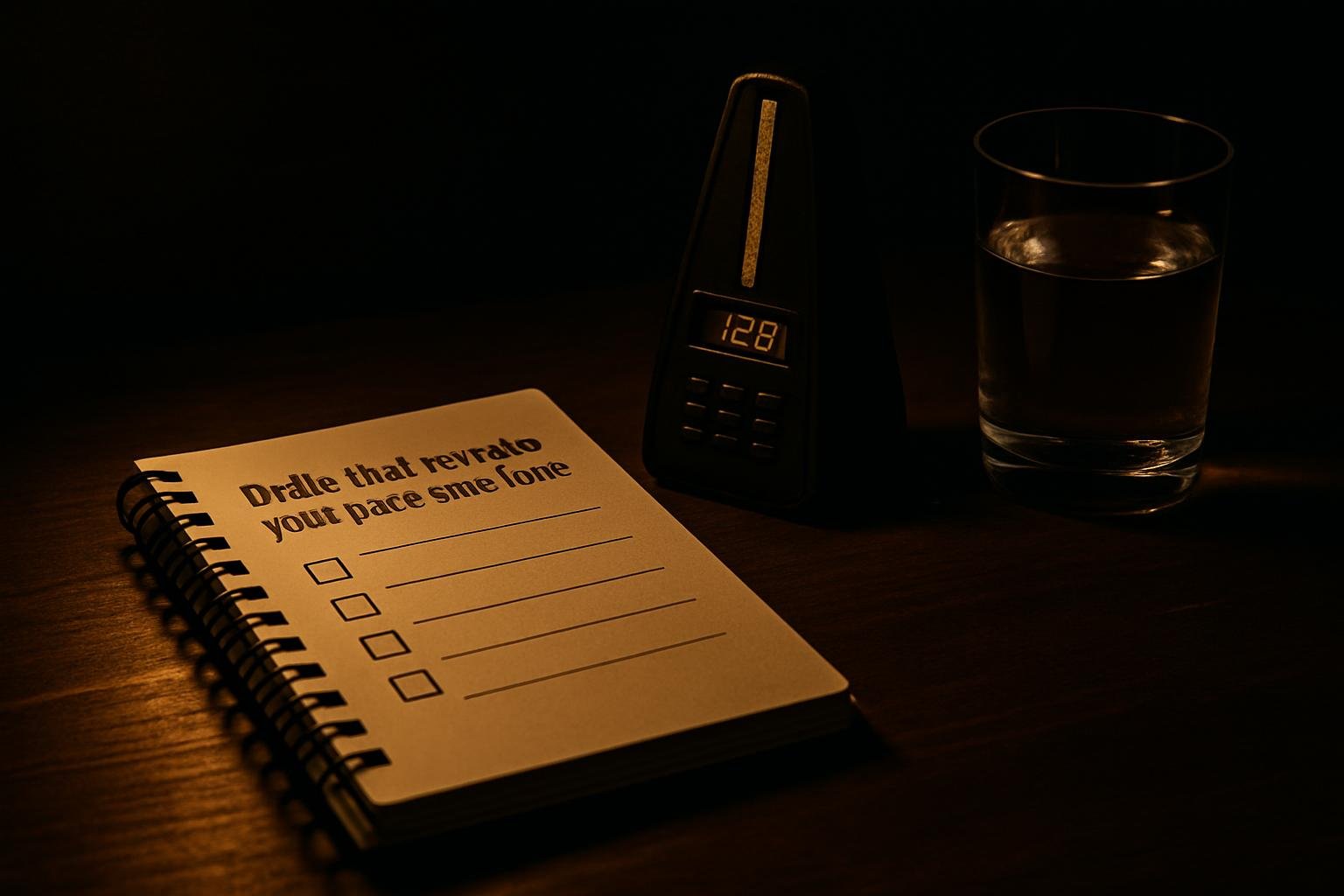
Five minutes a day beats white-knuckling it on the date. Keep it simple and measurable.
- Box exhale set (2 minutes): Sit. Exhale 5s, hold 2s, inhale 3s, hold 1s. Repeat 8 cycles. You’re training longer exhales and short holds so pauses feel normal.
- Metronome speech (2 minutes): Set a metronome app to 60 BPM. Read out loud, one short phrase per two clicks (about 90–110 words per minute). Record 60 seconds. That’s your calm baseline.
- Period stops (1 minute): Read a short article and insert an audible 1-second silence at every period. Count “one” in your head. This kills the urge to laugh as a bridge.
- Bridge phrases (90 seconds): Rapid-fire 10 labels from the list above, each followed by a 2-second pause. You’re teaching your mouth a new reflex.
- Voice memo review (2 minutes): Ask a friend to throw you 5 date questions by text. Answer each in one headline sentence, then one detail sentence. Listen back and note any laugh leaks. Re-answer two of them cleanly.
Do these for a week. You’ll feel a click on day 3–5 when the two-second pause stops feeling like a chasm.
What to do the instant you hear yourself laugh
Don’t apologize, and don’t explain a lot. Reset and continue. Here’s a four-step save that looks composed.
- Cut it clean: Close your lips mid-chuckle. Exhale through the nose for three seconds.
- Plant and still: Feet flat. Forearms resting. Hands quiet. Stop fidget loops. If your fingers are restless, place one palm on your thigh.
- Own one line (optional): Use one of these and move on:
- “Let me take that from the top.”
- “I did the nervous chuckle—give me a second.”
- “Okay, clean version:”
- Deliver the headline: One sentence first. Then expand if needed. Example: “Short answer—Italy. The food and the pace agree with me.”
If the moment was heavy, keep it simple: “I hear you.” Then pause. Silence carries respect. A laugh would not.
Bring water. A small sip after your pause buys you a second and steadies your voice. Hold the glass by the bowl or base, not midair fidgeting between sips.
Replace laughs with real presence skills
You’re not removing warmth. You’re swapping filler for signal. These skills keep your vibe open without the nervous soundtrack.
- Reflect, don’t rush: Paraphrase 6–10 words of what she said before adding your take: “So your team’s fully remote now—what’s been the best part?” That shows you heard her and buys a calm beat. See our guide on active listening on dates.
- Lead with a headline: One clear sentence first. If she wants more, she’ll ask. This trims rambling, which often ends in a laugh.
- Use the two-second rule: Wait two full seconds after she finishes before you speak. Count “one… two…” in your head. It feels long to you; it doesn’t to her.
- Slow your rate: Aim for 110–130 words per minute. If people often say “huh?” or you stack clauses, you’re fast. This guide pairs well with stopping talking too fast.
- Ask grounded questions: “What did you learn from that move?” “What felt surprisingly easy?” These prompt real answers and reduce your urge to fill space.
If you want a structured outside read on your presence—voice, posture, expressions—the Suvant image audit scores your photos across eight categories and explains what’s adding noise. It’s free to try at app.getsuvant.com, and the full plan turns fixes into exact quests.
Set up the room to help you

Small setup choices make pauses feel normal and laughs unnecessary.
- Choose seating smartly: Ask for a corner or wall-side table. Sit at a 90-degree angle instead of directly across when possible (bar corner, L-shaped seating). It feels conversational, not adversarial.
- Mind the noise: Moderate volume reduces the urge to over-project and speed up. If the first spot is loud, suggest, “Want to try the patio? Easier to hear there.” Calm move, zero drama.
- Anchor your hands: Rest forearms on the table or one hand around your glass between sips. Avoid tapping, label-peeling, and straw-chewing. Quiet hands equal quieter mouth.
- Order pacing: Start with water alongside any drink. Take a sip before new topics. That inserts a natural pause and keeps your voice steady.
- Use props with intention: A cloth napkin folded on your thigh gives your hands a home. A small plate for shells or garnish stops fidget trash piles that steal your focus.
Combine this with steady eye contact—3–5 seconds, then a relaxed glance to the side or your glass. No staring contest. Just present.
Your two-week plan to retire nervous laughs
Consistency beats heroics. Here’s a short plan that fits real life.
Daily (5–7 minutes)
- Breathing ladder: 3 minutes.
- Metronome speech: 2 minutes at 60 BPM, one paragraph.
- Bridge phrases: 60–90 seconds of labels + two-second pauses.
3x per week (8–12 minutes)
- Voice memo Q&A: 5 date questions, headline then detail. Listen back. Note any laugh leaks.
- Period stops: 2 minutes of deliberate stops. Bonus: one answer entirely without a smile, then repeat with a soft smile you choose.
Before each date (5 minutes)
- Exhale set: 5 rounds of 3-in/5-out, then 5 rounds of 4-in/6-out.
- Body set: shoulder rolls, neck length, feet planted.
- Intention line: “Clear over quick. Two-second beat.”
On the date
- Use Pause–Label–Answer. Two-second rule after she finishes.
- Water sip before big answers. Hands anchored. Feet planted.
- Micro-save if you chuckle: exhale, plant, “Clean version:” + headline.
After the date (10 minutes)
- Score yourself 1–5 on three items: paused before answers; avoided filler laughs; steady hands.
- Note one line you loved and one you’ll tighten.
- Skim a guide that reinforces presence, like first-date body language or how to stop fidgeting.
If you want outside eyes, Suvant’s free audit takes about two minutes. The full plan turns this into quests with exact deliverables—like a presence checklist for your next date—and it’s backed by a money-back guarantee.
Get the honest audit you've never gotten.
Three photos, eight scores, the real reasons behind each number, then a ranked plan to fix them one move at a time.
Get my free audit →