Your LinkedIn Headshot Is Not a Dating Photo
- LinkedIn headshots signal competence; dating photos need warmth, approachability, and a hint of real life.
- Swap suits and hard light for textured casual layers, soft light, and natural settings.
- Aim for three expressions across your set: friendly smile, soft smile, and focused candid.
- Use a simple 5-photo lineup with one clear head-and-shoulders hero and four story photos.
- Retake or refresh quarterly; small, repeatable changes beat rare, perfect shoots.
LinkedIn vs. dating: what actually changes
Your LinkedIn headshot proves you’re competent. Dating photos need something else first: warmth. The same face can do both, but the signals are different. Here’s the short answer:
- Wardrobe: LinkedIn favors suits, starched collars, flat colors. Dating favors relaxed structure: knit polos, henleys, unstructured sport coats, textured tees, dark jeans, suede sneakers or boots.
- Light: LinkedIn often uses hard, even light with gray or white backdrops. Dating wins with soft directional light (open shade, window light) and subtle background depth.
- Expression: LinkedIn: neutral to light smile, minimal teeth. Dating: a real smile in at least one photo, softer eyes, some micro-movement (turn, laugh, mid-conversation).
- Background: LinkedIn: seamless paper or office wall. Dating: clean real-world settings—brick, cafe window, leafy path, home shelf—blurred enough to keep you sharp.
- Framing: LinkedIn: tight head-and-shoulders, straight-on. Dating: still include one clean head-and-shoulders, but add 3/4 and full-body frames for context.
Quick filter for any photo
- Would this sit on a company org chart? If yes, it’s likely too stiff for apps.
- Do I look relaxed and human? Look for a visible smile line in at least one shot.
- Can someone imagine meeting me this weekend? Real setting, comfortable clothes, simple props (coffee, jacket, book, bike).
Bottom line: keep one crisp, friendly head-and-shoulders for clarity. Build the rest of your set to feel like a Saturday, not a board meeting.
What to wear that reads warm, not corporate
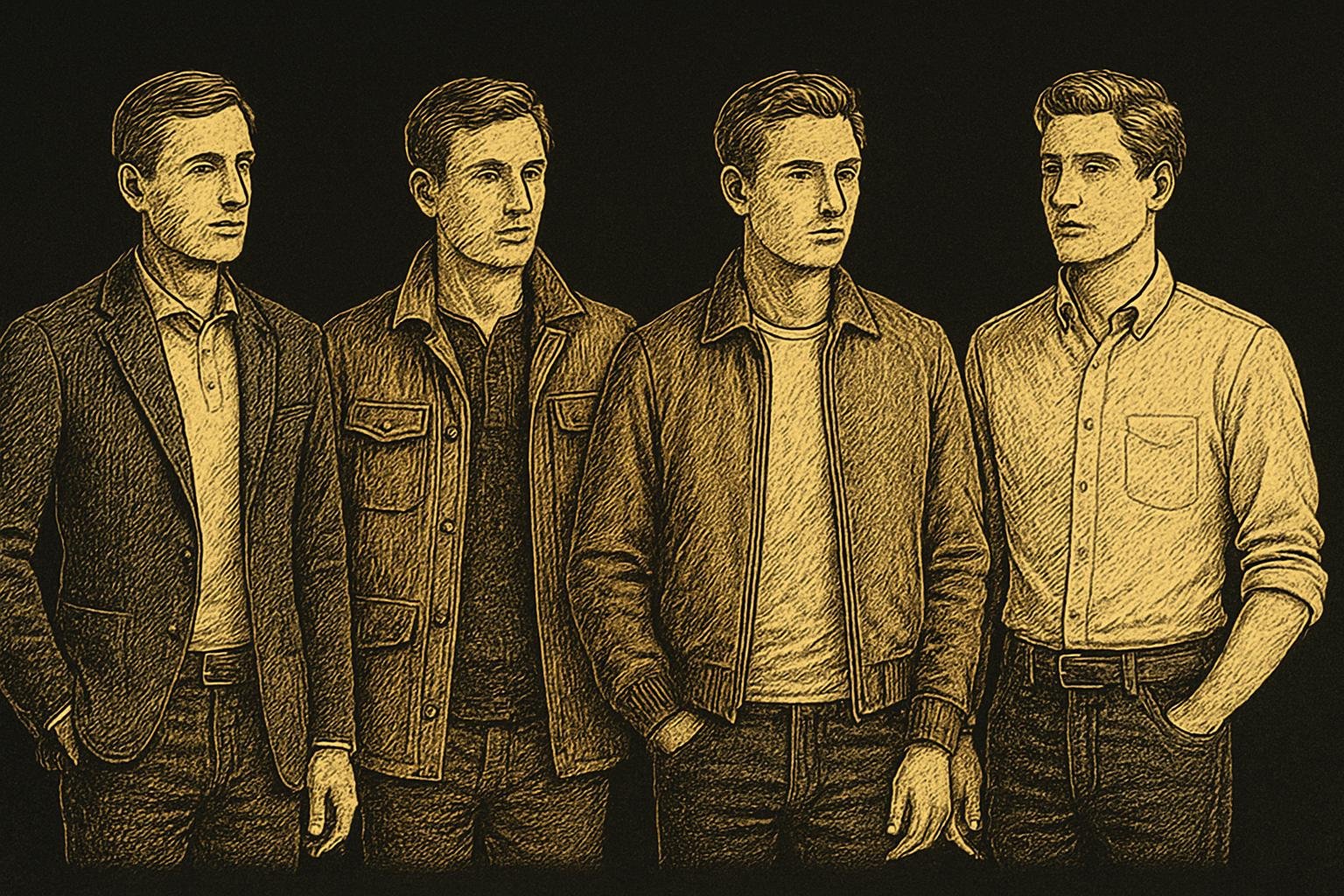
Your clothes do half the talking. You don’t need a new wardrobe—just the right layers and textures. Use this checklist:
Top layers (pick 1)
- Unstructured sport coat in navy, charcoal, or olive. No shiny worsted; think matte cotton, wool, or tweed. Sleeve shows 0.25" of cuff if you wear a shirt.
- Field jacket or chore coat in olive, tan, or navy for outdoors shots.
- Lightweight bomber in suede or matte nylon. Keep logos minimal.
Shirts (pick 1-2)
- Knit polo (solid, dark or muted tone). Collar sits clean under a jacket.
- Henley (2–3 buttons) in mid-gray, navy, cream, or forest.
- Oxford cloth button-down with texture; skip stiff collars. Top button open; second open if it doesn’t collapse.
- Well-fitted crew tee in heavy cotton. No athletic sheen.
Pants and shoes
- Dark denim or tapered chinos with clean lines. No stacked bunching over shoes.
- Footwear: suede sneakers, clean leather sneakers, or crepe-sole chukkas. Brown or white; avoid neon and obvious gym shoes.
Color and texture rules
- Stick to 2–3 colors total. Muted earth tones, navy, charcoal, cream. High-saturation reds/oranges read loud on camera.
- Matte beats sheen. Texture (knit, suede, brushed cotton) looks touchable and warm.
- Avoid heavy stripes or micro-checks that can moiré on-camera.
Grooming alignment
- Trim edges the day before, not the day of, so lines look natural.
- Matte hair products reduce shine. A pinch goes a long way.
- Blot T-zone with a clean tissue before each set. Chapstick, then blot once.
Bring one alternate top in a different texture. Shoot both in 10 minutes and keep the warmer look.
Light and background that flatter without trying
Soft light + simple depth = warmer presence. You can do this with a phone and zero gear.
Find soft light in 2 minutes
- Open shade: Stand just inside the shadow line of a building, facing the sky. No speckled light on your face.
- Window light: Indoors, stand 3–6 feet from a large window. Turn 30–45° to the window. Keep background 6–12 feet behind you.
- Golden hour: First hour after sunrise or last hour before sunset. Face the sun, then turn 20–30° to avoid squinting.
Backgrounds that read warm
- Outdoors: textured brick, leafy paths, wood fences, painted doors. Keep the closest background element 8–15 feet behind for blur.
- Indoors: bookcase with negative space, a clean kitchen shelf, a plant on a console. Remove clutter in a 6-foot radius.
Framing rules of thumb
- Hero head-and-shoulders: crop mid-bicep to leave space around the head. Camera at eye level or 1–2 inches above.
- Three-quarter: mid-thigh crop to show layers and posture.
- Full-body: back up and include feet; leave room above the head and below shoes.
Skip office backdrops and hard flash. They signal corporate. Let the background whisper context, not shout brand.
If you want more on the full set for men 40+, this deeper guide lays out examples: dating profile photos for men over 40.
Expression: how to look friendly without faking it
LinkedIn asks for neutral authority. Dating asks for approachable confidence. You don’t need to act—just set up moments that create real micro-expressions.
Three expressions to capture
- Friendly smile (teeth showing): think “old friend at brunch.” Lift cheekbones, let upper teeth show a bit, breathe out slowly through your nose. Hold 2–3 seconds.
- Soft closed-lip smile: slight upward corners, relaxed jaw. Good for head-and-shoulders.
- Focused candid: look down and adjust a cuff, or glance off-camera as if reacting to a comment. Tiny movement, no stiffness.
Prompts to say out loud
- “Say ‘mm-hm’ under your breath.” This engages the cheeks without a grin.
- “Think the word ‘you.’” It softens the eyes. Hold for two beats.
- “Laugh once through your nose.” A tiny exhale breaks tension and looks real.
Head, shoulders, hands
- Angle your body 10–20° off-camera. Chin forward and slightly down (not up). Shoulders back and down.
- Hands: pocket thumbs only, or one hand lightly on a jacket edge or coffee cup. No fists, no full hands buried.
- Posture adds presence. If you want the deeper posture breakdown, see posture and presence.
Practice in three 5-minute reps. Film quick clips on your phone using the self-timer or short video, then grab stills. Watch your eyes: the difference is in the eyelids relaxing when you exhale.
Need objective feedback? The how to smile in photos guide gives more drills, and if you want a blunt scorecard across face, hair, skin, and photos, Suvant’s free audit shows you where warmth is leaking—then turns fixes into step-by-step quests.
Composition, phone setup, and simple do/don’ts
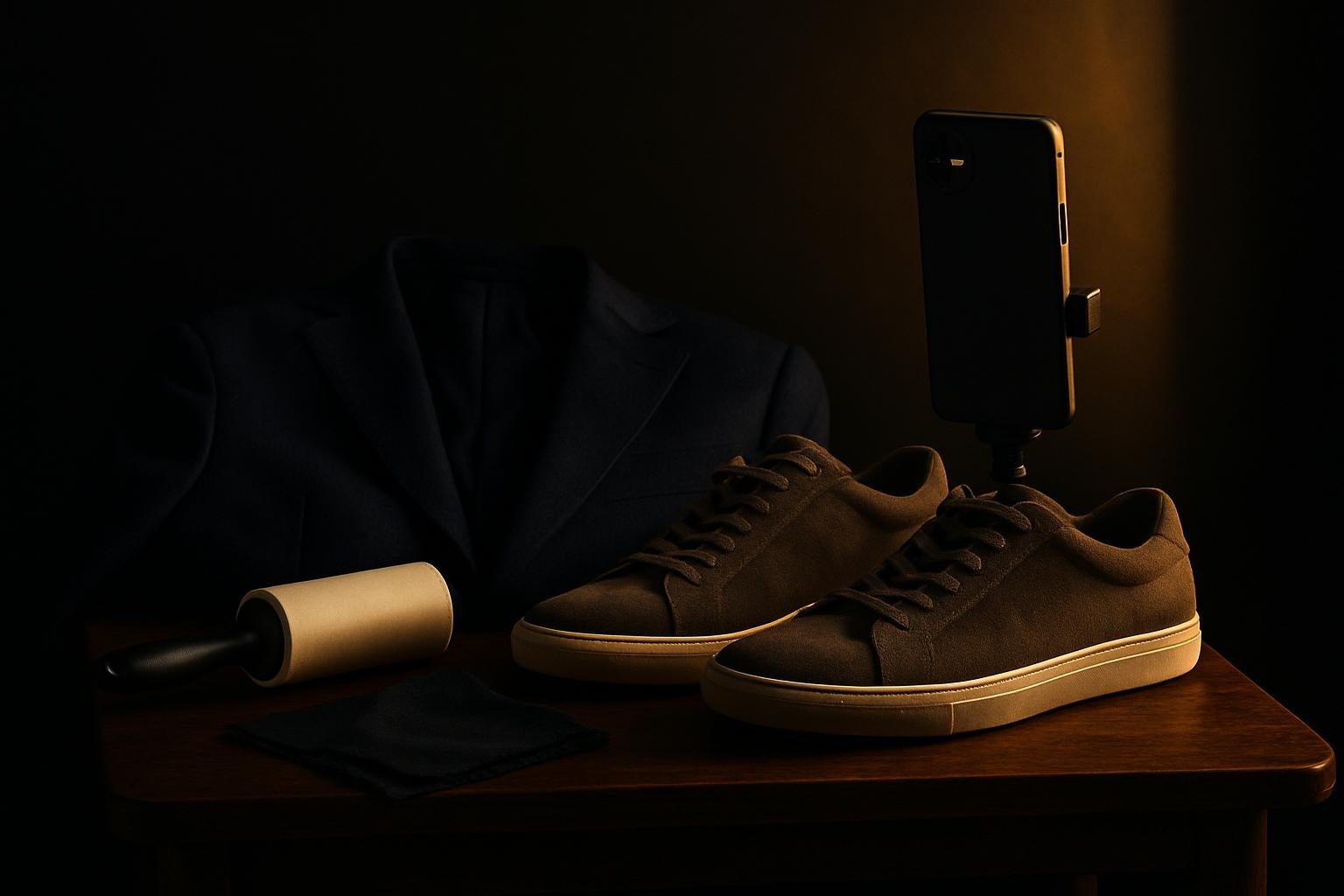
You can make dating photos that feel nothing like corporate with a simple phone setup. No lights, no flash, just small choices.
Phone settings
- Lens: Use the 2x/3x tele lens for head-and-shoulders. If you only have 1x, step back and crop; avoid wide-angle distortion.
- Exposure: Tap your face and slide exposure down slightly until skin retains detail. Over-bright = flat.
- Focus: Lock focus (long-press on your face) for consistent sharpness.
- Timer: 3–10 seconds. Shoot bursts of 3–5 frames per pose.
Angles and cropping
- Eye level or 1–2 inches above. Never shoot up the nose.
- Leave room above your head; don’t crop hair at the widest point.
- Rule of thirds: place eyes on the top third line for the hero shot.
Do
- Bring a lint roller and a microfiber cloth. Clean glasses and phone lens before every set.
- Carry one small prop that fits your weekend life (coffee cup, book, jacket over shoulder).
- Shoot 20–40 frames per location. Expect 1–2 keepers per spot.
Don’t
- Don’t use office backdrops, conference rooms, or event step-and-repeats.
- Don’t wear a shiny tie or lapel pin unless you’re leaning into a formal venue shot on purpose.
- Don’t crop to only forehead and eyes; it looks edgy, not inviting.
As you review, ask: “Do I look like someone I’d grab coffee with?” If the answer is yes, you’re in dating-photo territory, not corporate.
Build your 5-photo lineup, then maintain it
Most apps show 4–6 slots. Aim for five strong, different photos. Cover clarity, warmth, and a slice of your real life.
Your five
- Hero head-and-shoulders: Soft light, friendly smile, background blur. This is the first impression. Wardrobe: knit polo or OCBD, clean neckline.
- Three-quarter with texture: Unstructured jacket or field jacket, soft closed-lip smile. Hands relaxed. Outdoors or window light.
- Full-body, grounded: Stand or lean lightly. Show footwear and posture. No crossed arms.
- Real-life candid: Mid-laugh or mid-action (pour coffee, adjust cuff, lock bike). Eyes may be off-camera.
- One interest photo: A simple, non-try-hard scene (book on a bench with you, cooking prep at a counter). Keep it tidy and authentic.
Order matters
- Lead with the clearest, friendliest head-and-shoulders.
- Alternate close and wider frames to keep rhythm.
- Avoid duplicates (same outfit, same angle) back-to-back.
Retouching and edits
- Keep edits light: straighten horizon, slight exposure tweak, tiny warmth (+100–200 K), subtle contrast. Skip heavy skin smoothing.
- Black and white? One max, and only if it’s strong. Color usually feels more available and current.
Refresh schedule
- Quarterly: Swap 1–2 photos with new looks or locations.
- After a haircut/beard change: Update the hero within a week.
- Seasonal wardrobe: Capture a spring and fall version of your hero shot.
If you want outside eyes
Objectivity beats guesswork. Suvant gives you a blunt image audit: upload three photos and get scored across eight categories—face, hair, skin, body, style, grooming, photos, presence—with the reasons behind each number. Then it turns those into ranked quests, like a barber brief you can hand over. The audit is free and takes about two minutes; the full plan is $89/yr with a money-back guarantee, at app.getsuvant.com.
Even if you never sign up, use the checklists above and give yourself a deadline: 90 minutes this weekend, two outfits, two locations, 100 frames. You’ll walk away with a set that feels like you on your best Saturday.
Get the honest audit you've never gotten.
Three photos, eight scores, the real reasons behind each number, then a ranked plan to fix them one move at a time.
Get my free audit →