Master Eye Contact on Dates Without Being Weird

- Hold eye contact 3–5 seconds at a time; average 60–70% when listening and 40–50% when speaking.
- Break gaze naturally to menus, hands, or the room every couple of sentences or sips—never to your phone.
- Watch comfort cues: pupil size, blink rate, micro-smiles, head angle, and body orientation tell you when to hold or soften.
- Practice with 10-minute daily drills: triangle gaze, metronome pacing, selfie video review, and live reps with a friend.
- Seat yourself at 90–120 degrees, mind lighting and glare, and use small smiles to warm neutral eye contact.
The simple rules that stop staring
Here’s the clean, adult answer you can use tonight. Eye contact that reads confident has rhythm. Use these numbers and anchors.
- Hold time per look: 3–5 seconds. That’s long enough to connect, short enough to avoid a stare. If you’re mid-story, glance away for a beat, then back.
- Listening ratio: Aim for 60–70% eye contact when she speaks. You’re engaged. Add nods and an occasional soft smile.
- Speaking ratio: Aim for 40–50% when you speak. Look away briefly to think, then land your point back on her eyes.
- Break points: Use natural outs: a sip, a small hand gesture, glancing at the menu, or scanning the room for a second. Come back to her.
- Reset every 20–30 seconds: If a moment feels intense, soften with a side-eye smile (eyes relax first, then a half-smile), look down to your napkin, then re-engage.
- Never lock on: If you’ve held past 5 seconds and neither of you is speaking, you’re in stare territory. Break, then return.
That’s the baseline. Keep it playful, not pinned. If you want a full body-language pass, pair these rules with stance and hands from this guide to first-date body language.
Mechanics: what your eyes, mouth, and breath do
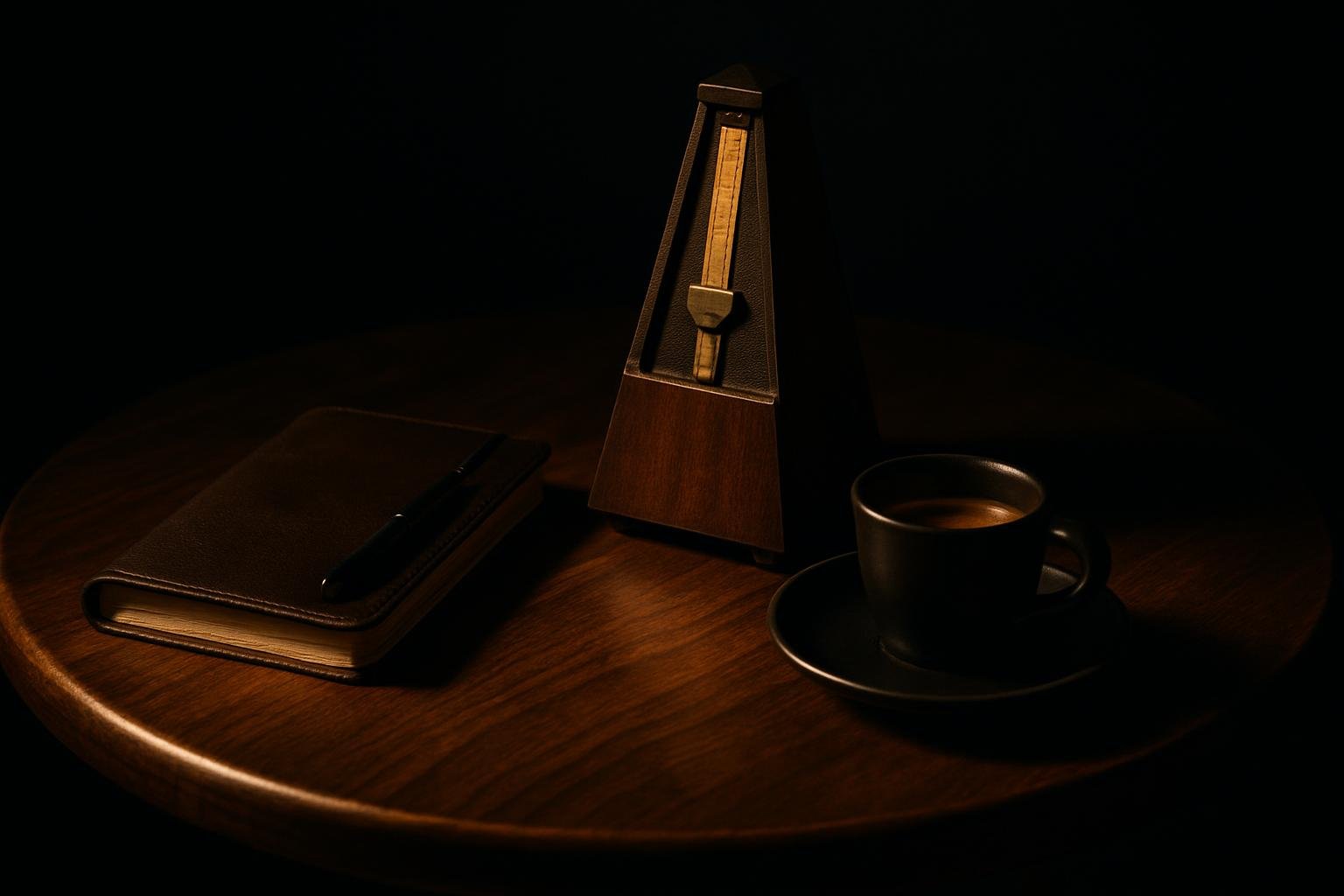
Eye contact isn’t just your pupils. It’s your brow, lids, mouth, and breath. Here’s how to look present, not piercing.
- Set your baseline face: Relax your forehead; let your upper lids soften so no white shows above the iris. Corners of the mouth slightly up—resting polite, not a grin.
- Triangle gaze for speaking: When you talk, trace a slow triangle: right eye → left eye → mouth. Each point gets about 1–2 seconds. It keeps connection without drilling one spot.
- Single-point gaze for listening: When she talks, favor one eye at a time for 2–3 seconds, blink normally, then switch. This reads focused.
- Blink rate: If you feel you’re staring, add one deliberate slow blink every 5–7 seconds. It softens the look immediately.
- Breath sync: Match your gaze resets to breath. Inhale: brief glance down. Exhale: look back and nod. Your cadence will feel natural without counting.
- Eyebrow lifts: Tiny, one-beat lifts on new or surprising info. No cartoon arches. Think eyebrow comma, not an exclamation point.
- Smile timing: Micro-smile as she finishes a sentence, not while she’s mid-word. That prevents a fixed, pasted-on look.
Use your hands as release valves. A small gesture out from your torso buys an easy gaze break and keeps your energy open. For more in-room presence details, see how to look confident in person.
Read her comfort level in real time
Good eye contact is responsive. Watch for green, yellow, and red signals and adjust within seconds.
Green lights (hold or gently increase)
- Her pupils steady or slightly larger in the same lighting.
- Returns your look within 1–2 seconds after you glance back.
- Micro-smiles and quick head nods while you’re speaking.
- Torso turned toward you, ankles and knees pointed your way.
What to do: Keep the 3–5 second holds. Land key lines back on her eyes. You can let the triangle gaze slow down.
Yellow lights (soften and add breaks)
- Faster blinks or double-blinks as you hold her gaze.
- Looking past you or over your shoulder more than twice in a minute.
- Touching face or hair right after your longest holds.
- Lip press (corners down slightly) or mouth drying—she sips water more.
What to do: Shorten holds to 2–3 seconds, add more nods, glance to the table between sentences, and lighten your tone. Consider checking in: “Quick check—this spot okay for you?”
Red lights (back off and check in)
- Head turns away and stays there for a few seconds.
- Body leans back with crossed arms or bag placed between you.
- Forced laugh with eyes not returning to yours.
What to do: Give a 10–15 second reset: look to the menu or room art, soften your shoulders, then re-enter with warm voice. If it persists, name it simply: “I can get intense when I’m into a topic—let me slow down.” Then ask a light, open question about the venue to move attention outward.
If you want honest feedback on how your face reads in photos (resting intensity vs. warmth), a quick Suvant image audit can help you see what others see and gives concrete next steps. It’s free at app.getsuvant.com, and the full plan turns this into quests with specific deliverables.
Breaks, resets, and where to look instead
Breaks make your eye contact feel alive. Use intentional outs instead of jittery darting.
- Use the 2-sentence rule: Every two sentences you speak, give a one-beat look to your drink, napkin, or hands, then return.
- Gesture-led breaks: Start a small hand motion while you briefly look at it. Your gaze follows your gesture naturally.
- The window scan: If you feel locked, scan the room’s midline for one second (not the TV), then come back with a smile.
- Sip and smile: Take a sip, look down to set the glass, smile as you look back up. It’s a built-in reset that reads composed.
- Question landings: When you ask a question, look at her eyes on the last 3–4 words. Then hold 3 seconds and relax your face while she starts.
- Story beats: On the punch line or key point, return to her eyes. On background details, feel free to glance away to the side—like you’re replaying the scene.
- Exit ramps if you over-held: If you notice you’ve stared, simply look down, exhale, and half-smile. Don’t over-apologize. You just rebalanced the rhythm.
Keep your phone face-down and out of sight. Phone glances read like disinterest, not a harmless break. If you tend to talk with a downward chin and mumble when you look away, tighten up with the tips in stop mumbling on dates.
Practice drills that stick in a week

Reps beat theory. Ten focused minutes a day for one week will change how your eye contact feels—on dates and everywhere.
Day 1–2: Mirror and metronome (10 minutes)
- Setup: Stand at a mirror with a small metronome app at 60 BPM (or count seconds).
- Drill A: Hold your own gaze for 3 beats, glance to your right hand for 1 beat, then back for 3. Do 15 cycles.
- Drill B: Triangle gaze on your reflection: right eye 2 beats → left eye 2 → mouth 2. Do 10 cycles with relaxed brows.
- Goal: Smooth blinks, no forehead strain.
Day 3–4: Selfie video (10 minutes)
- Setup: Record yourself telling a 60-second story.
- Drill: While speaking, hit 40–50% camera lens contact. Use a sip or gesture every two sentences. Watch playback twice: once muted (faces), once with sound (cadence).
- Checklist: Any frozen stare frames? Fix with a slow blink every 5–7 seconds. Any downward mumble? Lift chin 5–10 degrees on key lines.
Day 5: Live rep at a cafe (10 minutes)
- Setup: Order, then chat 2–3 minutes with the barista. Aim for 3–5 second holds when listening and 2–3 seconds when you speak.
- Script: “Hey, quick question—what’s your favorite roast here and why?” Land the question on eye contact, then hold through their first phrase.
Day 6: Friend on video (10 minutes)
- Setup: Call a friend. Tell them you’re practicing presence.
- Drill: During a 3-minute story, look at the camera lens on key lines and at their face while they talk. Ask them how your eye contact felt: “Too strong, too light, or about right?”
Day 7: Full mock date (15 minutes)
- Setup: Sit at your dining table at a 90–120 degree angle to an empty chair. Place a glass of water and a menu or magazine.
- Drill: Run a 5-minute conversation out loud: question → listen (3–5 sec holds) → break to sip → follow-up. Film and review.
- Upgrade: If you’ve used Suvant’s audit, compare your facial warmth note from photos to your video. Align your in-person look to the stronger version.
Context: seating, lighting, and edge cases
Where you sit and what the room does will change how your eye contact lands. Set the stage.
- Seating angle: Sit at a 90–120 degree angle (L-shape) instead of directly across on small tables. It lowers intensity and makes glance breaks natural.
- Distance: Aim for 2.5–4 feet. Closer than that with direct staring can feel invasive; farther weakens connection. Slide your chair an inch if needed.
- Lighting: Avoid overhead glare that makes you squint. If light is behind her and she’s backlit, you’ll stare to focus. Ask, “Mind if we swap so you’re not in the glare?”
- Glasses glare: Tilt your frames down 2–3 degrees or push them 2–3 mm down the bridge. It removes reflections so your eyes show.
- TVs and mirrors: Sit with your back to the TV and avoid a line-of-sight mirror behind her. Those steal your gaze and look like disinterest.
- Video dates: Look at the camera when you emphasize a point, not the screen the whole time. 5–7 camera glances per minute is enough.
- First date vs. third date: On date one, stay in the middle of the ranges (3–5 second holds, 60–70% listening). By date three, if comfort is high, you can lengthen holds to 5–7 seconds during warm stories and shared laughs.
- Greeting and goodbye: Before the hug, make eye contact for one beat with a soft smile and open shoulders. After the hug, reconnect eyes for 1–2 seconds as you step back and speak.
- If you’re naturally intense: Start each response by glancing down at your hands for one beat. Then look up on your first clause. It bleeds off heat without looking evasive.
Dialing this in sits alongside posture and voice. If you want a blunt read on your presence across hair, face, grooming, and photos, Suvant’s free audit gives a scored baseline and turns improvements into ranked quests with exact deliverables. It’s at app.getsuvant.com and comes with a money-back guarantee on the full plan.
Get the honest audit you've never gotten.
Three photos, eight scores, the real reasons behind each number, then a ranked plan to fix them one move at a time.
Get my free audit →