Dress Sharp, Trim the Middle: A Grown Man’s Playbook
- Prioritize mid-to-high rises, room in the seat and thigh, and a gentle taper to clean up the midsection line.
- Structured layers (sport coat, overshirt, cardigan) build verticals and hide tidal zones without bulk.
- Matte, mid-weight fabrics in low-contrast color stories read slimmer than clingy thin knits or shiny synthetics.
- Dial shirt length, shoulder fit, and hem shapes; add small tailoring tweaks for big visual payoff.
- Use simple outfit formulas—two solids plus one textured layer—to look modern, not older.
The fast answer: what actually slenderizes
You don’t need to hide. You need to control lines. These moves downplay the belly without dressing old:
- Mid-to-high rise pants: 10–12 in front rise (measured from crotch seam to top of waistband) keeps the waistband above the widest point, smoothing the front.
- Room where you need it, taper where you don’t: Comfortable seat and thigh; leg opening that narrows toward the ankle. Clean, not skinny.
- Structured top layers: Unpadded sport coats, overshirts, chore jackets, or cardigans add vertical lines and cover compression wrinkles at the waist.
- Matte, mid-weight fabrics: Avoid clingy, shiny tees and thin polos. Choose 180–220 gsm knits, oxford cloth, twill, hopsack, or brushed flannel.
- Low contrast, vertical bias: Dark-to-medium outfits with subtle texture or faint vertical patterns lengthen the torso visually.
- Proper shirt length: Casual shirts should hit mid-fly; tees should clear the belt by 1.5–2 in when arms hang.
- Collar and shoulder fit: Shoulder seams sit at the edge of the shoulder bone; collars lie flat without pulling.
- Footwear proportion: A slightly substantial sneaker, derby, or boot balances the silhouette better than a tiny, ultra-low shoe.
If you want a blunt read on what’s working in your actual photos, Suvant gives a free image audit in about two minutes and turns the results into ranked next moves you can act on. It’s not hype—just a clear plan.
Fit first: rise, seat, taper, and length
Good lines beat camouflage. Lock these dimensions before you buy anything else.
Pants: where the silhouette starts
- Rise: Target front rise 10–12 in (size M–XL) and back rise 14–16 in. Try the waistband ~1 in below your navel. Too low and the belly spills; too high and you look old-timey.
- Seat and thigh: You want a clean drape, not pull lines under the seat. Pinch test: standing, you should pinch 0.5–1 in of fabric at mid-thigh.
- Taper: Hem openings usually 6.5–7.5 in (measured flat, tagged waist 32–38). Bigger waists can go 7.75–8.25 in to keep proportions balanced.
- Waistband details: Extended tab closure, 1.25–1.5 in belt width, or side adjusters help distribute pressure and keep the front flat.
Shirts and tees: clean up the torso
- Shoulders: Seams end where your shoulder bone ends. If they fall down the arm, you look wider.
- Chest ease: 3–4 in of ease around the chest (measure your chest, add 3–4). Buttons shouldn’t pull across the belly when seated.
- Hem shape and length: Casual button-downs with a gentle curve, back slightly longer, landing mid-fly. Tees should hit 1.5–2 in below belt when standing.
- Neck opening: Polos with a firm knit collar and 2–3 buttons give a vertical line; avoid floppy collars.
Simple alterations that pay off
- Pants taper: Ask a tailor to slim from knee to hem 0.5–1 in total. Keep the knee comfortable.
- Shirt darts: Two back darts remove waist billow without making the belly obvious.
- Move a button: Shifting the second button down 0.25 in opens the V slightly and lengthens the neck.
- Hem tune-up: Casual shirt tails trimmed to mid-fly; sleeves shortened so cuffs end at wrist bone.
Layering that slenderizes without bulk
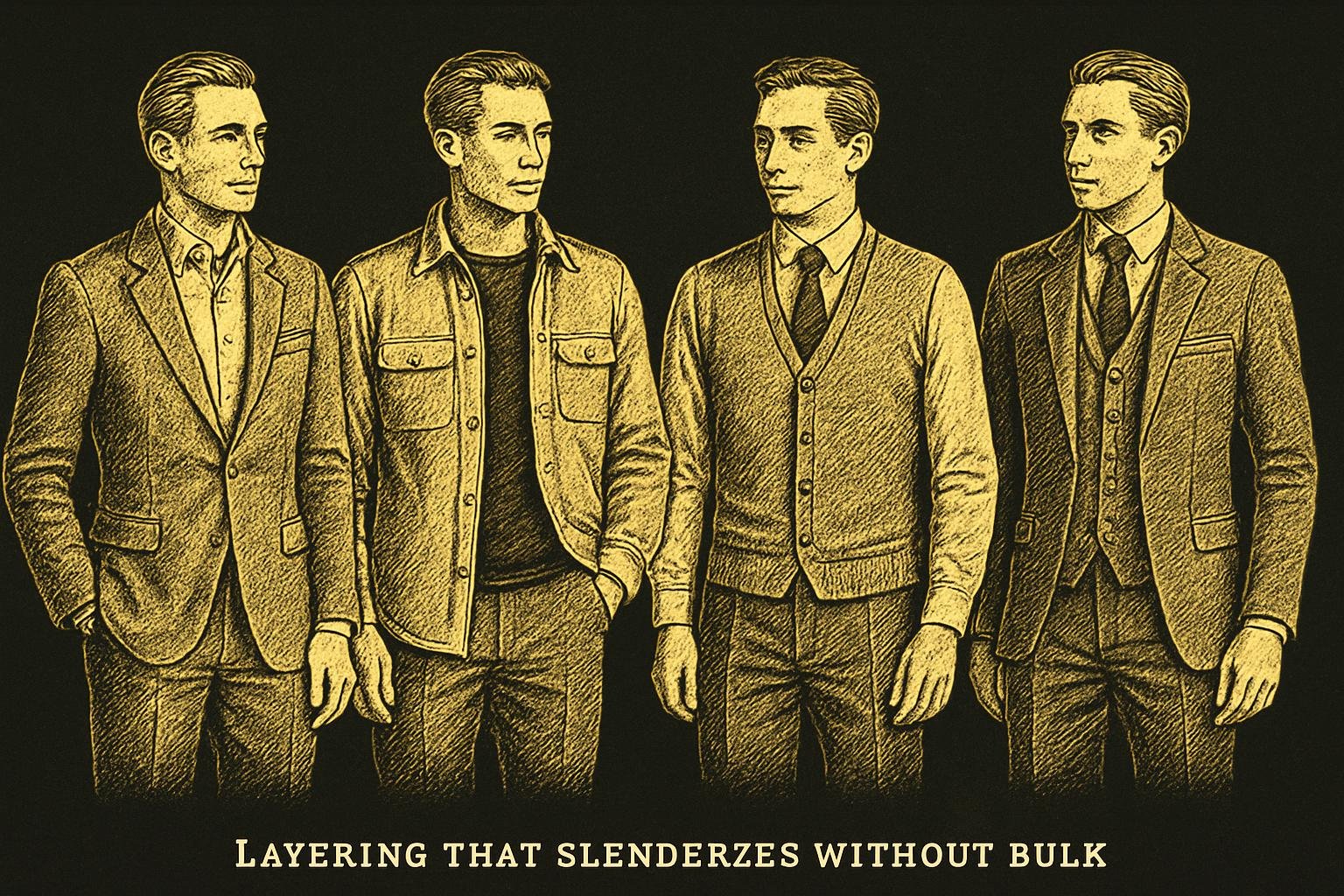
Layering is not hiding—it’s framing. Use structure and verticals to guide the eye.
Go-to top layers
- Unstructured sport coat: Hopsack or soft twill, half-lined, length covering your seat. Light shoulder shaping lifts the torso without padding.
- Overshirt or chore jacket: Cotton twill, wool blend, or canvas. Two chest pockets are fine; keep the body clean. Length around your crotch point.
- Fine-gauge cardigan: 12–16 gauge merino or cotton. Wear open to form a vertical lane. V-necks are forgiving over tees or oxfords.
- Light gilet/vest (non-puffy): Slim synthetic or wool knit to smooth the front under a jacket. Avoid marshmallow quilting.
Outfit formulas that work
- Smart-casual: Dark denim (mid-rise, gentle taper) + oxford button-down + hopsack sport coat + suede boots. Shirt tucked, belt matches shoes.
- Weekday casual: Olive chino (12 oz, mid-rise) + heather tee (200 gsm) + navy overshirt + white retro-runner sneaker.
- Office relaxed: Charcoal wool trousers + knit polo + unstructured blazer + leather derby.
- Cool weather: Dark jeans + long-sleeve henley + fine-gauge cardigan + field jacket.
Keep layers close to the body but not tight. If your jacket pulls at the button when you sit, let it out 0.5–1 in or wear it open.
Fabrics, colors, and patterns that slim
Shine and cling exaggerate curves. Matte and mid-weight fabrics clean the silhouette.
Fabrics
- Best bets: Oxford cloth, brushed twill, chambray, merino knits, pique polos with firm collars, hopsack, flannel, tropical wool (for heat).
- Avoid: Paper-thin jersey, shiny polyester blends, high-stretch knits that cling to the belly, heavy-stiff denim that tents at the front.
- Weights to target: Tees 180–220 gsm; polos 200–240 gsm; overshirts 7–9 oz; denim 12–13.5 oz for most climates.
Colors
- Low contrast: Keep top and bottom within two steps of each other (e.g., navy top + dark olive bottom; charcoal top + black jean). This reduces horizontal breaks.
- Monochrome lanes: All-navy or all-charcoal with texture variations reads sharp, not funereal, when fabrics are matte and fitted.
- Anchor colors: Navy, charcoal, olive, tobacco, stone, ecru. Add color with muted tones (rust, forest, faded burgundy) in a layer, not the tightest piece.
Patterns
- Vertical bias: Shadow stripes 1/8–1/4 in, herringbone, subtle pinstripe, or vertical rib knits. Keep contrast low.
- Skip loud horizontals: Bold Breton stripes and high-contrast checks across the belly widen the frame.
- Micro over macro: Small-scale patterns (micro-check, micro-houndstooth) add texture without widening.
Two solids plus one textured or subtly patterned layer is a reliable rule. If in doubt, put the darkest piece on the bottom, and the most structured piece on top.
Jeans, chinos, and trousers that clean up the line
Your pants do most of the slimming work. Choose rises and legs that smooth the midsection, then keep the ankle clean.
Jeans
- Rise: Mid to high (10–11.5 in). Back rise 14–15.5 in for seated comfort.
- Leg: Straight-to-tapered. Hem 6.75–7.5 in depending on waist.
- Stretch: 1–2% elastane is enough. More than 3% clings and shines.
- Wash: Dark indigo, rinsed, or even-black. Minimal whiskering keeps the eye moving vertically.
- Length: Hem to a slight break or no break. Stacks create belly-adjacent clutter.
Want more denim detail? See our guide to the best jeans for men over 40.
Chinos
- Fabric: 10–12 oz cotton twill with a touch of stretch (1–3%). Garment-dyed looks modern.
- Fit: Comfortable thigh, gradual taper. If you see front pocket flare, size up or let the hip out slightly.
- Colors: Navy, olive, tobacco, stone. Avoid neon or high-sheen finishes.
Dress trousers
- Fabric: Tropical wool or flannel. Drapes better than cotton and resists knee-bagging.
- Details: Extended waistband, side tabs, or discreet two-pleats facing inward. Pleats are fine when the rise is right.
- Break: Minimal. A clean hem lengthens the leg.
Outfit formula: Charcoal tropical wool trouser + knit polo + unstructured navy blazer + suede derbies. This reads current, not corporate. For more smart-casual mixes, check smart casual outfits for men over 40.
Shirts, polos, and knitwear that don’t cling
Get the fabric, opening, and hem right and your midsection stops being the headline.
Button-downs
- Oxford cloth (OCBD): Slightly brushed, hides ripples. Wear tucked for sharper lines; untucked only if hem is designed for it (mid-fly).
- Chambray and flannel: Matte and forgiving. Pair with dark denim or charcoal trousers.
- Fit tweak: Ask for back darts and sleeve trim if the body is right but the waist billows.
Polos and tees
- Polos: Firm knit collar, 2–3 buttons, 200–240 gsm. Avoid super-stretchy athletic polos that outline the belly.
- Tees: 180–220 gsm cotton or cotton-modal blends. Set-in shoulders, no chest pocket if it sits high on the curve. Hem 1.5–2 in below belt.
- Henleys: 2–3 buttons create a vertical V. Long sleeve under an overshirt works year-round.
Knitwear
- Cardigans: Fine gauge, worn open to create a slimming lane. Keep buttons flat and minimal.
- V-neck sweaters: Shows collar and elongates the neck. Crewnecks can work if the collar sits clean and fabric is matte.
Accessories and footwear
- Belts: 1.25–1.5 in width; avoid giant buckles that center the gaze.
- Watches: Mid-size cases (38–41 mm) keep proportions balanced.
- Shoes: Slightly substantial soles (lug-lite boots, retro runners, chunky-but-clean derbies) anchor the look.
If you’re unsure which of your existing shirts deserve tailoring and which should be replaced, the Suvant audit calls out fit issues in your real outfits and gives you a ranked checklist to fix them—plus exact deliverables like what to tell your tailor or barber.
Tailor notes and quick fixes
Small, specific adjustments beat starting over. Here’s what to ask for, and what to do at home.
At the tailor
- Waist and seat balance: “Let the back rise out 0.5 in to remove pulling under the seat; keep the front flat.”
- Knee-to-hem taper: “Taper the leg 0.75 in total from knee to hem; leave room in the thigh.”
- Shirt darts: “Add two gentle back darts to remove muffin effect without tightening the belly.”
- Sleeve and cuff: “Shorten sleeves so cuffs touch the wrist bone; keep a clean, narrow cuff.”
- Jacket waist: “Shape the sides slightly; avoid X-pulls at the button when standing; priority is a straight front.”
At home, in five minutes
- Military tuck: Pinch excess shirt fabric at the side seams and fold it back before tucking. Works with OCBDs and casual shirts.
- Steam, don’t iron shines: Steam knits and chinos to remove belly-adjacent wrinkles without adding sheen.
- Swap undershirts: Use a breathable, close-fitting v-neck undershirt to absorb heat and prevent cling.
- Cuff choice: One clean single cuff; avoid big rolls that add bulk mid-torso.
Finally, match the formality of your layer to the setting. A soft-shoulder sport coat with jeans reads modern when it fits right—see our notes on sport coat fit over 40—while a twill overshirt can do the same job off-duty.
Want someone to keep you honest? Suvant turns an image audit into a monthly quest list with specific outfits and fit tweaks. The full plan is $89/yr with a money-back guarantee, and it lives at app.getsuvant.com.
Get the honest audit you've never gotten.
Three photos, eight scores, the real reasons behind each number, then a ranked plan to fix them one move at a time.
Get my free audit →