Jeans Over 40: Fit, Wash, and Pairing That Win
- Choose a mid rise, room in the seat and thigh, and a gentle taper to the ankle.
- Pick dark indigo, rinsed mid-blue, or washed black with minimal whiskering and contrast.
- Buy comfort stretch (1–2% elastane) in 12–13.5 oz denim for structure without squeeze.
- Hem to a slight break for boots and no break for sneakers; avoid puddling.
- Use a try-on checklist and tailor notes; don’t rely on tag sizes alone.
The short list: what actually works over 40
You want jeans that sharpen your frame without shouting. Here’s the formula that works on most men 35–55 and reads modern in any room.
- Fit silhouette: Mid rise, room in the seat and thigh, gentle taper to the ankle. Labels often call this “athletic taper,” “straight taper,” or “slim straight.”
- Rise: Front rise around 10–11.5 in; back rise around 14–15.5 in. This keeps your waistband at the hip bones or just above your navel line without digging.
- Stretch: Comfort stretch denim with 1–2% elastane (or similar). Enough give to sit, drive, and move; not so much that the jeans bag out.
- Weight: 12–13.5 oz denim for year-round structure. Lighter can feel flimsy; heavier can feel stiff until broken in.
- Washes: Dark indigo (nearly solid), clean mid-blue rinse (subtle wash, no loud whiskers), or washed black (charcoal, not jet-black). These pair with everything and read put-together.
- Inseam target: Hem to a slight break with boots and no break with sneakers. If you switch often, pick the longer of the two and use a single cuff when in sneakers.
- Immediate avoids: Baggy seats, painted-on skinnies, heavy whiskering, ripped knees, carpenter loops, contrast-white stitching.
If you want a dressier jean for dinners and dates, choose a dark indigo or washed black with minimal grain, match a leather belt to your shoes, and keep the leg clean to the ankle.
Fit that does the work: rise, seat, thigh, taper
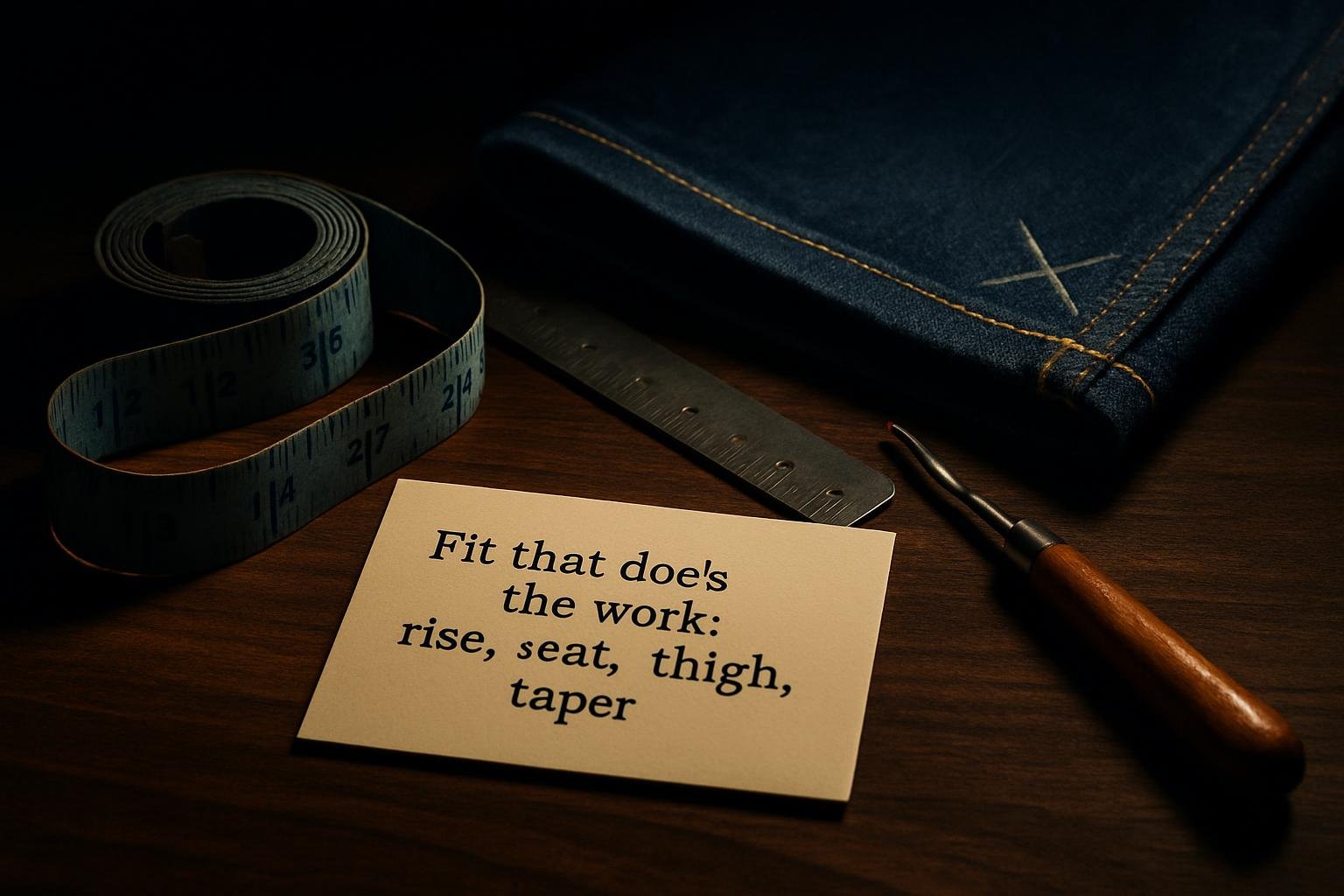
Your body didn’t fail you. Most jeans on racks are cut for teens or trend cycles. Dial these four areas and you’ll look sharper in five minutes.
Rise (front and back)
- Front rise: 10–11.5 in on a size 32–34 waist. This sits near the hip bones or just below the navel. If you see belly overhang or feel waistband bite when sitting, go up in rise, not size.
- Back rise: 14–15.5 in holds you when you bend or sit. If the yoke pulls down in the back, you need more back rise or more room in the seat.
Seat and thigh
- Seat: Fabric should lightly drape over your glutes. No sagging shelf; no sausage casing. Pinch test: you should pinch 0.5–0.75 in of fabric at the widest point.
- Thigh: Aim for 1 in total ease around the thigh. You should be able to do a full step onto a curb without the seam biting.
Taper and leg opening
- Taper: A gradual taper from knee to ankle keeps the line clean and modern. Avoid dramatic funnels.
- Leg opening (reference size 32): 6.75–7.5 in works with most sneakers and boots. If your feet look oversized, the opening is too small; if the hem swallows the shoe, it’s too wide.
Stretch and fabric
- Stretch content: 1–2% elastane (or 1% elastomultiester) balances comfort and shape retention. Over 4% often sags and looks “jegging.”
- Fabric weight: 12–13.5 oz is the sweet spot for structure without stiffness. Raw denim will relax about half a size with wear.
60-second try-on checklist
- Sit test: Sit for 30 seconds. Waistband should not bite; back should not slide down.
- Phone test: Slide your phone in front pocket. It shouldn’t print a rectangle across your thigh.
- Squat step: One shallow squat or step onto a bench. Seams shouldn’t scream. If they do, you need more thigh ease or stretch.
- Shoe check: Try with the shoes you wear most. Hem should kiss the shoe, not pool.
Modern washes and details that look grown up
Wash is the difference between dated and deliberate. Keep it clean and subtle so your face and jacket do the talking.
- Dark indigo: Nearly solid, maybe a soft vertical grain. Dress it up with a blazer or down with a tee. Avoid high-contrast cat whiskers at the crotch.
- Rinsed mid-blue: A single rinse or light stone that evens the color without fake streaks. Works with brown boots, gray hoodies, navy chore coats.
- Washed black/charcoal: Softer than jet black, easier to pair with white sneakers and leather jackets. Avoid greenish casts.
- Hardware/stitching: Matte or antique hardware, tonal or slightly darker stitching. Contrast-white stitching reads mall-brand and busy.
- Distressing: Skip blown-out knees, knee slashes, and sanded fade patches. If you want texture, look for subtle knee honeycombs from wear, not a sandblaster.
- Selvedge: Nice if you enjoy cuffing, but the best-looking jean is the one that fits. Don’t pay extra for a detail you’ll never show.
Care note: Wash inside-out on cold when they smell, not on a schedule. Hang dry. Heat cooks stretch fibers and shortens the life of the fit.
Size selection and inseam math (no puddles, no floods)
Tag sizes lie. Get your real numbers and make the hem work for your shoes.
Find your waist (for jeans)
- Measure: Use a soft tape around where your jeans sit (usually just below the navel). Stand relaxed. Note that number.
- Translate: Most brands vanity size 1–2 inches down. If your tape says 37 in, you’ll likely buy a tagged 35–36. Try both.
- Shrink/stretch reality: Raw or rigid denim relaxes up to half a size with wear. Stretch denim relaxes slightly, then recovers after a wash.
Choose your inseam by shoe
- Sneakers (low profile): Hem to no break—the front hem just kisses the upper with no fold. For many men 5'10"–6'0", that’s around a 30–31 in inseam, but measure on your body.
- Boots (Chelsea/service/plain-toe): Hem to a slight break—one small fold in front. Often 0.5 in longer than your sneaker hem.
- Versatile single inseam plan: Pick the boot length, then single cuff once (about 1–1.25 in) when wearing sneakers.
Cuffing rules
- Single clean cuff: 1–1.25 in high, flat. Works with most mid-weight denim.
- Pin roll: Skip. It reads teen. If the opening is too wide for a sleek sneaker, you need a taper, not a trick.
Tailoring: give your hem a job
- What to ask for: A clean lockstitch hem at your measured break, pressed flat. If you want to keep the original roping look, ask for an original hem reattachment.
- Notes to bring: Wear the shoes you’ll pair most. Mark ideal hem with painter’s tape while standing natural. Ask for a 0.25 in allowance in case the denim relaxes.
- Cost/time: Expect a basic hem to run modestly and take a few days. Worth it every time.
What to wear with your jeans: shoes and jackets
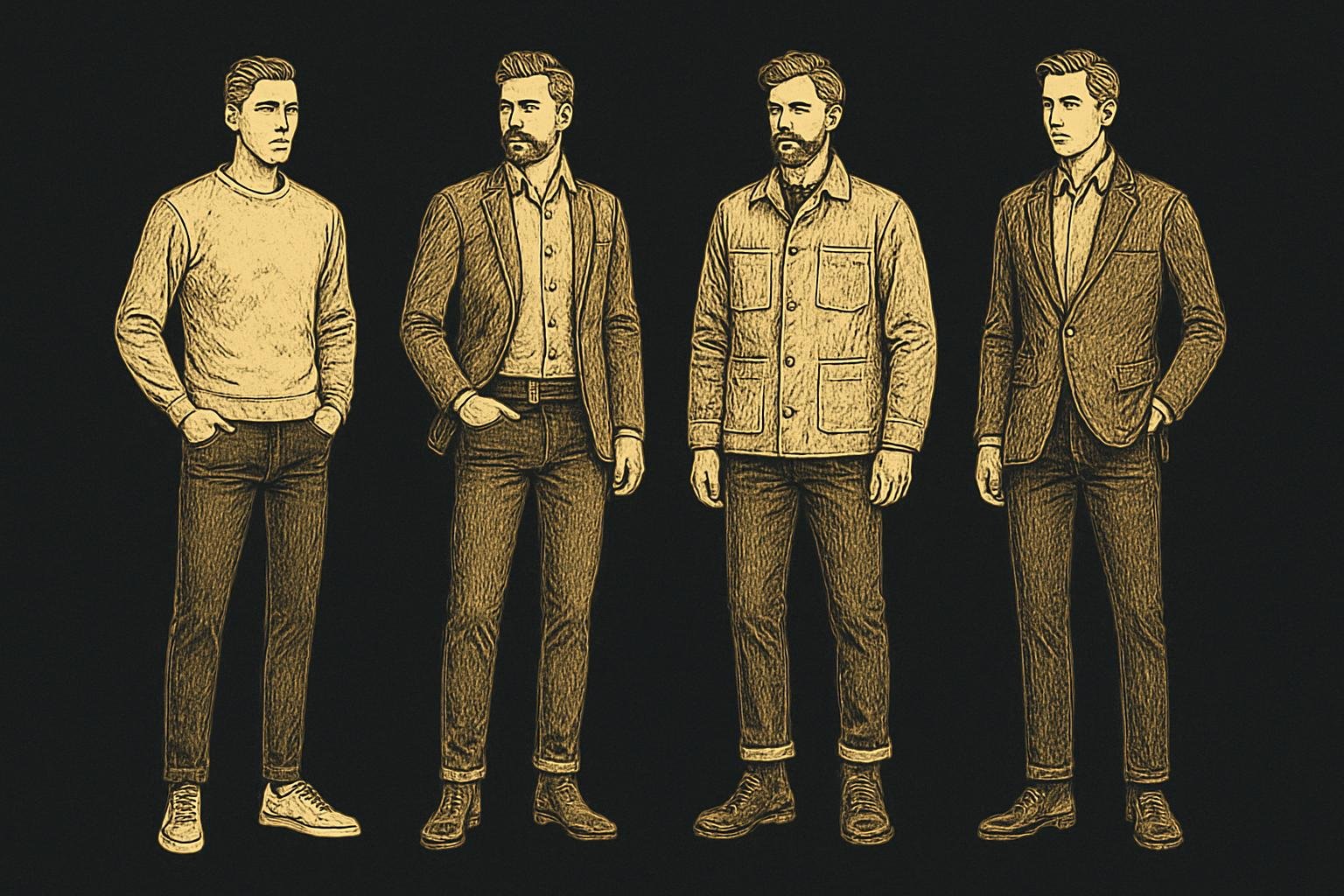
The right shoe and jacket make your jeans look intentional. Use these plug-and-play pairings.
Shoes that click with a tapered leg
- White or gray leather sneakers + dark indigo: No-break hem. Add a crewneck tee and an overshirt. Clean, not try-hard.
- Chelsea boots + rinsed mid-blue: Slight break. Throw on a suede trucker or a wool topcoat when temps drop.
- Lug-sole or service boots + washed black: Slight break. Pair with a heavyweight tee and a canvas chore jacket.
- Derby or minimal loafers + dark indigo: No or slight break. Add a knit polo or oxford and a blazer for dinners.
Avoid running shoes with jeans. The bulky foam fights the taper and makes the hem look confused. If you need comfort, pick a leather or suede sneaker with a sleeker profile. For more on footwear picks, see the best shoes for men over 40.
Jackets that sharpen the line
- Unstructured blazer: Dark indigo + navy or charcoal blazer + white tee or oxford. Jacket should cover your seat or end mid-seat. No shiny suit fabric.
- Suede trucker: Mid-blue + tan or dark brown suede. Instant texture, still understated.
- Leather cafe racer: Washed black + black or gray tee. Keep hardware minimal.
- Wool topcoat: Dark indigo + camel, navy, or charcoal. Hem of coat should land around mid-thigh.
Building outfits around jeans gets easier once you lock silhouette rules. If you want full smart-casual templates, check smart casual outfits for men over 40.
What to avoid (and why it reads dated)
- Baggy seats and thighs: Adds visual weight and sag. You look shorter and wider. Choose room, not volume.
- Spray-on skinnies: Over 40, painted-on fabric looks like you sized wrong. You want a trace of the leg, not a cast.
- Heavy whiskering/sanding: Fake stripes across the crotch and thighs drag the eye to the wrong place. Go clean or soft, low-contrast wash.
- Ripped knees and blowouts: They catch on chairs, look costume, and limit where you can wear them.
- Carpenter loops and cargo pockets: Pure utility costume unless you’re actually on a jobsite.
- Stacked hems/puddles: Extra fabric pools and slouches over shoes. Hem them. A small, neat break is stronger every time.
- High-contrast stitching and loud logos: They date quickly and fight your shoes and jacket.
- Ultra-stretch blends (>4%): They cling and then bag out. You’ll be pulling them up all day.
For more traps to skip in your closet, read men’s style mistakes over 40.
Your 60‑minute shopping plan (and how Suvant helps)
You don’t need a whole afternoon. Give yourself one focused hour with a short list and a mirror checklist.
Before you go
- Write your target specs: mid rise, room in thigh, gentle taper, 12–13.5 oz, 1–2% stretch. Wash: dark indigo + washed black.
- Wear test shoes: your everyday sneakers or boots. Bring the other pair in a tote if you swap often.
- Bring a soft tape and a phone for quick fit photos (front, side, back).
In the fitting room (30 minutes)
- Grab two waist sizes (e.g., 34 and 35) and two lengths (e.g., 30 and 32) in each of two silhouettes (slim-straight and athletic taper). That’s 8 tries, max.
- Run the sit, phone, squat, shoe checklist. Pinch test at thigh and seat.
- Pick the best rise first. If the waistband bites when you sit, swap to a higher rise cut before going up a full size.
- Shoot quick photos. Choose the pair with the cleanest vertical line from hip to hem and the least pocket flare.
Tailor handoff (10 minutes)
- Mark hem with painter’s tape at no-break in sneakers, slight-break in boots. Ask for one length and plan a single cuff with sneakers if needed.
- Request a clean lockstitch hem or original hem reattachment. Keep a 0.25 in safety allowance.
Where Suvant fits in
If you want a second set of honest eyes, Suvant gives you a free image audit of face, hair, skin, body, style, grooming, photos, and presence. Upload three photos—your results include ranked next moves and specific quests. For jeans, that can mean a style brief with your target rise, taper, inseam, and three outfit pairings you can take to the store. It’s built with input from barbers, wardrobe stylists, and portrait photographers. The full plan is $89/yr with a money-back guarantee at app.getsuvant.com. Use it once to dial your specs, then re-audit monthly to keep your streak and refine.
Whether you use Suvant or not, write your specs on a note in your phone. Reuse the list. Buy two of the winners so laundry day doesn’t put you in the backup pair.
Get the honest audit you've never gotten.
Three photos, eight scores, the real reasons behind each number, then a ranked plan to fix them one move at a time.
Get my free audit →