Shirt Colors That Make Gray Hair Look Intentional
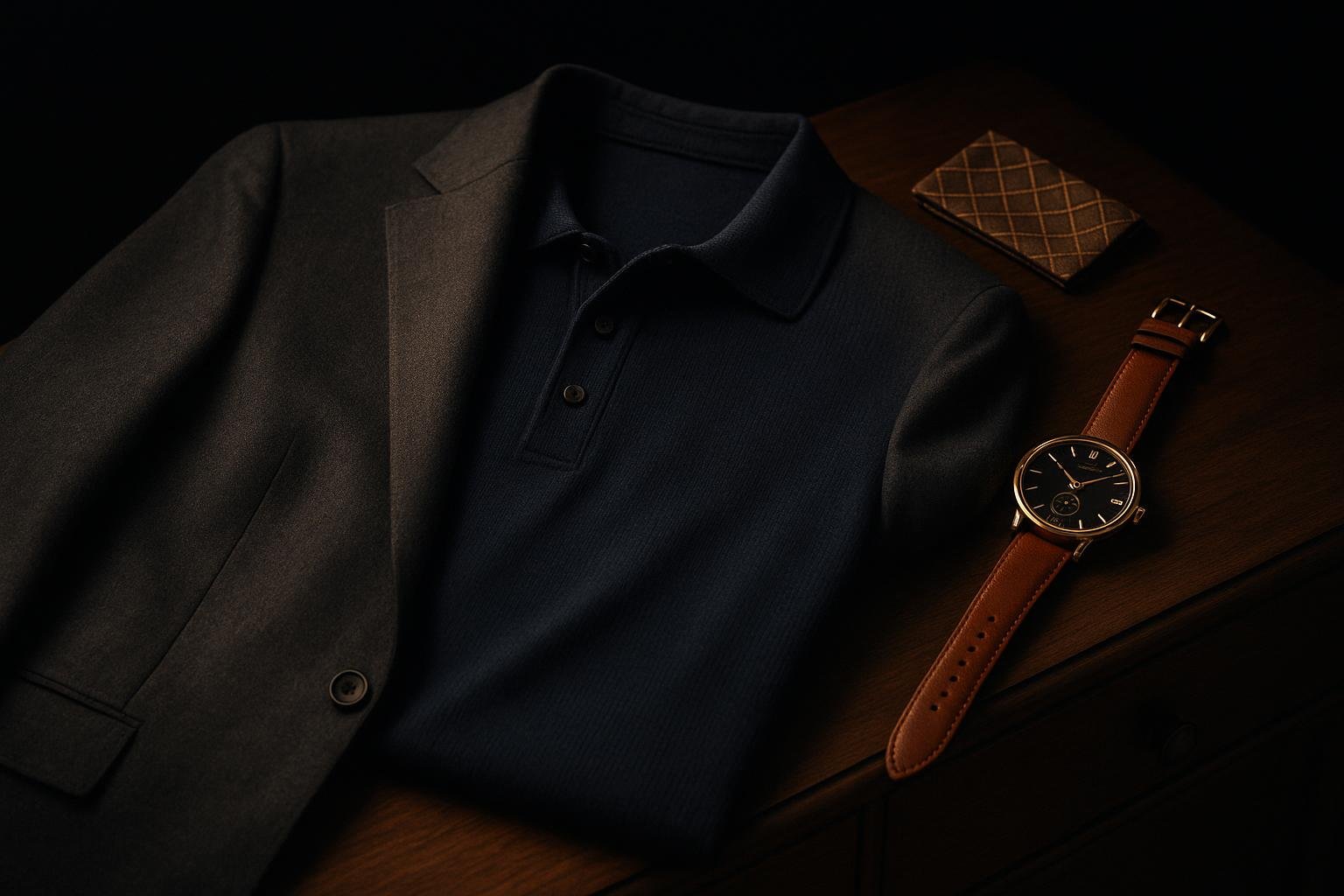
- Navy, charcoal, mid-blue, and off-white are the safest base shirts with gray hair.
- Jewel tones like burgundy, forest, teal, and cobalt add energy without shouting.
- Avoid pure black and stark white near the face unless you soften them with texture or layers.
- For photos: solid, matte, medium-bright colors beat pale pastels and tiny checks.
- Build a 10-shirt capsule around 6 neutrals and 4 accents to cover work, dates, and weekends.
The short list: colors that flatter gray hair
You asked for the best colors for gray hair men. Here’s the fast answer you can take to a store today.
Neutrals that almost always work
- Navy (not midnight black-blue). Reliable contrast without harshness.
- Charcoal (darker than mid-gray). Frames silver without blending into it.
- Mid-blue (Oxford blue, chambray, denim blue). Easy with jeans or chinos.
- Off-white (ecru, stone, bone). Softer than white, kinder to skin texture.
- Earth neutrals: taupe, mushroom, and light olive (especially if your skin runs warm).
Accent colors that look sharp
- Burgundy and oxblood — depth without reading loud.
- Forest and deep olive — grounded, flattering in evening light.
- Teal and petrol — blue-green that lights up gray.
- Cobalt — the boldest blue that still photographs well.
- Muted rose and dusty pink — subtle lift that works with salt-and-pepper.
- Soft lavender — especially good if your skin is cool-toned.
Salt-and-pepper vs fully gray
- Salt-and-pepper: medium contrast is your friend. Mid-blue, teal, forest, burgundy, off-white.
- Fully gray/silver: step up the contrast or go richer. Navy, charcoal, cobalt, oxblood, deep olive, stone.
Quick do/don’t
- Do choose matte fabrics (Oxford, brushed cotton, merino) that don’t glare on camera.
- Do favor solids or simple stripes (5–10 mm). They read clean in photos.
- Don’t put pure black or stark white alone under your face unless you balance with a jacket or texture.
- Don’t wear heather gray shirts the exact shade of your hair — it blends.
The neutrals kit: your everyday backbone
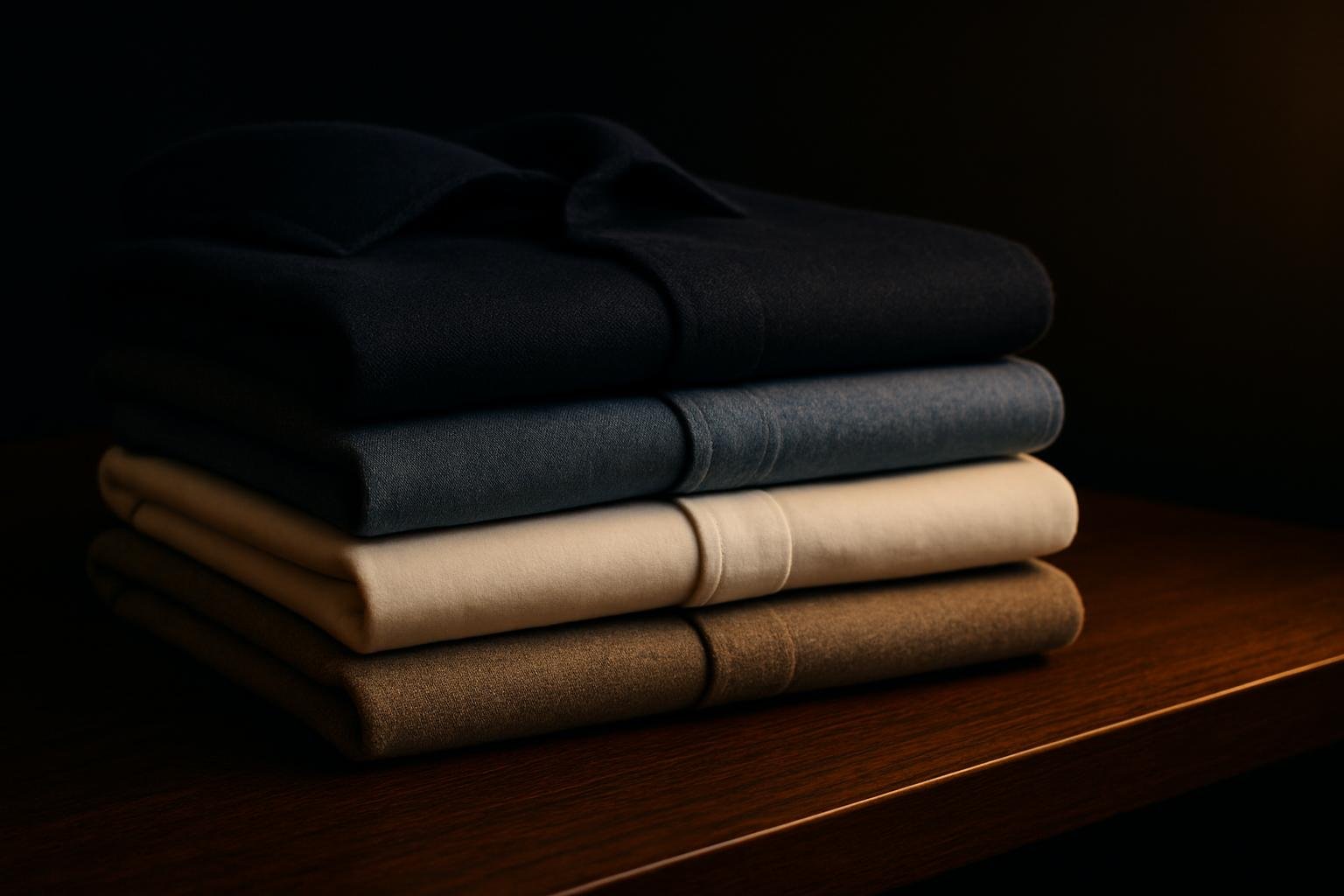
Start with neutrals you can repeat without anyone noticing. These carry workdays, first coffees, and family events.
Five neutrals that do the heavy lifting
- Navy Oxford/button-down — the one-shirt solution. Works with denim, tan, or gray chinos.
- Charcoal knit polo — evening-friendly, frames the jawline, less severe than black.
- Mid-blue chambray — texture gives depth; great under a navy jacket.
- Off-white poplin or Oxford — cleans up casual looks without the clinical feel of pure white.
- Taupe or mushroom tee — a smarter neutral that warms silver hair.
Color notes that matter
- Navy vs black: navy gives contrast without sucking the color out of your face. Black can work, but only with texture (knits, slub) or a layer to break the block.
- Off-white vs white: off-white reflects softer light. White can exaggerate under-eye shadows under LEDs.
- Gray on gray: if your hair is fully silver, wear charcoal or light gray shirts — skip mid-gray that matches your hair.
Fabric and finish
- Matte beats sheen. Oxford, brushed cotton, pique, jersey, and merino are safer than sateen or shiny synthetics.
- Weight shows quality. Aim for shirts in the 150–180 gsm range for poplin/Oxford; tees at 180–220 gsm. They drape and photograph better.
Accents that energize without shouting
These are your color hits. They make gray hair look deliberate, not accidental.
Four high-confidence accent lanes
- Deep reds: burgundy, oxblood, cordovan. Pair with gray trousers or dark denim.
- Greens: forest, bottle, muted olive. Works with navy jackets and tan chinos.
- Blue-greens: teal and petrol. A sharp date-night crewneck or knit polo color.
- Cool brights: cobalt and French blue. Choose solids; let the color do the work.
How bright is bright enough?
- Light skin + silver hair: pick medium to rich saturation (teal, burgundy, cobalt). Pastels can wash you out on camera.
- Medium to deep skin + gray hair: you can run brighter or darker safely. Cobalt, oxblood, and deep olive read balanced.
Pairing rule: 3–2–1
- 3 neutrals for every 2 accents, and at most 1 high-contrast piece near the face. Keeps outfits grounded.
New to color? Start with one accent knit or oxford (teal or burgundy) and wear it twice in one week. If three separate people say, “That color works on you,” lock it in.
Want a deeper dive on undertones and testing in daylight? Read our guide: how to find your colors.
Salt-and-pepper vs full silver: tune the contrast
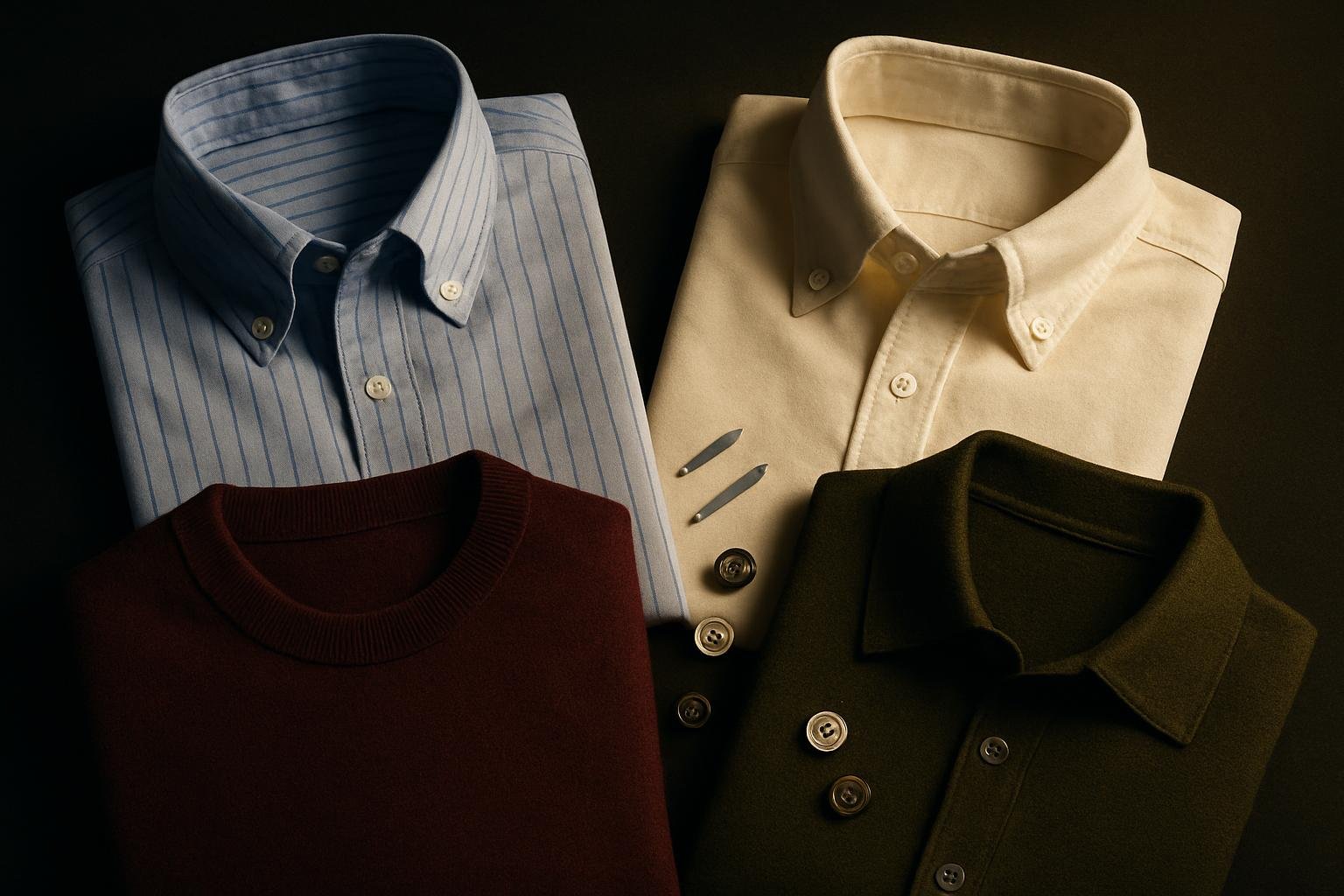
Your hair’s pattern changes what “balanced” means. Set your contrast on purpose.
If you’re salt-and-pepper
- Aim mid-contrast. Mid-blue, teal, forest, off-white, and burgundy sit well between light and dark strands.
- Patterns: thin rugby stripes (5–10 mm) or shadow stripes add interest without buzzing on camera.
- Avoid: tight micro-checks and pencil stripes; they can moiré on phone cameras.
If you’re fully gray/silver
- Increase contrast or depth. Navy, charcoal, cobalt, oxblood, deep olive. These frame silver hair cleanly.
- Monochrome done right: go light shirt (stone, ecru) + dark jacket (navy/charcoal) instead of all one shade.
- Avoid: heather mid-gray tees or shirts that match your hair exactly. You’ll blend into your own outline.
Collar and neckline details
- Button-down or cutaway collars create structure next to softer hair texture.
- Knit polos and crewnecks in matte yarns soften edges for casual settings.
If you’re still deciding whether to keep the gray or color it, get oriented here: going gray: keep it or dye it.
Photo-friendly picks for dating apps and Zoom
Colors behave differently on camera. Control what the lens sees.
Best on-camera shirt colors
- Teal, cobalt, burgundy, forest — medium to rich saturation that keeps skin tone lively.
- Navy and mid-blue — safe anchors that still separate from dark backgrounds.
- Off-white/stone — cleaner than gray in natural light, softer than white under LEDs.
Patterns and textures
- Go solid or simple stripe. Stripes in the 5–10 mm range read crisp; avoid micro-gingham and herringbone on phone cameras.
- Matte beats sheen. Shiny shirts blow out highlights and show wrinkles.
Background and lighting
- Dark background: wear mid or lighter tones (off-white, mid-blue, teal) so your head doesn’t float.
- Light background: wear deeper tones (navy, burgundy, deep olive) to anchor the image.
- Window light test: stand 3 feet from a window, face it, and take three selfies in navy, teal, and off-white. Keep the one that makes your eyes look clearer, not brighter shirt-first.
If you wear glasses, frames change contrast too. See our guide to glasses that fit your face and choose shirt colors accordingly (darker frames = lighter shirt, and vice versa).
Build a 10-shirt capsule that’s always ready
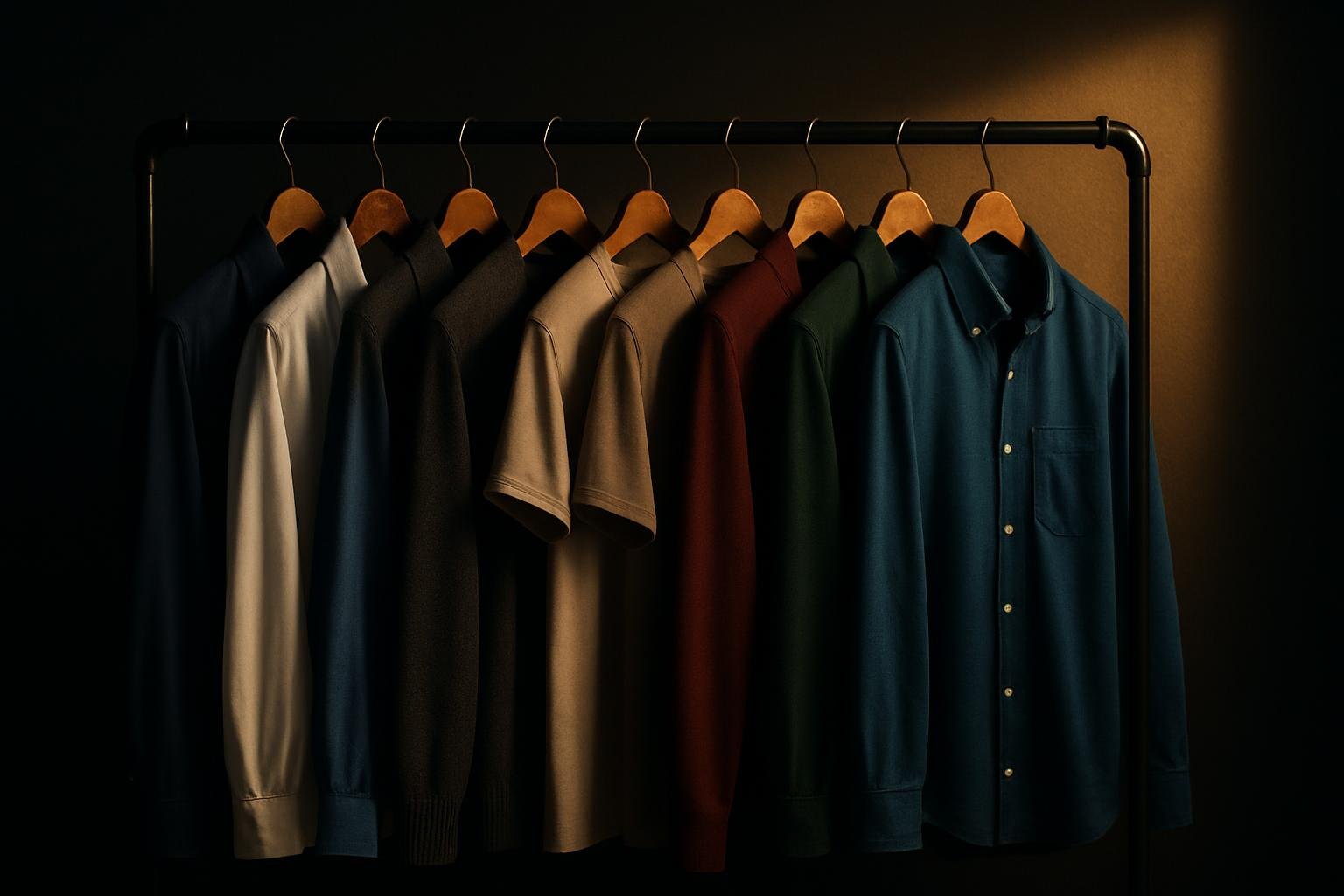
Stop guessing. Keep ten shirts that cover 95% of life without repeats getting obvious.
The list
- Navy Oxford button-down (all-year workhorse)
- Mid-blue chambray (texture for daytime)
- Off-white Oxford (smart casual)
- Charcoal knit polo (evening or travel)
- Taupe crewneck tee (under jackets)
- Stone or ecru tee (weekends, photos)
- Burgundy merino crewneck (date night layer)
- Teal knit polo (statement without shouting)
- Forest Oxford (fall anchor)
- Cobalt casual shirt (one bold option for energy)
Fit and fabric checkpoints
- Shoulder seam: lands exactly at the shoulder bone. If it drops, size down; if it pulls, size up.
- Sleeve: ends mid-bicep on polos/tees; at wrist bone on button-downs.
- Body: 2–3 inches of pinchable fabric at the waist. More = tailor or size down.
- Collar: slip one finger comfortably when buttoned; more means floppy on camera.
Care that keeps color honest
- Wash darks cold, inside out. Hang dry knits and tees to avoid twisting seams.
- Use a fabric shaver on knits; pills kill polish faster than color mistakes.
Shop fast: tags to look for and two tests
You don’t need a stylist. You need a plan and ten minutes in a fitting room.
What to look for on tags
- Color names to search: navy, charcoal, mid-blue, oxford blue, chambray, off-white, stone, taupe, burgundy, oxblood, forest, olive, teal, petrol, cobalt, French blue.
- Fabric words: Oxford, poplin, chambray, pique, jersey, merino, brushed cotton.
- Avoid: sateen, high-sheen polyester, micro-prints described as “micro-gingham,” “herringbone,” or “dobby” if you’re buying for photos.
Two quick tests before you buy
- Window selfie test: Step to a storefront window or fitting-room doorway, face the light, take a photo. If your face looks clearer than the shirt looks bright, it’s a yes.
- Jacket check: Throw on a navy or charcoal jacket (store sample is fine). If the shirt still separates cleanly, color depth is right.
Want a ranked plan without guessing?
Upload three photos to Suvant’s free image audit. You’ll get honest scores across face, hair, skin, body, style, grooming, photos, and presence — plus why. The audit turns into step-by-step quests, including exact shopping color targets and a camera checklist. It’s at app.getsuvant.com, and the full plan is $89/yr with a money-back guarantee.
Get the honest audit you've never gotten.
Three photos, eight scores, the real reasons behind each number, then a ranked plan to fix them one move at a time.
Get my free audit →