Look Sharp on Video Dates, Every Single Time
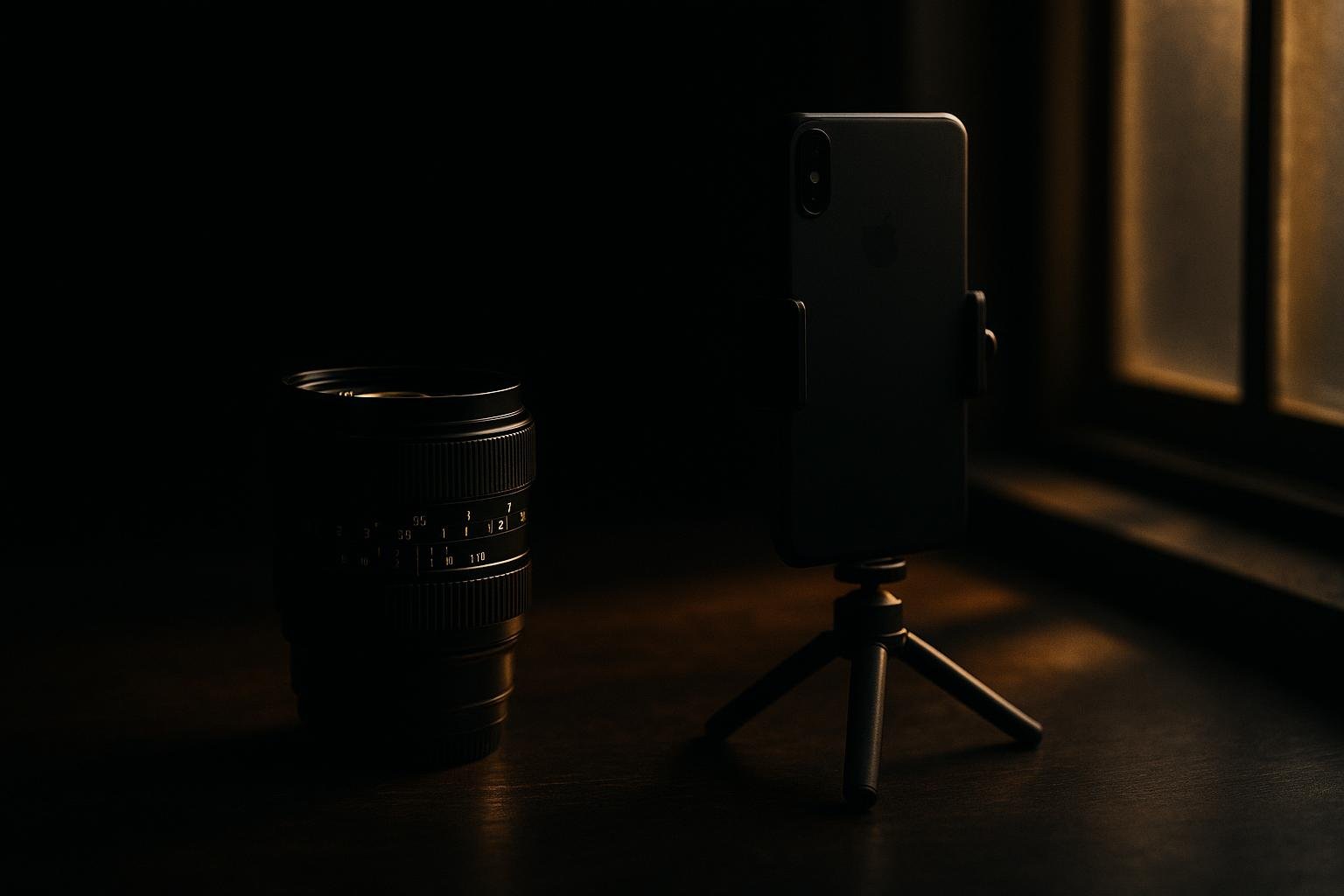
- Raise the camera to eye level, frame mid‑torso up, and sit 24–30 inches from the lens.
- Use one key light 45° off‑center at eye height; kill backlight and dim overheads.
- Sit 3–5 feet off a simple background with one or two intentional objects in view.
- Wired earbuds or a small USB mic beat laptop mics; soften echo with fabric.
- Wear mid‑tone solids with texture; avoid thin stripes, bright white, and shiny fabrics.
The 10-minute setup that makes you look better on video
You don't need a studio. You need a repeatable setup. Here’s the exact order, from zero to ready in ten minutes.
- Pick your spot (1 minute): Face a window if you have one. If it’s behind you, rotate your setup so the window is in front of you or at a 45° angle. Distance yourself 3–5 feet from the wall behind you.
- Raise the camera (1 minute): Eye-level lens is non-negotiable. Stack 3–5 books or use a laptop stand to raise your camera 6–8 inches so the lens lines up with your eyes. Tilt the screen so the top edge leans slightly forward to avoid under-chin angles.
- Frame yourself (1 minute): Sit 24–30 inches from the camera. Leave a thumb’s width of space above your head in frame. Show mid-torso up. Center your eyes on the upper third line of the frame.
- Light your face (3 minutes): Put a lamp or LED light 45° to your left or right at about eye height. Dim or turn off overhead lights if they cause shadows. If you only have a window, sit so it’s in front of you or just off to one side. Avoid any bright light directly behind you.
- Choose a clean background (1 minute): Keep it simple: a plant, a framed print, a lamp. Remove laundry, boxes, or anything you wouldn’t bring on a first date. If in doubt, take two minutes to box clutter out of frame.
- Fix your audio (1 minute): Plug in wired earbuds (inline mic at collarbone) or a small USB mic 8–12 inches from your mouth. Turn off fans. Close the door. Put a folded blanket off camera if your space echoes.
- Shine control and last looks (1 minute): Dab T‑zone with blotting paper or a clean tissue. A tiny touch of translucent powder on forehead, nose, and cheeks reduces glare. Check teeth quickly, smooth your collar, sip water.
- Connection and notifications (1 minute): Close heavy apps and extra browser tabs. Silence notifications. If Wi‑Fi is weak, move closer to the router or plug in an ethernet adapter.
That’s your repeatable routine. Practice it twice this week so it becomes muscle memory.
Camera angle and framing that flatter your face
Your camera should make you look like you, on a good day. Angles and distance do the heavy lifting.
- Lens at eye height: Too low = under-chin and nostrils. Too high = hunched vibe. Raise the lens so it meets your gaze.
- Distance sweet spot: 24–30 inches from the lens keeps features natural and reduces distortion. If you’re on a phone, use the rear camera on a stand when possible for better optics.
- Headroom: Leave a small gap above your head (about a thumb’s width on screen). Crop at mid‑torso, not neck. Shoulders visible = grounded presence.
- Eye-line: When you speak, look at the lens, not your own image. When you listen, you can look at their face. That mix feels natural without seeming shifty.
- Glasses glare: Tilt the frames down 2–3 degrees at the temples or lower your screen brightness 10–20% to reduce reflections.
- Posture cue: Sit on the front third of your chair. Feet flat. Roll shoulders back once. Imagine a string lifting the crown of your head. It reads as confident, not stiff.
Quick line if you need to adjust mid‑call: “Mind if I nudge my camera up a touch? I was getting the under-chin angle.” Simple, human, and you instantly look better.
If you want an honest read on your framing and presence, Suvant’s free image audit at app.getsuvant.com scores face, hair, skin, style, grooming, photos, and presence from three photos and explains the numbers. The full plan turns feedback into exact quests, like a barber brief or framing guide.
Lighting that helps, not hurts
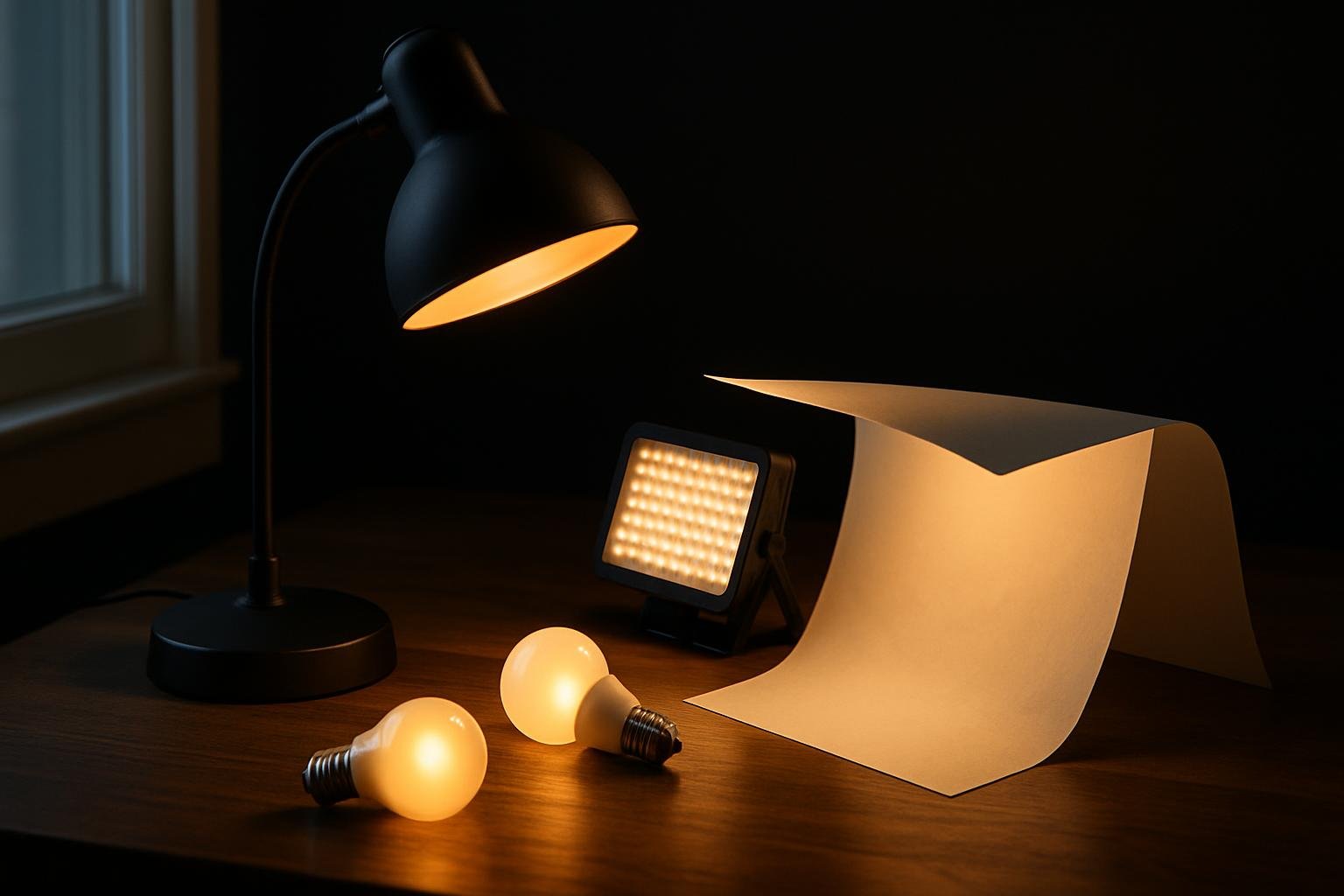
Good light smooths, defines, and makes eyes brighter. You can do it with the lamps you own.
- One key light, 45° off‑center: Place a lamp or LED panel slightly to your left or right at eye height. Aim it toward your face. This adds shape without harsh shadows.
- Use warm‑neutral bulbs: 2700–4000K color temperature looks natural indoors. Avoid overly cool “daylight” bulbs that can gray out skin on camera.
- Soften, don’t blast: If the light is harsh, bounce it off a white wall, or clip a plain white paper sheet in front as a diffuser (keep it a few inches from the bulb, safe from heat).
- Kill backlight: Any bright window or lamp behind you will force the camera to dim your face. Close the shade, turn that lamp off, or reposition so light is in front.
- Dim overheads: Overhead cans create eye sockets and shine. Dim them 50% or off if your key light and window are doing the job.
- Ring lights: Fine if placed slightly off‑center and dimmed so you don’t get saucer eyes. Don’t blast it straight on full power.
- Shine control: Minimize forehead and nose glare with blotting papers. A light dusting of translucent powder on T‑zone helps. For deeper detail, see our guide on reducing a shiny face in photos.
Want to go deeper on how to aim and balance lights for online photos and calls? Our breakdown of the best lighting for dating photos applies directly to video too.
A background that says you have your life together
Your space doesn’t need to impress. It needs to be clean, intentional, and calm so attention stays on you.
- Create depth: Sit 3–5 feet from the wall behind you. That slight blur reads as comfortable and modern, even on a webcam.
- Keep a simple anchor: One plant, one framed print, and a warm lamp make a complete background. That’s enough. Avoid photo collages or shelves crammed with objects.
- Color and contrast: Mid‑tone walls (gray, olive, navy) or a tidy bookshelf look great. If your wall is bright white, add a plant or lamp to break the glare.
- Box the mess: Two minutes: toss loose items into a basket and move it out of frame. Clear chair backs and doorknobs of hanging clothes.
- Camera test: Open your camera app, take a 10‑second video, and scan the frame. If an object draws your eye more than your face, remove it.
- Sound lives in your background too: Soft surfaces reduce echo. A rug, curtains, or even a folded blanket off camera makes you sound warmer.
Script if you need a second before the call: “Give me ten seconds to close this shade so you can actually see me.” Then do it. You’ll look better and you’ve shown care.
Audio and connection that don’t distract
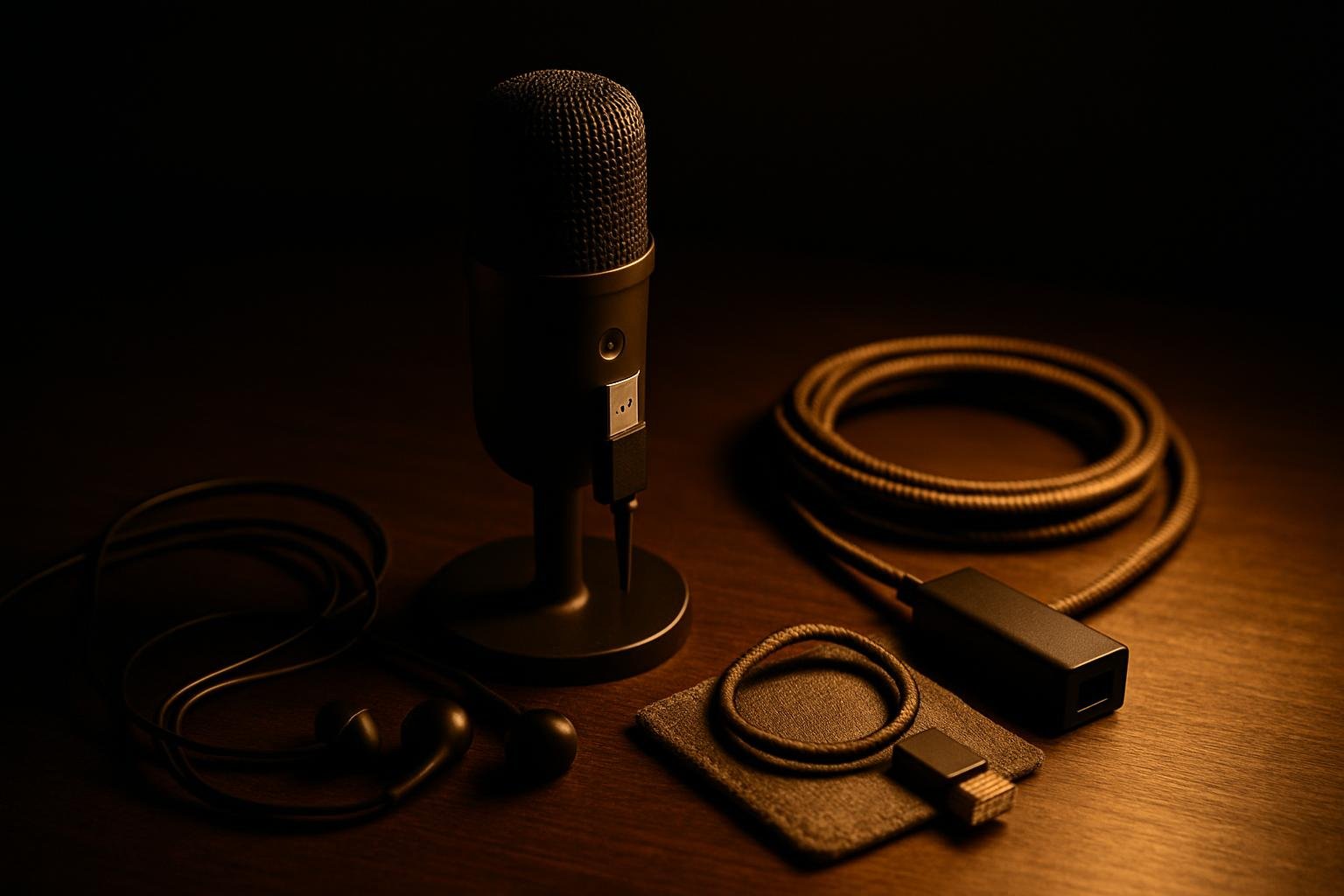
Your voice should be clear and close. Laptop mics hear the room. You want the mic to hear you.
- Best quick mic: Wired earbuds with an inline mic. Place the mic at your collarbone so it doesn’t rub fabric. If the wire taps your zipper, flip the mic to the other side.
- Small upgrade: A compact USB mic 8–12 inches from your mouth (slightly off to the side) sounds rich without blocking your face.
- Kill noise: Turn off fans and AC for the first 30 minutes. Silence phone and desktop notifications. Close the window if the street is loud.
- Soften echo: If your room is lively, add a rug, close curtains, or place a folded blanket on a nearby surface just out of frame.
- Quick sound check: Record a 10‑second voice memo from your seat and play it back. If you hear hiss or hum, move the mic away from your laptop’s vents and try again.
- Bandwidth stability: Close heavy apps and extra tabs. If you can, connect over ethernet with a small USB adapter. If not, sit near your router and use the 5 GHz network.
Polite line if audio glitches: “You’re a bit choppy on my end—mind if I switch to earbuds so it’s easier to hear you?” Clear, considerate, and it fixes most issues fast.
What to wear on camera so you read as sharp
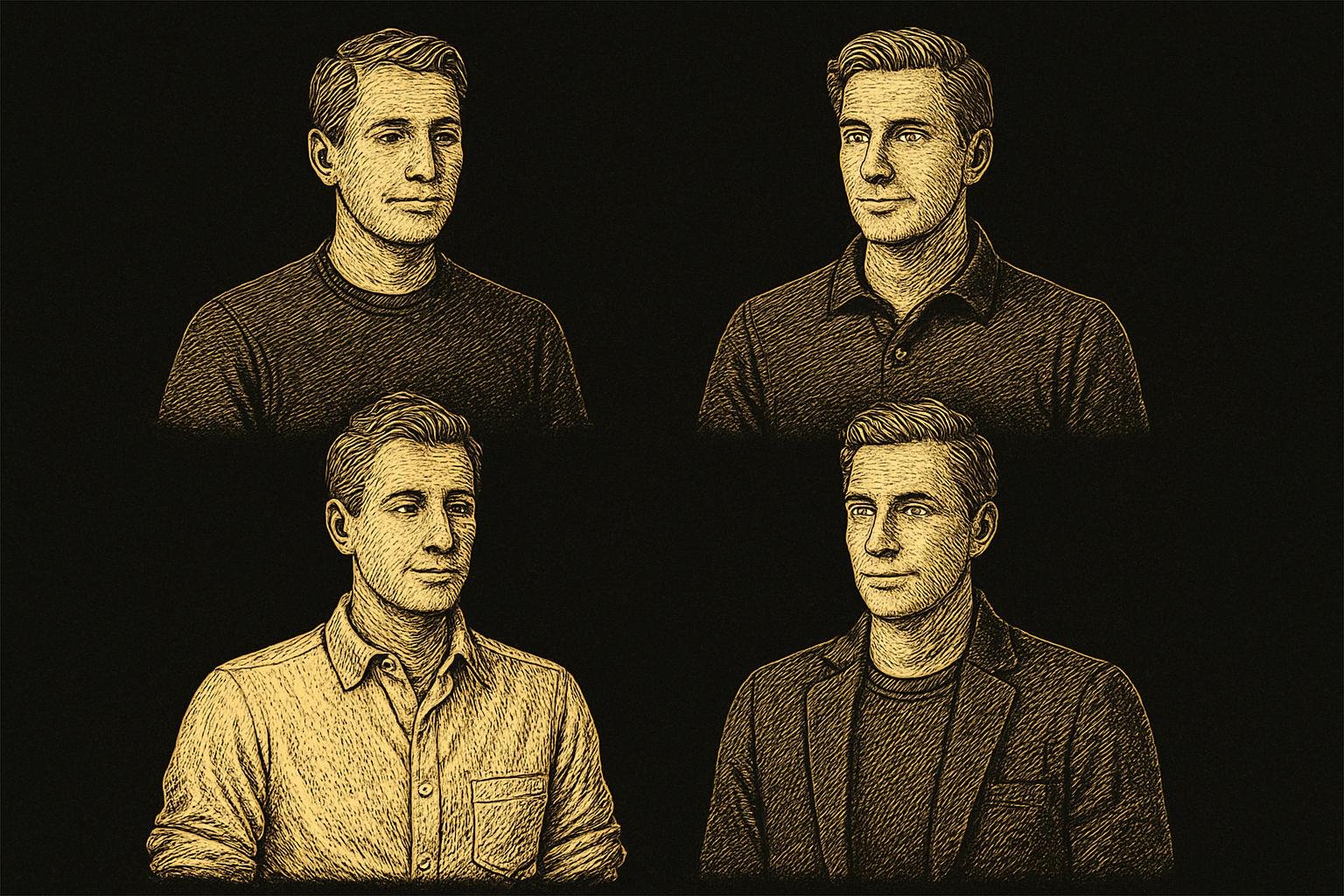
On video, fabric, fit, and color matter more than labels. The camera likes mid‑tones, texture, and clean lines.
- Stick to mid‑tone solids: Charcoal, navy, olive, tobacco, rust, heathered blues. Avoid bright white (blows out) and deep black (loses detail). Cream and soft gray work well.
- Texture over shine: Knit polos, merino crewnecks, heathered tees, oxford cloth, brushed flannel. Skip satin, slick polyester, or anything that flashes light back.
- Collar clarity: A knit polo or OCBD (oxford button‑down) frames your neck without looking stiff. If you’re in a tee, pick a well‑fitting crewneck (no bacon collar) or a Henley with 1–2 buttons done.
- Patterns: Big, simple patterns only. Thin stripes and tight checks can shimmer (moiré) on camera.
- Fit check: Shoulder seams meet the edge of your shoulders. No pulling across the chest when you sit. If sleeves are loose, push them once to the forearm for structure.
- Layer lightly: A fine‑gauge cardigan or unstructured sport coat cleans up a tee or knit polo and reads as intentional, not formal.
- Glasses and glare: Clean lenses. Tilt frames down 2–3° at the temples if reflections show. Position your key light slightly off the side the lenses reflect most.
- Grooming touchups: Comb brows, smooth beard lines with a quick brush, and dab powder on shiny spots. Keep lip balm handy so lips don’t look dry under light.
Need help choosing an outfit beyond the frame? Our guide on what to wear on a first date over 40 pairs well with this list.
Run of show: before, during, and after the call
This is how to keep the call easy and intentional without feeling staged.
15 minutes before
- Do the 10‑minute setup. Then record a 10‑second test clip. Watch for angle, glare, and audio. Adjust once.
- Put a glass of water within reach. Close other apps. Silence notifications. Set your phone face down, out of reach.
- Have one neutral opener ready: “How’s your week been treating you?” or “What are you drinking tonight?”
During
- Start with presence: look into the lens for your hello, then relax your gaze to the screen.
- Hands in frame now and then. A mug or pen is fine. It reads as engaged, not fidgety.
- Mind the mic: avoid rubbing your collar or necklace against the mic wire.
- Brighten, don’t interrogate: “What are you into outside work these days?” then follow a thread.
- If lighting shifts (sunset): “Let me click this lamp on—there we go.” Two seconds, then back to them.
Close and next step
- End with a clear read: “I’ve really enjoyed this—want to grab coffee this weekend?”
- If you’re unsure: “I’d like to continue this in person—can I text you tomorrow to pick a spot?”
- After you hang up, jot one note you liked about the convo. It helps you follow up authentically.
If you want outside eyes on your overall presentation—face, hair, skin, style, grooming, photos, presence—Suvant’s audit is free and takes about two minutes. The full plan ($89/yr) turns feedback into ranked next moves with exact deliverables, and it’s backed by a money-back guarantee.
Get the honest audit you've never gotten.
Three photos, eight scores, the real reasons behind each number, then a ranked plan to fix them one move at a time.
Get my free audit →