Stop Looking Shiny in Photos, Starting Today
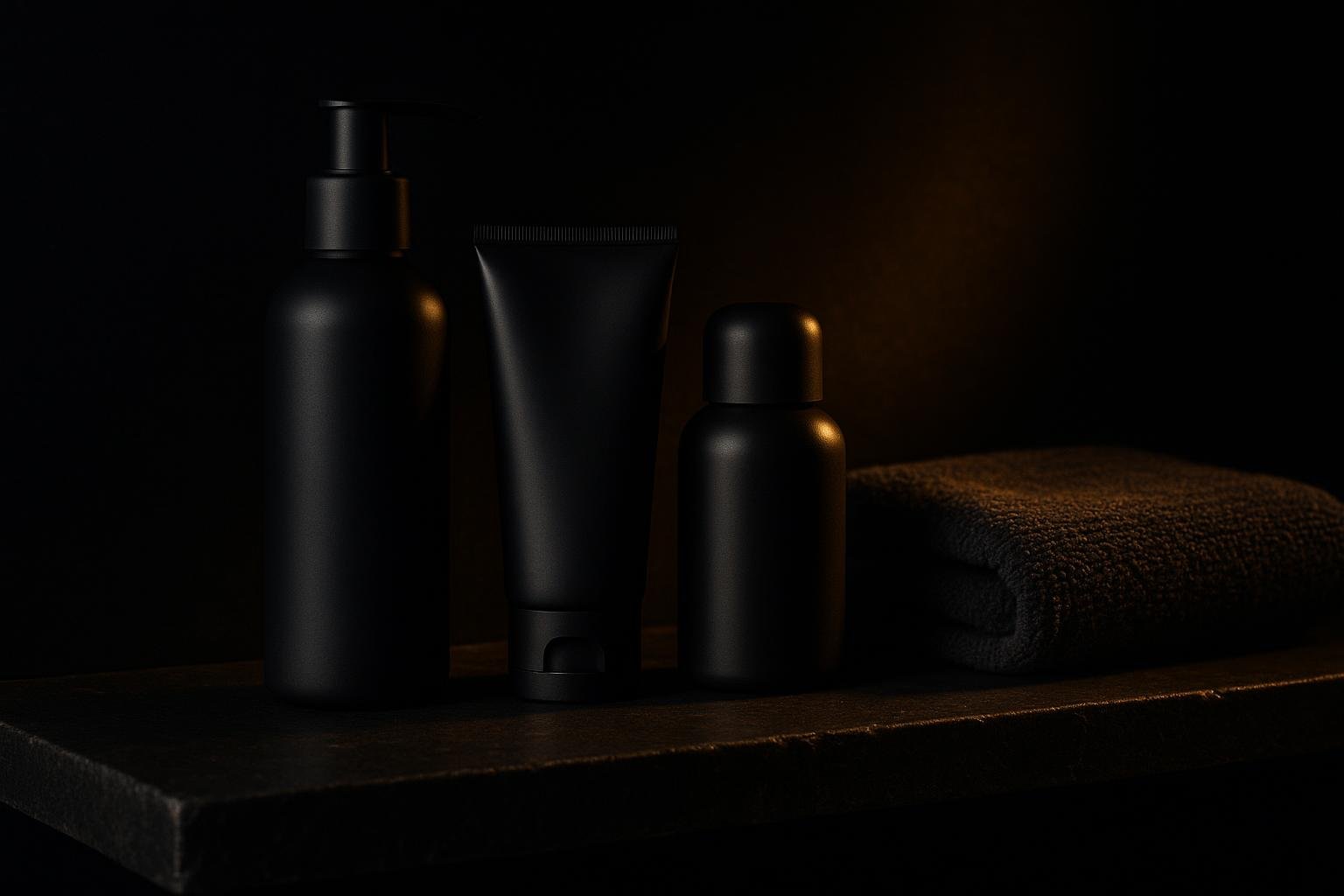
- Five-minute pre-photo plan: cleanse, blot, matte moisturize, translucent powder on T‑zone, soft light.
- Carry a pocket kit: blotting papers, mini powder, travel brush, tissues, and a matte lip balm.
- Choose camera-friendly products labeled matte or oil-control; avoid dewy, illuminating, or high-shine finishes.
- Face a window, avoid overhead light, and angle the forehead slightly down to cut hotspots.
- A gentle morning-and-night routine reduces baseline shine over 2–4 weeks without over-drying.
The 5-minute fix before any photo
If your face reflects every ceiling light, you don’t need a new face. You need a short sequence. Do this, in order, when you have five minutes before a photo.
- Rinse (30 seconds). Splash lukewarm water, then one cold rinse. Pat dry with a clean towel or tissue. No rubbing. This resets surface oil without stripping.
- Blot (20 seconds). Use blotting papers on the T-zone: center forehead, sides of nose, top of cheeks, chin. Press, hold 2–3 seconds, lift. Two sheets max. If you don’t have papers, fold a clean tissue and use the unprinted side.
- Apply a pea of matte moisturizer (45 seconds). Look for words like “matte” or “oil-control.” Warm a pea-sized amount between fingers. Press into T-zone and sides of nose; feather the leftovers over cheeks. Wait 60 seconds. If you’re already moisturized, skip to step 4.
- Set with translucent powder (60 seconds). A colorless, pressed translucent powder is the camera’s friend. With a small fluffy brush or clean cotton pad, tap off excess and press—not rub—onto the T-zone. Focus on the center 2 inches of your forehead, nose bridge/sides, and the tip of the chin. If you see powder, you used too much. Buff lightly to invisible.
- Check the light (60 seconds). Face a window or step into open shade. Avoid standing directly under downlights or the noon sun. Angle your forehead 5–10 degrees downward, turn your head 5–15 degrees off-center. Hotspots usually live on the forehead and nose; that tiny tilt moves the glare off the lens.
- Final dab (15 seconds). If a hotspot returns, dab once with a blotting paper and re-touch a whisper of powder only where it shines.
That’s it. No one will see the steps. They will see a calmer, even finish that reads confident on camera.
Build a pocket anti-shine kit
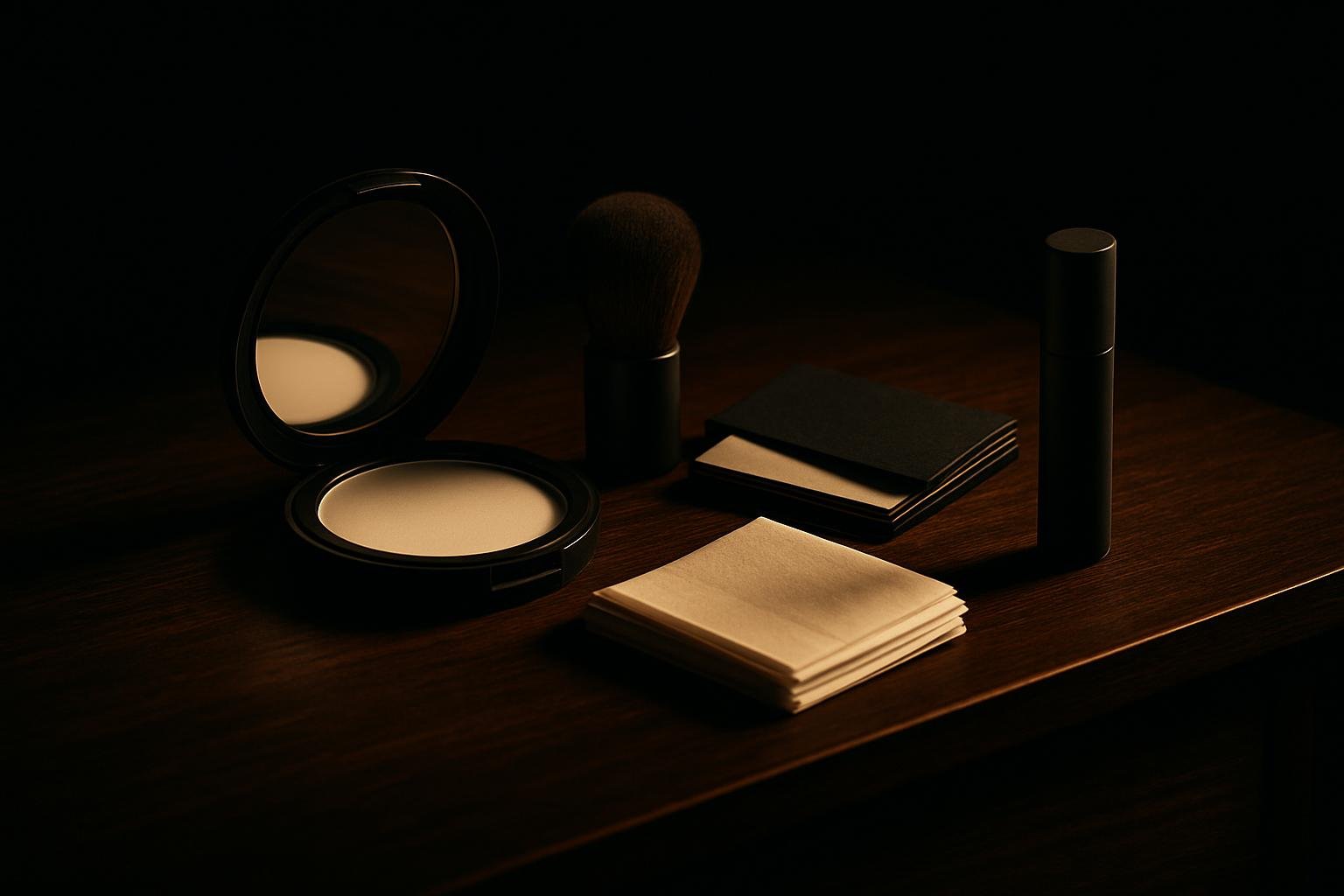
You don’t need a bathroom to fix shine. Keep a slim kit in your car, desk, or jacket. Budget-friendly, airline-legal, and takes up less space than a wallet.
What to carry
- Blotting papers (50–100 sheets). Rice or linen papers, no shimmer. Cost: usually $5–$10. Replace monthly if you use them often.
- Pressed translucent powder + small brush. Choose “translucent” or “colorless.” Compact size with a mirror helps. A travel brush (or clean cotton rounds) keeps it neat.
- Mini matte moisturizer or gel (15–30 mL). Look for oil-control or gel-cream textures. Avoid anything labeled dewy, glow, or illuminating.
- Tissues. For emergency blotting or to diffuse powder that went on heavy.
- Matte lip balm. Shiny lips read greasy on camera. Choose a natural, no-sheen finish.
How to use it in public without fuss
- Step to the side, face away from direct light. Two quick blots, one press of powder on the nose, you’re back in under a minute.
- For glasses glare: a single blot across the bridge and nose pads reduces slip and reflections.
- Wipe the brush weekly with a spritz of brush cleaner or mild soap and water; let it dry overnight.
Set a calendar reminder to restock every 8–12 weeks so you’re never caught without it.
Control the light, not just the oil
Shine is oil plus the wrong light. Even with perfect prep, bad light will bounce right off the forehead and nose. Move the light; you win.
Position and angles
- Face a window from 3–6 feet away. If the sun is blasting, step to the side so the light is soft and even.
- Avoid overhead spotlights (office can lights, porch lights). Step forward until the light hits from the front, or take two steps to the side.
- Angle the forehead down 5–10 degrees and turn your head slightly off-center. This pulls hotspots off the lens without looking posed.
Environment tweaks
- Shiny backgrounds amplify face shine. Avoid glossy tiles, mirrors, and stainless steel behind you. Matte walls, fabric backdrops, or foliage are your friends.
- Hats and brims can block overhead glare outdoors. Choose matte fabrics; avoid glossy leather bills.
- Glasses: Clean lenses, tighten screws, and nudge frames slightly lower so the top rim sits below your brows. A tiny downward chin tilt reduces lens reflections.
Phone camera settings you can control
- Lower exposure one notch by tapping your face on screen and sliding the sun icon down a hair. It keeps highlights from clipping.
- Turn off beauty/smoothing filters. They can make highlights look plastic and catch more glare.
If you want blunt feedback on which photo angles and lighting flatter you most, upload three photos to Suvant’s free image audit at app.getsuvant.com. You’ll see where light and finish are hurting your shots and get ranked next moves.
A simple routine that reduces shine over time
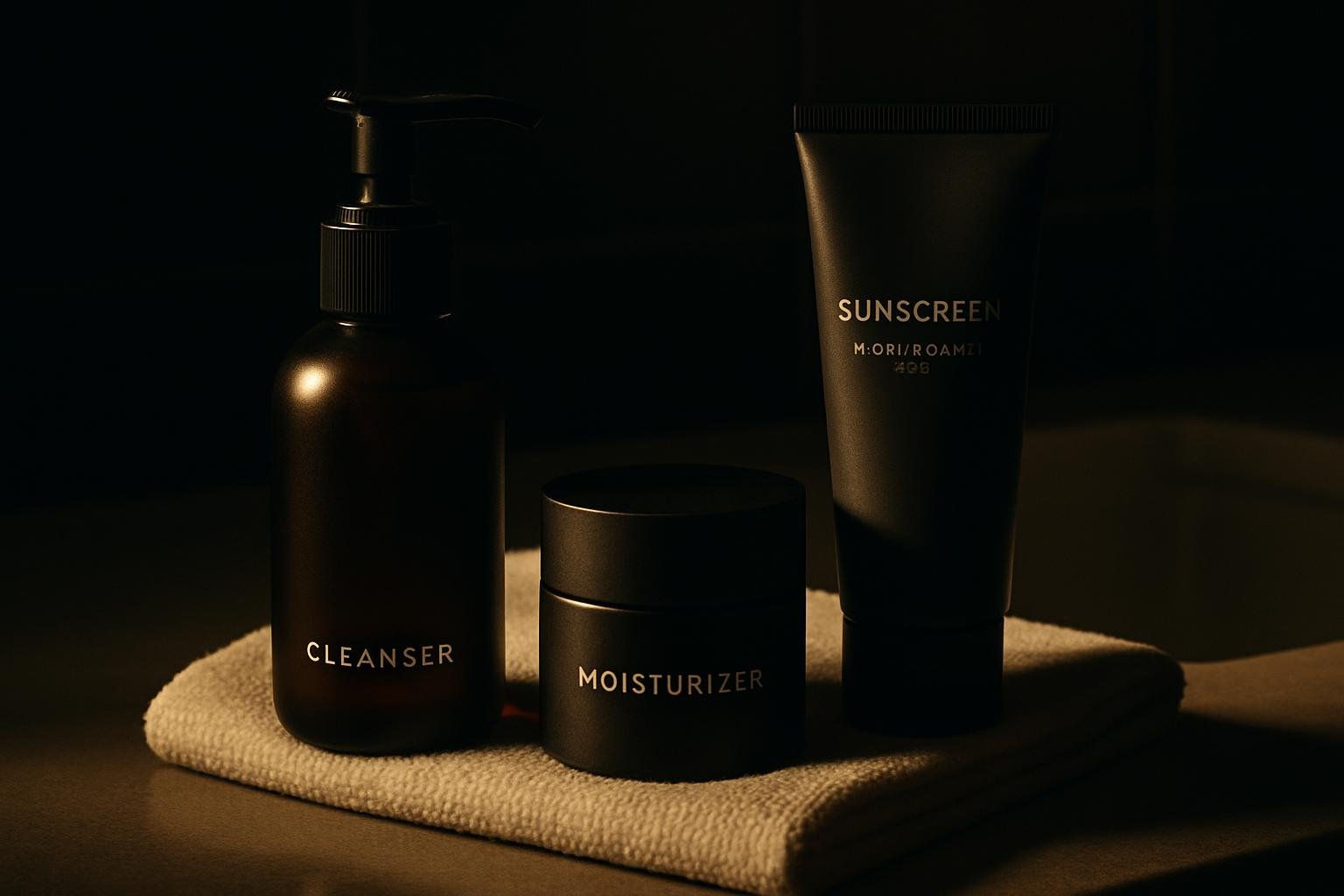
Quick fixes help today. A light routine steadies things for the next month and beyond. Keep it simple so you actually do it.
Morning (3 minutes)
- Gentle cleanse (30 seconds). Use a mild gel or cream cleanser. Work it for 10–15 seconds on the T-zone, then the rest of the face. Rinse. If your skin feels tight, you’re using something too harsh.
- Light, matte moisturizer (30 seconds). Pea-sized amount, pressed into the T-zone and blended out. Skip heavy creams.
- Matte SPF (30 seconds). Choose a broad-spectrum, matte or oil-control sunscreen. Apply a nickel-sized amount to face and neck. Let it set 2–3 minutes before clothing. For help picking one, see this SPF guide.
Evening (2–4 minutes)
- Cleanse. Same gentle cleanser. If you wore sunscreen or were outdoors, do a double cleanse: massage a light cleansing balm or oil for 20 seconds, rinse, then your regular cleanser.
- Moisturize lightly. Gel-cream or oil-free lotion, pea-sized. If your skin is combination, use more on cheeks and less on the T-zone.
Weekly (1–2 times, not daily)
- Exfoliate gently. A mild chemical exfoliant (for example, a low-dose salicylic or lactic acid) 1–2 evenings a week can smooth texture so light scatters more evenly. Go light, patch test, and skip if you notice irritation. When in doubt, ask a skincare professional.
- Replace pillowcase and face towel weekly. Clean fabrics cut down on oil transfer and shine the next morning.
For a deeper but still manageable routine for mature skin, read our over-40 skincare guide. Keep the focus on gentle cleansing, matte moisture, and consistent SPF.
Camera-safe products and how to apply them
You don’t need a makeup bag. You need the right finishes in the right places. These are discreet, quick, and read natural on camera.
Choose finishes, not hype
- Labels to look for: matte, oil-control, shine-free, soft-focus, translucent.
- Labels to avoid: dewy, luminous, glow, radiant, illuminating, high-shine.
Application map (60–90 seconds total)
- Mattifying primer (optional, pea-sized). Press into the center forehead, nose, and chin. Skip cheeks unless they shine.
- Translucent powder (pressed, colorless). Press and roll on the T-zone with a small brush. Leave the outer face slightly more natural; full-matte everywhere can look flat.
- Tinted moisturizer or skin tint (optional). If redness is your issue, use 1–2 small dots only where needed (sides of nose, around mouth), then set lightly with powder.
- Blot between shots. One sheet, then a tiny powder touch-up. Don’t stack product; thin layers outperform thick ones on camera.
Beard and brows help, too
- Keep the beard matte. Skip glossy beard oils on photo days. Use a tiny dab of light balm, warmed until clear, then press through to reduce sheen.
- Brush brows upward once. Oily brows can flash. A quick blot over the brow area, then a pass with a clean, dry toothbrush tames stray shine.
If you want a no-guess plan custom to your photos, Suvant’s audit turns three photos into exact next steps—down to which zones to de-shine and how to brief your photographer—plus monthly re-audits to track what’s working.
A quick playbook for dating-app photos
Shine shows up hardest in profile photos because the lens is close and the light is uncontrolled. Here’s a tight plan for your next mini-shoot.
48–24 hours before
- Hydrate normally and sleep 7–8 hours. Tired skin reflects light unevenly.
- Skip new products. Stick to your usual routine to avoid surprise shine or texture.
- Trim facial hair the day before, not the morning of, to let the skin settle.
Morning of
- Gentle cleanse, matte moisturizer, matte SPF. Give SPF 10 minutes to set before clothes.
- Pack your pocket kit. Papers, powder, brush, tissues, matte lip balm.
One hour before
- Test light at your location. Find open shade or face a bright window. Take two test shots and lower exposure one notch.
- Blot and powder the T-zone. Keep cheeks and jaw softer so your face looks alive, not plastic.
During the shoot
- Check every 10–15 frames. Hotspot? Blot once and re-press powder on nose and center forehead only.
- Adjust angles. Slight chin-down, head 5–15 degrees off-center. If you wear glasses, tilt the frames down a hair to dodge reflections.
When you’re ready to level up your shot selection and composition, this guide on dating profile photos over 40 pairs perfectly with the anti-shine plan above.
Get the honest audit you've never gotten.
Three photos, eight scores, the real reasons behind each number, then a ranked plan to fix them one move at a time.
Get my free audit →