Stop Flyaways: Keep Your Hair Neat From Morning to Night
- Calm flyaways fast: dampen, directional-comb, tiny dab of product, then lock with a cool shot or light hairspray.
- Your routine order matters: condition, pre-style, blow-dry with direction, finish with hold, then optional anti-humidity mist.
- Use the right tool for the job: cream or paste for control, clay for texture, hairspray to set—pea-sized amounts go far.
- Clean tapers and regular trims reduce friction and static, which means fewer flyaways between haircuts.
- Carry a minimal kit: folding comb, travel hairspray, mini cream, and a small mist bottle for quick resets.
Quick fixes: tame flyaways in 90 seconds
You’re at work or walking into a date and the hair halo shows up. Use this exact sequence. It works with what you already have.
- Add a touch of water. Wet your hands and shake once. Lightly pat the flyaway area. You want damp, not wet. Water adds weight and resets shape.
- Comb with direction. Use a fine-tooth comb. Pull hair from the root in the direction you wear it (side part: from crown toward part; slick back: from front to back). Two slow passes beat ten fast ones.
- Micro-dose product. Rub a half-pea of lightweight cream or paste between palms until invisible. Tap only the top layer and sides—avoid the scalp. If you have nothing, a pinhead of unscented hand lotion on fingertips can work in a pinch. Don’t overdo it.
- Lock it. If you’re near a dryer: hit a 10-second cool shot while holding hair in place with the comb. No dryer? A 1-second mist of light-hold hairspray from 10–12 inches away does the same. Shield forehead with your hand.
- Hands off. Set it and stop touching it. Fingers add oil, break the set, and invite more static.
That sequence covers 95% of flyaway moments without restarting your whole day.
The 10-minute morning routine that prevents flyaways
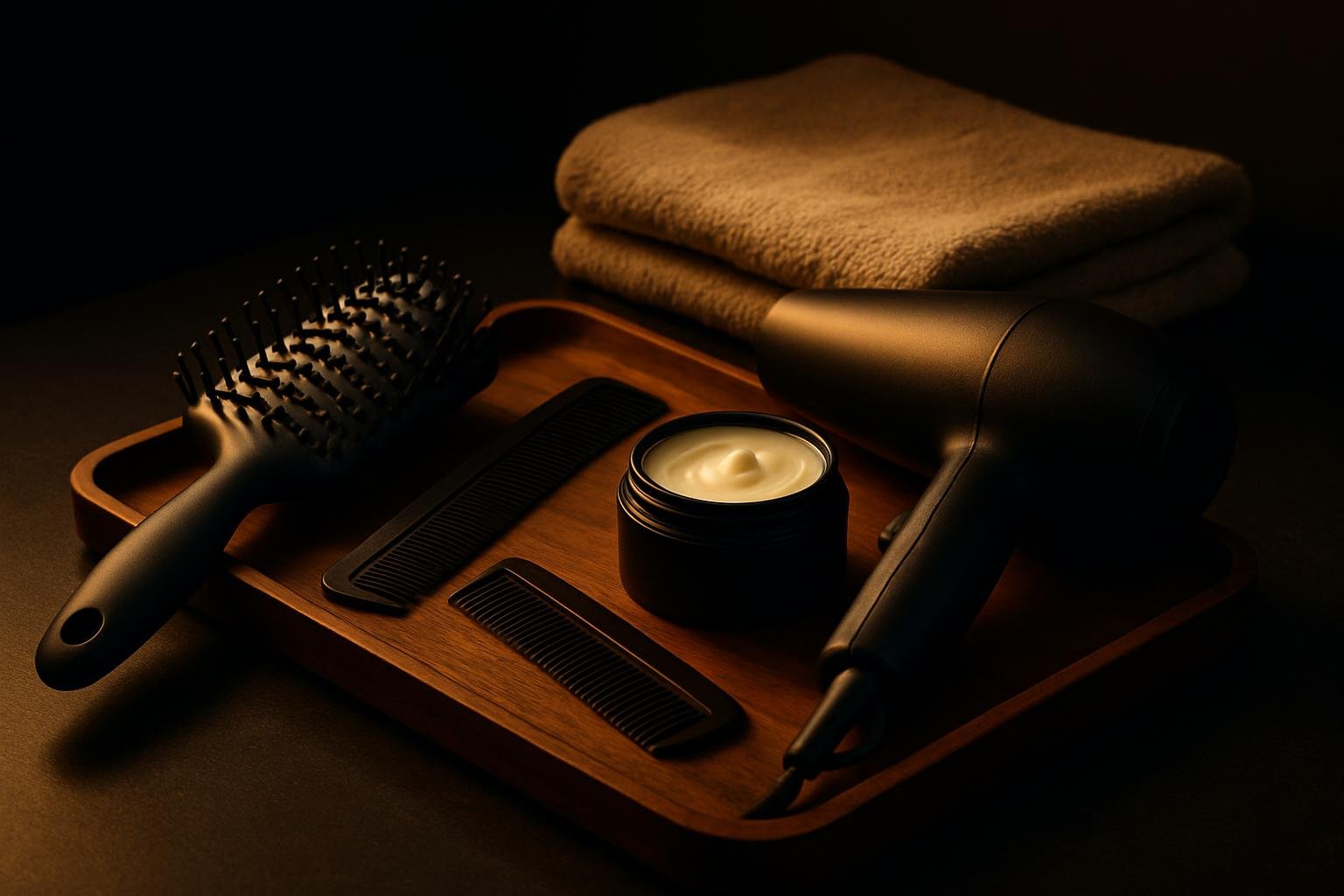
Flyaways are mostly a prep problem. This routine builds control without stiffness. Total time: about 10 minutes.
- Wash rhythm: Shampoo 2–3x per week, not daily. Rinse daily if you sweat. Over-washing creates dryness and static, which creates flyaways.
- Condition every time you wet your hair. Work a nickel-sized amount from mid-length to ends. Leave for 60 seconds. Rinse until hair feels slippy, not squeaky.
- Towel-dry the right way. Pat and squeeze. No rough rubbing. Leave hair 70% dry (damp but not dripping).
- Pre-style on damp hair. Use a pea-sized amount of light cream or leave-in conditioner if your hair is dry or frizzy; use sea-salt-free cream for straight hair. Work from back to front, roots to ends.
- Blow-dry with direction, not heat. Medium heat, low speed, nozzle on. Brush or comb in the direction you wear it. Keep dryer 6–8 inches away. Do three passes: sides down and back, crown flat, top in your style direction.
- Cool shot to set. When it looks 90% right, hold the shape with your comb and hit 15 seconds of cool air. This sets the cuticle smooth.
- Finish with hold. Rub a pea of paste (matte) or pomade (shine) until clear on hands. Tap the surface layer first, then detail flyaways at temples and crown with fingertips.
- Optional anti-humidity mist. In humid climates, one light mist of flexible-hold hairspray from a forearm’s length locks the finish without the helmet.
If you’re rushing: do steps 2, 4, 5, and 7. That’s the 4-minute version.
Products that actually help (and how to use them)
Flyaways happen when hair is too dry, too light, or not set. Match the tool to the job and keep amounts small. Order matters.
Pre-stylers (on damp hair)
- Leave-in conditioner: Best for dry, coarse, or wavy hair. Use a pea to dime size. Controls frizz and adds weight without grease.
- Light cream: Universal base. Adds slip so blow-drying lays hair flat. Pea-sized for short hair; dime for medium lengths.
Finishers (on dry hair after blow-dry)
- Paste (matte, medium hold): Best all-rounder for neat but natural. Pea-sized. Emulsify until invisible before touching hair.
- Pomade (shine, light–medium hold): For slick looks or to compress surface hairs. Start smaller than pea; add if needed.
- Clay (matte, strong hold): Great for thick hair that puffs. Rice-grain to pea. Too much causes static—use sparingly and finish with a light mist.
- Flexible-hold hairspray: The set. One 1–2 second cloud from 10–12 inches. Aim over the top and sides, not into the roots.
What to skip or minimize
- Sea salt sprays: They roughen texture. That increases flyaways unless you follow with a smoothing finisher.
- Heavy oils: They can separate strands and highlight flyaways. If you use oil, one tiny drop rubbed fully into hands and only on ends.
- Powders: Volume powders lift, which can kick up surface hairs. If needed, apply under the top layer.
Application rules
- Start with half what you think you need. You can add. Removing is a shower.
- Work product from back to front and under to over so the surface stays clean.
- Use a comb for shape and fingers for detail. Finish with a cool shot or spray to set.
Want a second set of eyes on whether your finish is matte enough or your hold is too light? Suvant’s image audit scores your hair and grooming, then turns that into exact next moves, like a written barber brief and product type guidance. It’s quick to try at app.getsuvant.com.
Haircut habits that quietly kill flyaways
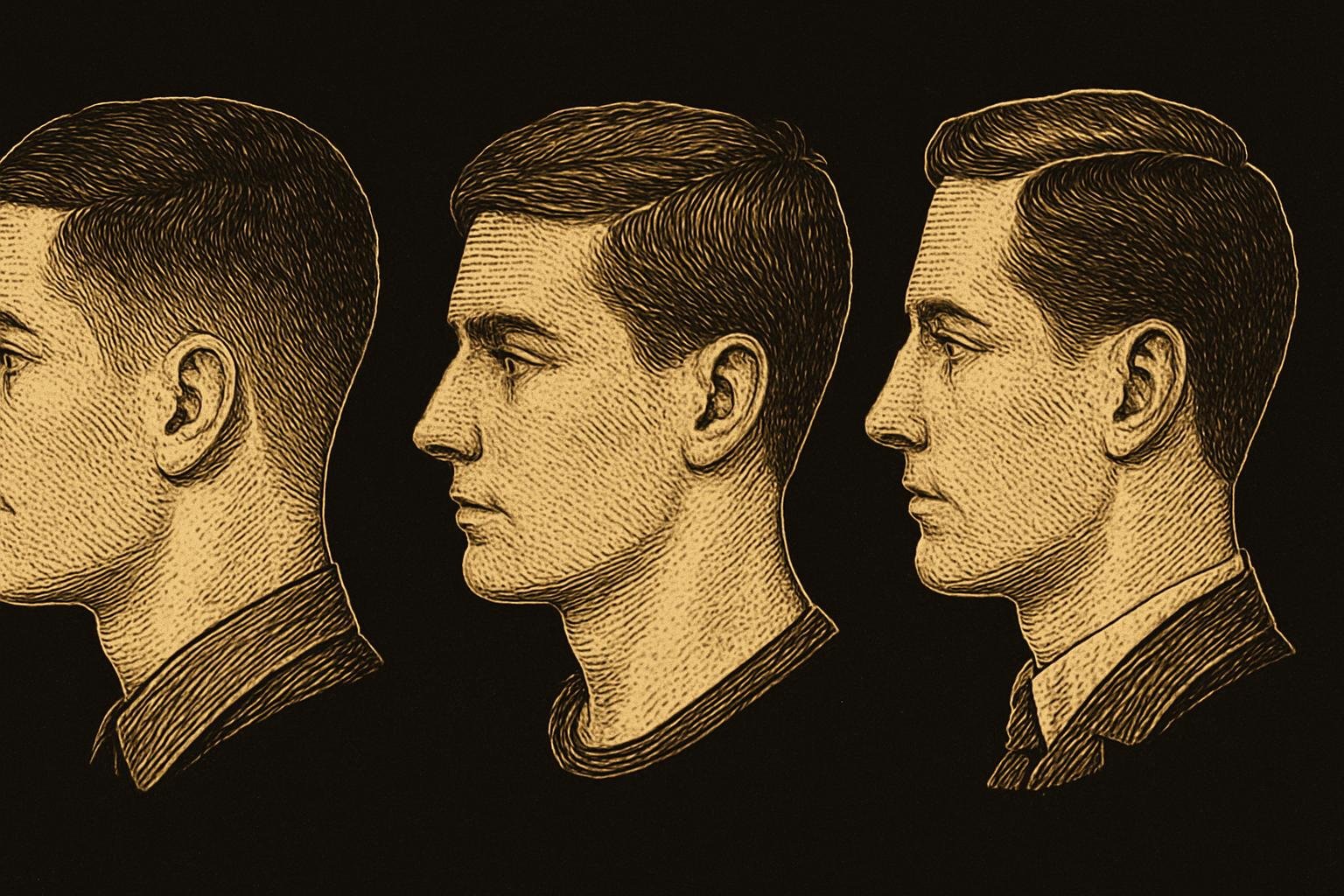
Good prep helps, but your cut sets the ceiling. Clean edges and balanced weight reduce the daily battle. Here’s what to ask for and when.
Timing
- Rebook every 3–5 weeks for short styles; 5–7 weeks for medium. As sides grow out, they push up and create flyaways, especially around temples and crown. If you’re unsure, see how often to get a haircut.
Barber brief (say this)
- “Keep the sides tidy with a low taper, #3 guard blending to scissor-over-comb at the temples. Avoid harsh weight lines.”
- “On top, leave about 1–1.5 inches, but remove bulk where it puffs. A few point-cuts for texture, not choppiness.”
- “Natural neckline, softly tapered. No squared shelf that will flip up in two weeks.”
- “Finish with a cool blow-dry laying everything in my usual direction.”
Why this works
- Low taper keeps edges short where hair tends to kick out (sideburns, nape) without exposing scalp.
- Scissor-over-comb removes weight cleanly, so hair lays down instead of ballooning and sprouting flyaways.
- Soft texture breaks up bulk without spikes. Too much choppy texturizing equals more pokey ends.
If speaking up in the chair is tough, read how to talk to your barber and bring a photo of your best hair day. Specific beats “short but not too short.”
Your office-and-gym kit for mid-day fixes
A tiny kit prevents small flyaways from becoming a full reset. Keep this in your desk or bag.
- Folding fine-tooth comb. Directional control without bulk.
- 30–50 ml water mister. Two sprays re-activate morning product.
- Travel hairspray. One-second cloud to set after combing.
- Mini cream or paste. A contact-lens case works as a leak-proof micro tub.
- Face tissues. Blot forehead before spraying so the set sticks to hair, not skin.
How to use it in 45 seconds
- Mist twice from 8–10 inches. Comb into place.
- Tap a rice-grain of cream on stubborn spots (temples, crown swirl).
- Hold with the comb and give a 1-second spray. Wait 5 seconds. Close the comb and go.
Hat and hoodie discipline
- If you must wear one, put it on after hair is fully dry and set. Taking a hat off while hair is warm creates dents and flyaways.
- Choose smooth linings (satin or tight cotton) instead of rough knits that create friction.
Troubleshooting by hair type (and common culprits)
Straight, fine hair
- Problem: Static and separation make every stray visible.
- Fix: Use leave-in conditioner as your pre-styler and finish with paste, not clay. Blow-dry on low speed with nozzle pointing down the hair shaft. One light mist of hairspray to set.
Thick, wavy hair
- Problem: Bulk puffs out at the sides; crown sprouts.
- Fix: Pre-style with a light cream. Blow-dry with a vented brush, pulling sides down and back. Finish with a clay pea, then soften the surface with two fingers coated in a drop of cream.
Curly hair
- Problem: Frizz halo and lifted roots.
- Fix: After conditioning, apply leave-in and diffuse on low heat/low speed. Don’t touch while drying. Finish with a cream or soft pomade scrunched on the outer layer, then a light spray set.
Thinning hair
- Problem: Flyaways draw attention to sparse areas.
- Fix: Keep sides tight with a low taper and avoid fluffy tops. Use paste over clay and finish with minimal spray. For cut strategy ideas, see thinning hair style options.
Going gray
- Problem: Gray strands are coarser and springy, which shows as flyaways.
- Fix: Condition every wash, pre-style with leave-in, and finish with a touch more cream than you used in your 20s. If you’re deciding whether to blend or keep it natural, read going gray: keep it or dye it.
Environmental triggers
- Dry air/static: Use a humidifier at home in winter and a leave-in on dry days.
- Humidity: Finish with flexible hairspray and avoid over-touching after you step outside.
- Workout sweat: Post-gym, rinse hair, condition 60 seconds, and reset with the 4-minute routine (steps 2, 4, 5, 7 above).
If you want your routine sanity-checked with photos, Suvant’s free image audit scores hair, grooming, and style with clear reasons and turns that into ranked next steps. If you like the plan, the full program includes exact deliverables, monthly re-audits, and a money-back guarantee.
Get the honest audit you've never gotten.
Three photos, eight scores, the real reasons behind each number, then a ranked plan to fix them one move at a time.
Get my free audit →