Get the Cut You Meant: Talk So Barbers Get It
- Lead with numbers: clipper guard on the sides and inches to remove on top.
- Specify neckline shape, sideburn length, and texture vs blunt on top.
- Bring one clear reference photo and explain what to copy and what to change.
- Check in mid-cut: confirm side length, top length, and neckline before it’s final.
- Leave with a maintenance plan: product, styling steps, and your next appointment date.
Say this to start strong
You don’t need hair jargon. Your barber needs a short brief: how short on the sides, how much off the top, how you style it, and how clean you want the edges. Lead with numbers and finish with finish.
- Sides: “I want a Guard 2 on the sides, tapered at the edges.” (Swap your guard number.)
- Top: “Take off about one inch. Keep some texture, not a blunt shelf.”
- Neckline & sideburns: “Tapered neckline, not squared. Sideburns to the middle of the ear.”
- Blend & part: “Soft blend into the top. I don’t want a hard shaved part.”
- Finish: “I style it matte with light hold. I wear it forward with a slight lift.”
Full script you can read: “Guard 2 on the sides with a clean taper at the temples and nape. Take one inch off the top and add texture so it doesn’t look blunt. Tapered neckline, sideburns to mid-ear. Soft blend, no hard part. I style it matte, forward with a little lift.”
Two-minute version if you’re unsure: “Short on the sides, not skin. Keep enough on top to push back with light texture. Taper the neckline, sideburns mid-ear. Can you show me how you’d style it matte?”
Know your numbers (guards and inches)
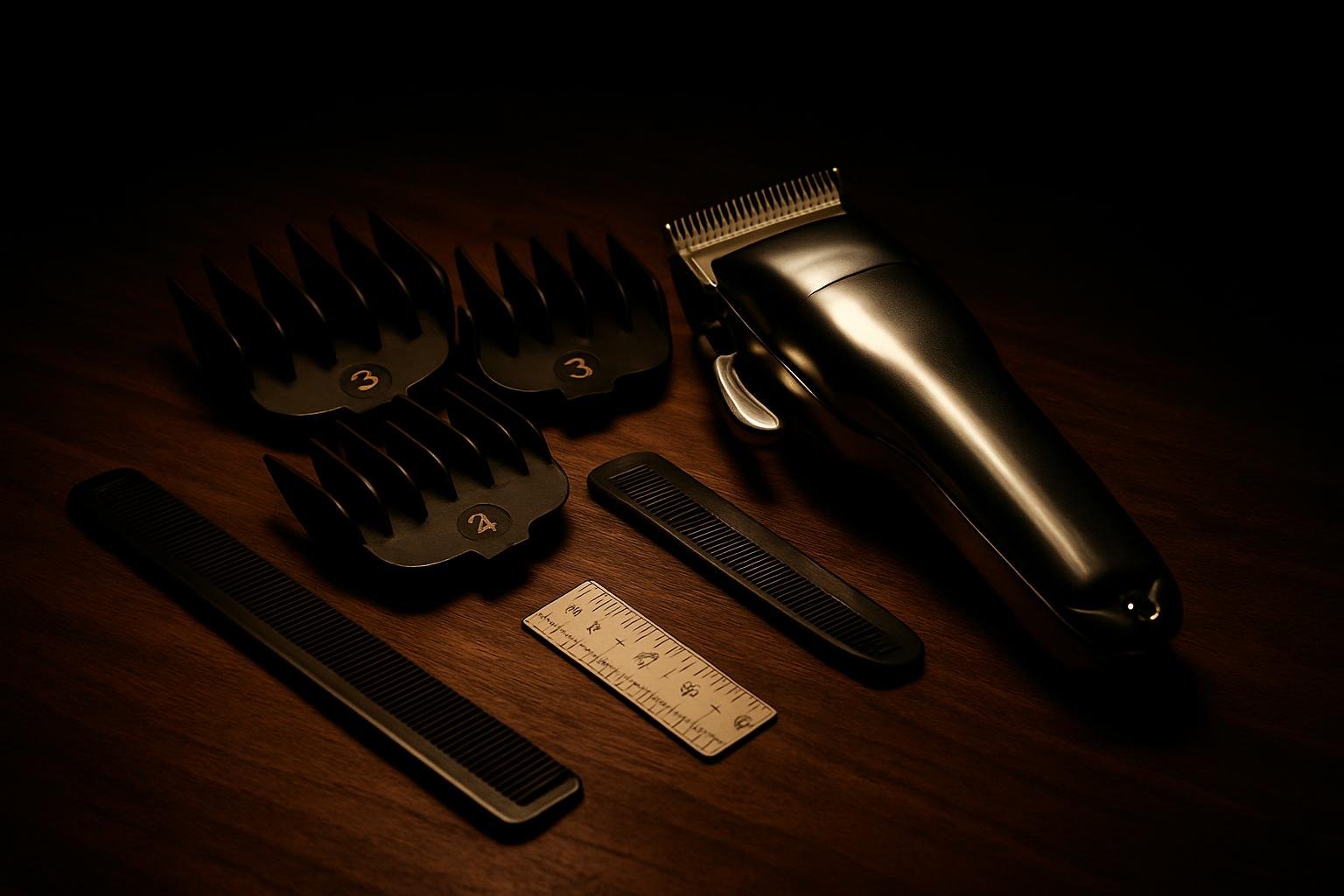
Numbers make this easy. Give a guard for the sides and an inch count for the top. Guards are clipper lengths. Higher number = longer hair left behind.
- Common guard lengths (approx.): 0 = stubble/skin-adjacent, 0.5 ≈ 1.5 mm, 1 ≈ 3 mm, 2 ≈ 6 mm, 3 ≈ 10 mm, 4 ≈ 13 mm, 5 ≈ 16 mm, 6 ≈ 19 mm.
- Safe side lengths: Conservative office look: Guard 3–4. Clean but sharp: Guard 2–3. Very tight (not skin): Guard 1–2.
- Top measurements: Say what to remove or what to leave. Example: “Leave about 2 inches on top,” or “Take off 1 inch; I want to end around 1.5–2 inches.”
- Scissors vs clipper-over-comb: If you want a softer look, add: “Can you scissor the sides instead of a clipper, or use a higher guard and blend with scissors?”
- Fade vs taper vs no fade: Fade means the sides transition from very short to longer; the lowest point can be skin, 0, 0.5, or 1. Taper means just the edges (temple and nape) gradually shorten; the side itself stays longer. If you don’t want a fade: “No fade, just a clean taper at the edges.” For a deep dive, see skin fade vs taper.
Script with numbers: “Guard 2 on the sides, low taper at the edges. Leave about 2 inches on top; take off around 1 inch and add light texture.”
Note: Guard brands vary a hair (no pun). Your barber will adjust. Your numbers are a starting point and signal confidence.
Specify the edges and shape (the details that matter)
Three minutes on details saves three weeks of hat wearing. Hit these one by one.
- Neckline: Tapered (natural and gradual), Natural (just cleaned, follows your growth), or Squared/Blocked (sharp box). Script: “Tapered neckline, not squared.” If you want crisp: “Squared neckline, still slightly rounded at the corners.”
- Sideburns: Set them against landmarks. Script: “Sideburns to mid-ear.” Alternatives: top of ear, bottom of ear, or aligned with your glasses arm.
- Around-the-ear/arches: “Clean around the ears, keep the arch natural, not too high.” High arches can look thin if overdone.
- Texture vs blunt on top: Texture breaks up bulk; blunt reads neat and structured. Script: “Add texture with point cutting so it’s not a hard shelf,” or “Keep it blunt for a clean side part.”
- Weight and height: “Keep the weight through the parietal ridge (the corner) so it doesn’t balloon,” or simpler: “Please avoid taking too much from the corners; my hair puffs if it’s cut too short there.”
- Part and fringe: “No hard part. I part it slightly left. Keep the fringe long enough to push back—about 1.5 inches when dry.”
- Beard connection (if applicable): “Taper the sideburn into the beard at Guard 2 and keep the cheek line natural, not razor sharp.”
If your crown is thin or your hairline is higher, tell them how you wear it: “I don’t want to expose the crown; keep a touch more length there,” or “Keep the front slightly longer so it can lay forward.” For strategy ideas that suit midlife hair, see haircuts for men over 40.
Quick recap script you can memorize: “Tapered neckline, sideburns mid-ear, clean around the ears. Keep some weight at the corners. Texture on top, no hard part, fringe long enough to push back.”
Note: This is where Suvant helps. Our audit turns your photos into a barber-ready brief (guards, lines, finish, and a reference image) you can hand over at the chair.
Use a reference photo the right way
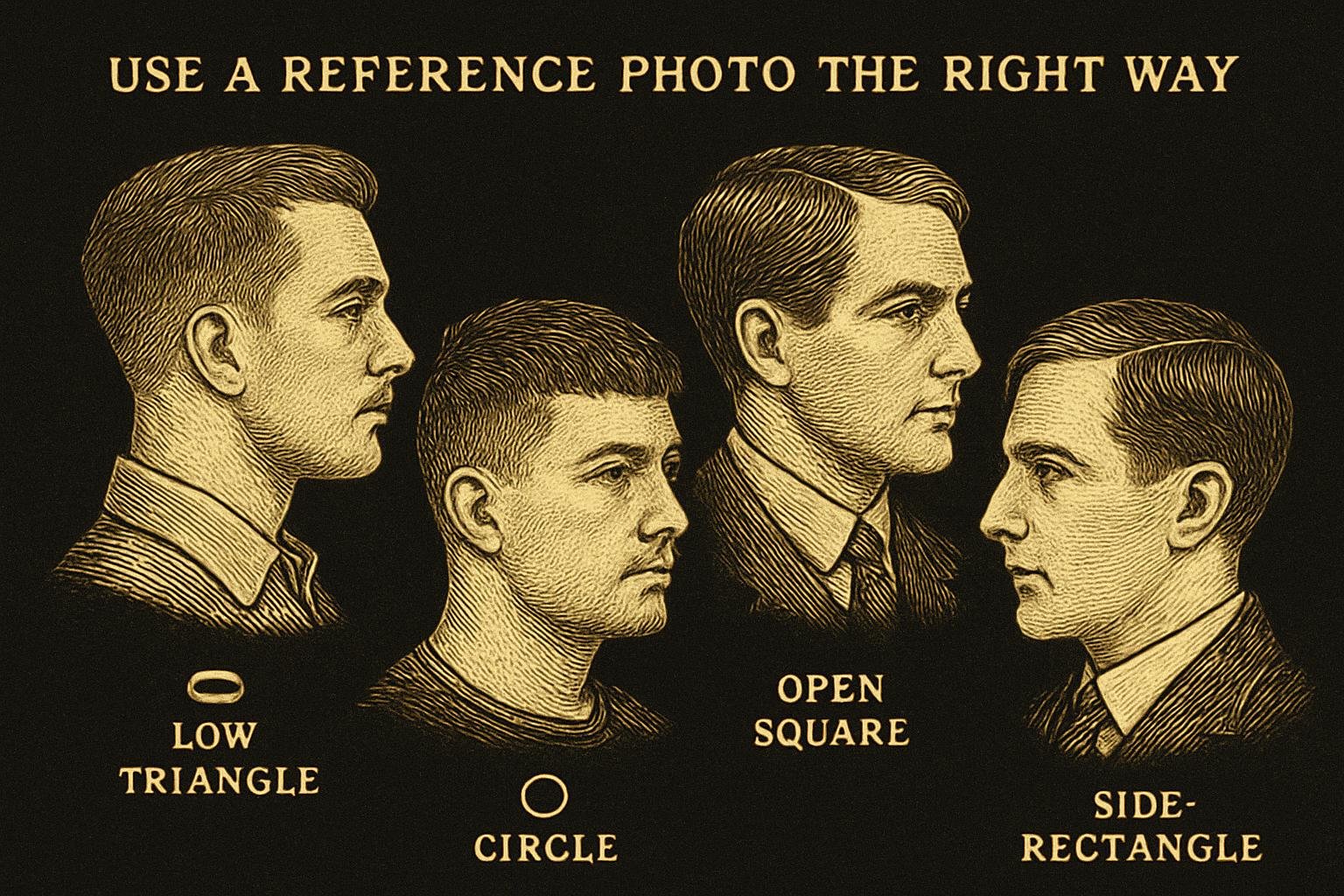
A good photo speeds everything up. Bring one photo, two angles if possible (front and side). The goal is not to clone a celebrity. The goal is to show shape, length, and finish.
- What the photo should show: Similar hair density and texture to yours (straight/wavy/curly), a clear view of the sides, top, and the neckline, and the finish (matte vs shine, tight vs loose).
- What to say while showing it: “I like the length on the sides here, looks like a Guard 2–3. I want the texture on top and this tapered neckline. I don’t need it as high in the front.”
- Translate differences: “My hair is thicker/straighter than his, so keep more/less texture,” or “My forehead is higher, so let’s leave the fringe a touch longer.”
- One photo beats five: Too many images confuse the ask. Pick the closest one and narrate what to copy vs change.
Mini script: “This photo is for the shape. Copy the side length and neckline. Add slightly more texture on top than this. I’ll style it matte, not glossy.”
Checkpoints during the cut (speak up early)
Good barbers expect feedback. You’re not micromanaging; you’re collaborating. Use these checkpoints so fixes happen while hair is still on your head.
- After the first side is clipped: Ask to feel it. Script: “That Guard 2 feels right. Let’s keep it below the temple; no higher than this.” If it feels too short: “Let’s switch the other side to a Guard 3 and blend this side up.”
- Before cutting the top: Your hair shrinks when dry. Script: “I want to end with about two inches on top when dry. Can we take small sections and check the length after the first pass?”
- Corner/weight check: “Please keep some weight at the corners so it doesn’t poof when it dries.”
- Neckline preview: Before they edge it up, ask: “Can we do a tapered neckline? Let’s avoid a squared box.” Turn your shoulders, look in the hand mirror, and confirm.
- Product and finish: “I use a matte clay. Can you show me the amount and how you blow-dry the front for lift?” Watch the blow-dryer angle and distance, and ask for the steps: heat to shape, cool to set.
If something feels off, use neutral language and a fix: “The sides feel a touch high for me—can we keep the blend lower and leave more weight near the temple?” Direct and calm beats vague and emotional.
Before you leave, set your maintenance window: “This shape looks best around weeks 3–4 for me.” For timing guidance, see how often men should get a haircut.
Your repeatable barber brief (copy this to Notes)
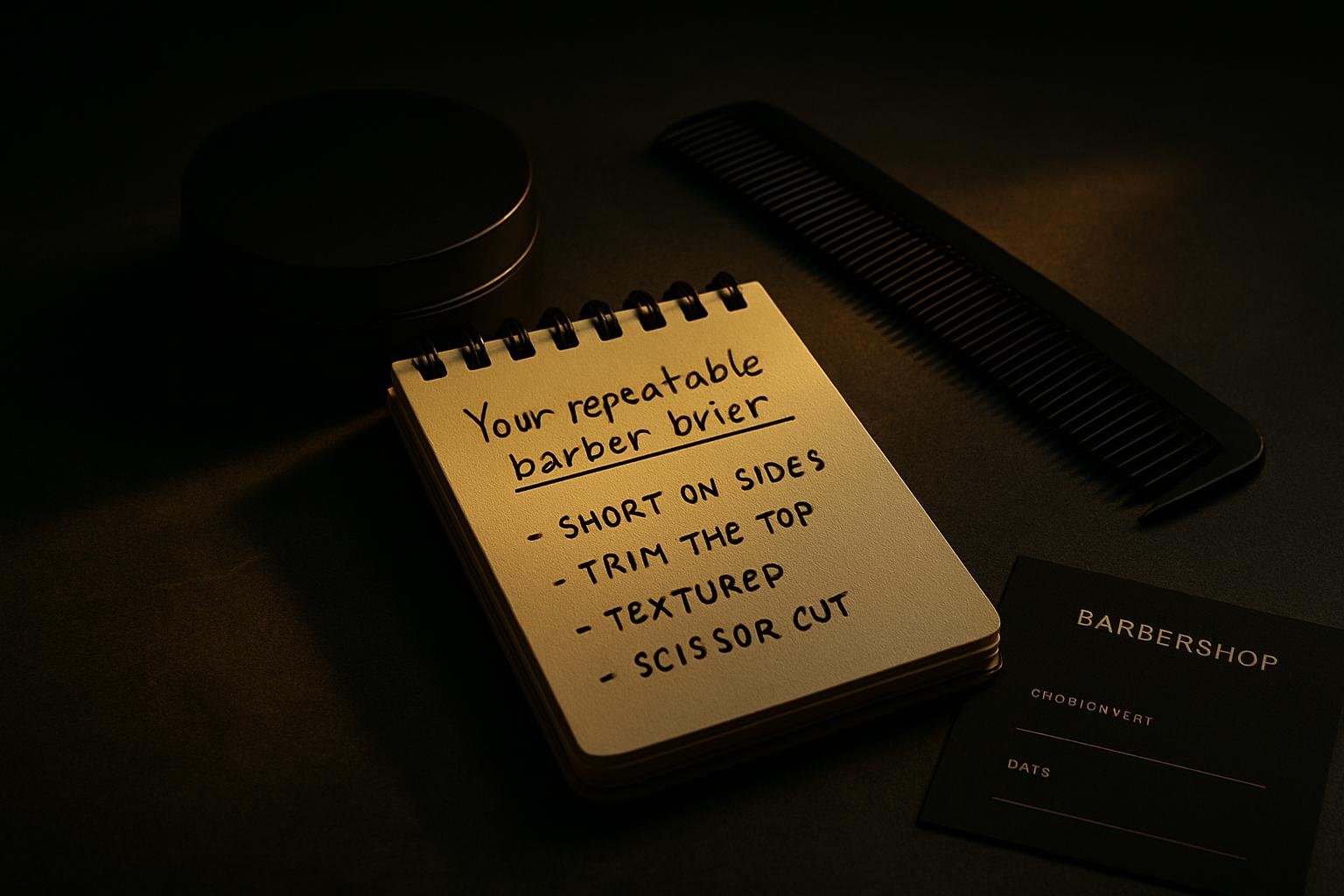
Save this in your phone and tweak as you learn what flatters you. Keep it to eight lines max so it’s readable in the chair.
- Sides: Guard 2 (no higher than temple). Clean low taper at temples and nape.
- Top: Remove ~1 inch. End length ~2 inches. Light texture, not blunt.
- Corners: Keep weight; avoid cutting too short at the parietal ridge.
- Neckline: Tapered, not squared. Sideburns to mid-ear.
- Part/finish: Natural part slightly left. Style matte, forward with slight lift. No hard part.
- Beard (if any): Taper from sideburn into beard at Guard 2. Natural cheek line.
- Maintenance: Rebook every 3–4 weeks. Quick cleanup at week 2 if needed.
- Notes: Crown can show—leave a touch more length there.
Final in-chair script when handing it over: “Here’s my brief. If you think a Guard 3 would grow out cleaner, I’m open—just keep the taper and the texture.” Inviting their expertise keeps you in control and shows respect.
If you want a second set of eyes, Suvant’s free image audit turns three photos into a plan, then gives you a printable barber brief (guards, neckline, texture, blend, and a reference image). If you like it, the full plan is $89/yr with a money-back guarantee at app.getsuvant.com.
Get the honest audit you've never gotten.
Three photos, eight scores, the real reasons behind each number, then a ranked plan to fix them one move at a time.
Get my free audit →