The Best Haircuts for Men Over 40 (and What to Ask For)
- The best haircuts for men over 40 are short-to-medium with structure on top and clean, tapered sides.
- Length without shape is what makes a cut look dated — go shorter and more defined, not longer to cover thinning.
- For thinning hair, reduce contrast and shine: short, matte, and a soft hairline beat any combover.
- Hand your barber a four-part brief — guards, lines, finish, and a reference photo — instead of asking for "the usual."
- Keep tight sides fresh every 3–4 weeks and have your brows, ears, and nose tidied every visit.
The Best Haircuts for Men Over 40, in One Line
If you want the short version: the best haircuts for men over 40 are short-to-medium, structured on top, and clean on the sides. Think a textured crop, a tapered side part, a tailored scissor cut, a sharp Caesar, or a low-volume quiff. The common thread is contrast and control — a defined shape that frames your face instead of hanging off it.
What stops working in your 40s is length without shape. Hair that's grown out, flat, and uniform reads as tired. A good cut in this chapter does three things: it adds structure where your hairline is softening, it keeps the sides tight so the whole thing looks intentional, and it works with your texture instead of fighting it. Below are five cuts that deliver all three, with the exact words to hand your barber.
Why Your Old Cut Stopped Working
Most men over 40 are still asking for the cut they wore at 28. The problem isn't the cut — it's that your hair changed and the cut didn't.
Three things shift in this decade. Your hairline matures, usually at the temples and corners. Your hair loses some density, so styles that relied on bulk now fall flat. And your texture can turn coarser or wirier, especially as gray comes in. A cut built for thick, easy hair at 28 will look thin and shapeless on the same head at 44.
There's also a styling trap: the longer, flatter, low-effort look. On younger hair it reads as relaxed. On maturing hair it reads as unkempt. The fix is almost always to go shorter and more structured, not longer to cover anything up. Length highlights thinning. Shape hides it.
Five Cuts That Work — and the Exact Brief
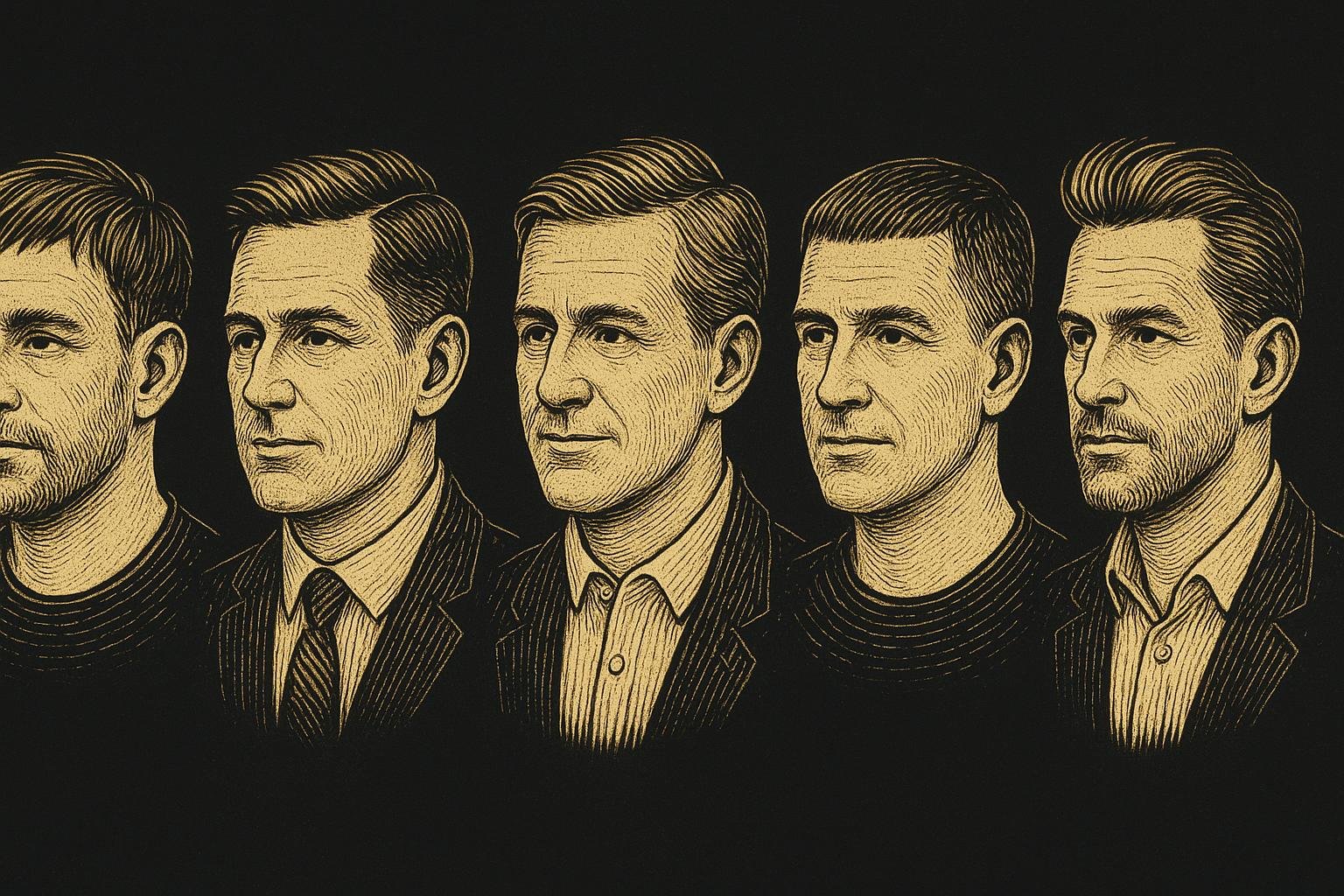
Here are five cuts that suit most face shapes and hair types in your 40s. Each comes with a plain-English brief — the kind of thing you can read aloud at the chair. Pair it with a reference photo on your phone and you'll get what you actually want.
1. The textured crop
Best if your hairline is softening at the front. Short, textured top with a fringe you can push forward, tight sides.
The brief: “Scissor on top, leave about two inches at the front, point-cut so it's textured, not blunt. Taper the sides — drop from a 2 guard down to a 1 at the bottom, blended. Keep the front hairline soft and natural, no hard line. Matte finish.”
2. The tapered side part
The grown-man classic. Works under any dress code and photographs well.
The brief: “Keep 1.5 to 2 inches on top, scissor-cut, with a side part on my natural fall. Taper the back and sides — a 3 guard up top blending to a 1.5 around the ears and neckline. Square off the neck, don't round it. Leave enough on top to comb over with a low shine.”
3. The short Caesar
Short, even top with a small horizontal fringe. Genuinely low-maintenance and very forgiving of a receding front.
The brief: “Even length on top, about three-quarters of an inch, brushed forward into a short fringe. Sides a touch shorter, blended with a 1.5. Point-cut the top so it doesn't look like a helmet. Matte finish, no shine.”
4. The tailored scissor cut
For men with healthy density who want a little length without looking shaggy. Taper versus skin fade is a real decision here — read our breakdown of skin fade vs. taper before you commit.
The brief: “All scissor work, no clippers. Take about 20% off the length, keep the shape natural and a little textured. Tidy the sides and over the ears, tighten the neckline, but keep it soft. I want it to look like I have great hair, not like I just got a haircut.”
5. The low-volume quiff
A bit more personality. Volume at the front, shorter at the back and sides — but kept restrained so it reads tailored, not retro.
The brief: “Leave about 2.5 inches at the front, graduating shorter toward the crown. Taper the sides from a 3 to a 1. I'll style it back and up with a low-to-medium hold and low shine. Keep it conservative — tailored, not a pompadour.”
If Your Hair Is Thinning, Read This
Let's be honest about thinning, because most advice tiptoes around it. If your hair is thinning, the single biggest upgrade you can make is reducing contrast and length. Long pieces raked over a thin area catch light and shadow and announce exactly what you're trying to hide. Short, even, matte hair does the opposite.
Three rules that hold up:
- Go shorter than feels comfortable. A buzz with a 2 or 3 guard, or a short Caesar, looks deliberate and strong. A combover looks like a combover.
- Kill the shine. Glossy product makes thin spots translucent. Use a matte clay or paste, pea-sized, worked through dry hair.
- Soften the hairline, don't draw it. Ask your barber to keep the front natural rather than carving a sharp line that frames the recession.
If the thinning is changing quickly or showing up in patches, see a dermatologist — that's a medical question, not a grooming one, and worth a professional opinion. Our lane is making the most of the hair you have today. If you're not sure how short to go or which shape suits your face, Suvant's free image audit scores your hair and gives you a ranked next move with a barber brief you can hand straight to the chair.
Working With Gray, Not Against It
Gray isn't a problem to solve. Handled well, it's one of the best assets you've got in this chapter — it reads as distinguished and settled. Handled badly, it just looks neglected. The difference is intention.
A few things make gray work:
- Keep it sharp. Gray hair shows shape more than pigmented hair does, so a clean cut and a tight neckline matter more, not less.
- Mind the texture. Gray often grows in coarser and drier. A little conditioner and a matte product keep it from going wiry.
- Decide on purpose. Whether you keep it, blend it, or color it is your call — just make it a choice, not a default.
If you're torn on whether to embrace it or cover it, we wrote a full guide: going gray — keep it or dye it. Either way, a well-defined cut does more for gray hair than any bottle ever will.
How to Hand Over a Brief at the Chair
The best cut in the world dies in translation. “Just a trim” or “the usual” hands every decision to a stranger. A brief takes 20 seconds and changes the result.
A good brief has four parts:
- Guards and lengths: the numbers for the sides and how much to leave on top — “1.5 on the sides up to a 3, leave two inches on top.”
- Lines: what to do at the neckline and around the ears — “square neck, natural hairline at the front, don't take the temples back.”
- Finish: matte or shine, textured or blunt — “matte, textured, no hard parts.”
- A reference photo: one or two on your phone. Photos beat words every time.
Say it once at the start, before the cape's even on. A good barber appreciates it — it makes their job easier and your result better. For the full script, including how to course-correct mid-cut without it being awkward, read how to talk to your barber.
The Cadence That Keeps It Sharp
A sharp cut is a perishable thing. Here's the cadence that keeps it looking intentional instead of grown-out.
- Tight sides (taper, fade, Caesar): every 3 to 4 weeks. These look their best fresh and rough up fast.
- Scissor cuts and longer tops: every 5 to 6 weeks.
- Neckline cleanup between cuts: a five-minute touch-up at the barber, or a careful pass with a trimmer, around the two-week mark.
Two more habits that matter as much as the cut: have your barber tidy your eyebrows, ears, and nose every visit — overgrowth there ages you faster than gray ever will — and own one matte product and a decent comb. That's the whole kit.
If you want to know exactly which cut, length, and finish suit your face before you sit in the chair, Suvant's free two-minute audit scores your hair and grooming and turns it into a ranked plan, complete with the barber brief to take with you. The audit's free; the full plan is $89 a year with a money-back guarantee.
Get the honest audit you've never gotten.
Three photos, eight scores, the real reasons behind each number, then a ranked plan to fix them one move at a time.
Get my free audit →