Glasses In Dating Photos: When They Help (And How)
- Use a 5‑photo set: hero, smile close, full‑body, lifestyle, social. Put glasses in 2–3 of them.
- Avoid glare by moving the light 45° off‑axis, tilting frames a few degrees, and shooting at 50–85mm.
- Thin, matte frames in neutral tones photograph cleaner than thick, glossy ones.
- Never use ultra‑wide lenses up close; step back 6–8 feet and crop for a natural face shape.
- If glasses are part of your everyday look, keep them in your hero or a lifestyle shot for authenticity.
The short answer and your 5‑photo mix
Yes—wear glasses in some of your dating photos, not all. If glasses are part of your daily look, you want them represented. If you only wear them at a desk, prioritize shots without them. The clean, grown‑man play is a five‑photo set with a mix.
Use this 5‑photo set
- Hero portrait (clean, confident, chest‑up)
- Smiling close‑up (genuine teeth smile)
- Full‑body (head‑to‑toe, relaxed stance)
- Lifestyle (you doing something—coffee, cooking, hiking)
- Social/context (one other person max, or candid in an environment)
How many with glasses?
- Wear daily? 2–3 shots with glasses, 2–3 without.
- Wear sometimes? 1–2 with, 3–4 without.
- Almost never? 0–1 with, 4–5 without.
Rule of thumb: Your primary vibe should appear in the hero and full‑body. If glasses are core to your look, include them in one of those two. If they’re optional, keep them to lifestyle or social shots.
Why mix?
- Authenticity: People should recognize you on the date—glasses included if that’s you.
- Versatility: Without frames, your eyes and bone structure read clearly. With frames, you add character and polish.
- Safety net: If one set glares, the other carries the profile.
Pros and cons by photo slot (what to wear where)
Here’s the slot‑by‑slot call, with exact notes so you can shoot it right the first time.
1) Hero portrait (chest‑up)
- Wear glasses if: They’re part of your identity (you wear them most days), or your frames are clean, matte, and fit well.
- Go without if: You have thicker, high‑shine frames, small lenses that cut through your eyes, or frequent glare.
- Technical: Shoot at 50–85mm equivalent. Light 45° off to your side and slightly above eye level. Tilt frames down 2–3° to kick reflections away from the lens.
2) Smiling close‑up
- Wear glasses if: Your lenses are anti‑reflective and your frames don’t cover the smile lines at the eyes.
- Go without if: You often get glare, or your frames ride up when you smile.
- Technical: Stand 4–6 feet from the camera. Avoid phone ultra‑wide. Chin slightly down, eyes to lens, relax forehead.
3) Full‑body
- Wear glasses if: You want to carry your everyday look through the set; full‑body de‑emphasizes frame thickness.
- Go without if: You already used glasses in the hero, or you want a clean, glasses‑free read of your face elsewhere.
- Technical: Camera at mid‑torso height, step back 15–20 feet and zoom to ~70mm. This keeps proportions natural and reduces lens distortion at the face.
4) Lifestyle
- Wear glasses if: The activity matches your vibe (reading outdoors, cooking, at a cafe). It looks intentional, not staged.
- Go without if: The environment is full of reflective surfaces (windows, polished counters) you can’t control.
- Technical: Angle your body ~30° to camera. Keep the brightest light source to your side/back, not straight on.
5) Social/context
- Wear glasses if: It’s a candid where you look relaxed and present; frames can add character in a busy scene.
- Go without if: The room has overhead spotlights or backlit windows you can’t move around.
- Technical: Ask a friend to lower the camera slightly and step back. If a reflection pops, slightly tip your frames or turn your head 10–15°.
Bottom line: Aim for two clean, reflection‑free shots with glasses. If you can’t guarantee that, prioritize glasses in the lifestyle or social slot and keep hero/close‑up clean.
How to kill glare and lens distortion
Glare hides your eyes. Distortion warps your face. Both are fixable in minutes with the right angles and distance.
Glare control checklist (do this before you shoot)
- Move the light: Keep the main light 45° to your side and slightly above eye level. If you see your light source reflected in your lens, rotate your body or move the light until it disappears.
- Tilt, don’t crane: A 2–3° downward tilt of your frames kicks reflections down. Keep your head neutral; adjust the frames, not your posture.
- Use soft light: Window light with sheer curtains, open shade outdoors, or a lamp bounced off a wall. Avoid direct, small light sources aimed straight at you.
- Clean lenses: Wash and dry with a microfiber cloth. Smudges catch and spread highlights.
- Anti‑reflective lenses help: If you already have them, great. If not, plan angles even more carefully.
For deeper tricks specific to glasses glare, see how to avoid glasses glare in photos.
Fix distortion (the silent killer)
- Never use ultra‑wide up close: Avoid 0.5× or anything under ~35mm equivalent for faces. It stretches your nose and pulls ears back.
- Stand back 6–8 feet and crop: On a phone, shoot at 2× in good light or step back and crop. Ideal portrait range is 50–85mm equivalent.
- Camera height matters: For portraits, set the lens just above eye level. For full‑body, keep the lens near mid‑torso to avoid big‑head/small‑feet distortion.
- Keep the frame level: Tilting the camera up or down creates odd lines in glasses and jaw shape. Use the phone grid.
Lighting placements that work
- Indoors by a window: Stand 2–3 feet inside the window edge. Window at 45° to your side. White wall opposite to bounce fill.
- Outdoors shade: Face the open sky, put the sun behind a building/trees. Rotate until no reflections read on the lenses.
- Golden hour: Put the sun 45° behind you. It backlights hair without flaring the lenses. Fill with open sky in front.
If you want to go deeper on light quality and placement for all profile shots, read best lighting for dating photos.
Tip: Record a 10‑second test video while slowly turning your head. Pause where glare disappears—that’s your camera angle.
Note: All of this is presentation, not medical advice. If you have questions about your frames or lenses, ask your eyewear professional.
Frames that photograph well (and ones that don’t)
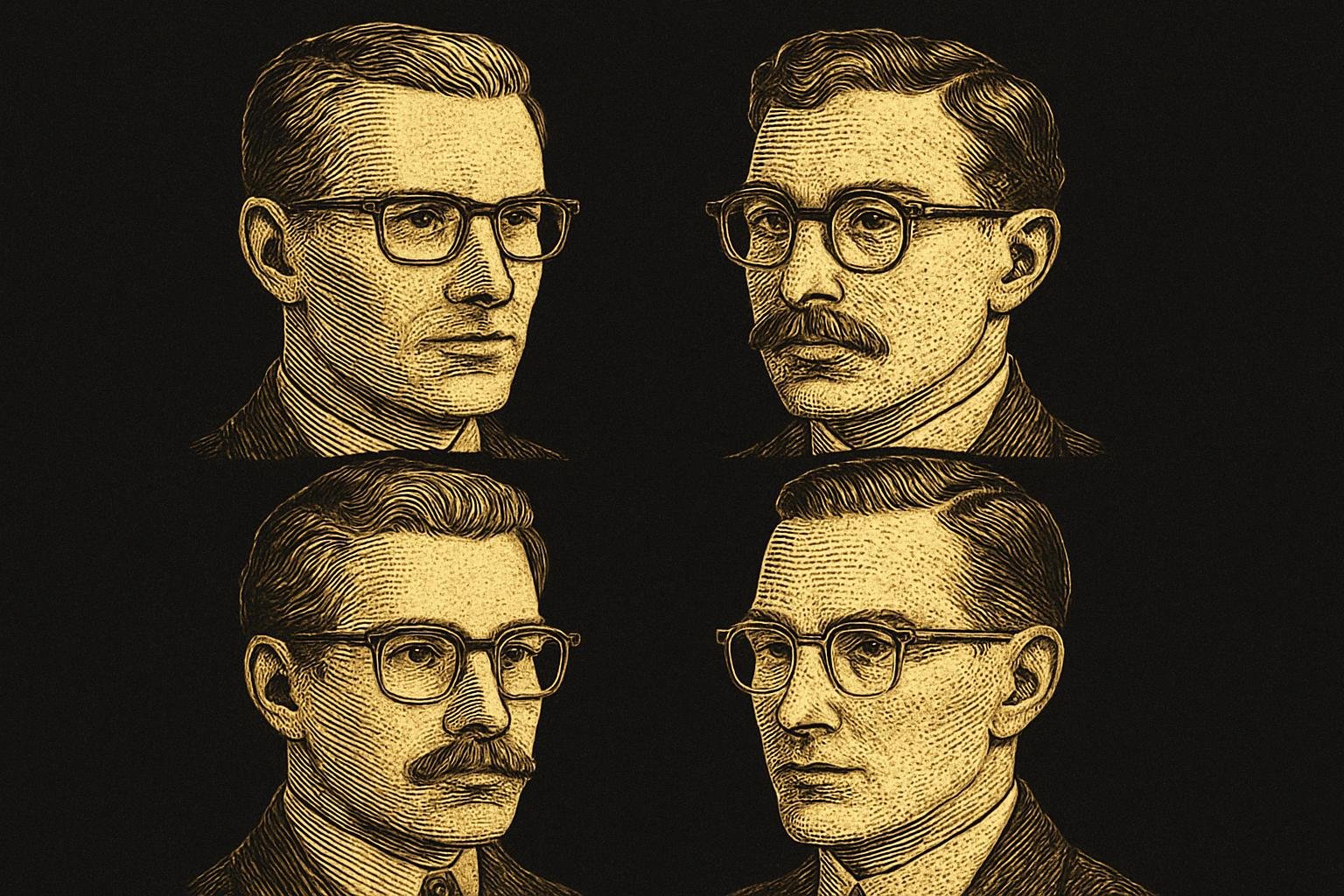
Glasses are part accessory, part punctuation. In photos, some choices quietly help your face read stronger.
What tends to work on camera
- Thin to medium rims: 1.5–3 mm rims define the eyes without overpowering them.
- Matte or satin finishes: Cut glare and hotspots. Gloss can look toy‑like under light.
- Neutral tones: Charcoal, dark tortoise, deep navy, or smoked crystal. They sit back and let your face lead.
- Larger, taller lenses: The lens top should sit near your brow line so the frame doesn’t slice through the pupils.
- Subtle keyhole or narrow bridge: Brings the lenses closer to center so your eyes aren’t set too wide.
What often works against you
- Over‑thick frames: 4 mm+ can swallow the eye area, especially in close‑ups.
- High‑shine acetate or mirrored lenses: Amplify reflections.
- Low‑sitting bridges: Frames slide down and cut across the eyes when you smile.
- Overly small lenses: Make eyes look cramped and can distort brow/cheek lines.
Style direction by vibe (keep it simple)
- Clean professional: Thin rim rectangular or soft square in matte charcoal or dark tortoise.
- Creative classic: Round or P3 (rounded square) in tortoise or smoked crystal.
- Modern minimal: Semi‑rimless or thin titanium in gunmetal or black.
Fit matters: Temples should sit flat, not flared. The bridge shouldn’t leave dents. Ask your eyewear shop to make small adjustments so frames don’t creep during a smile.
Keep a second pair if you can: one subtle, one with character. Use the subtle pair for hero/close‑up; save character for lifestyle.
Pose, expression, and eye contact with glasses
Frames can either box your face in or frame it well. Small pose tweaks make the difference.
- Head angle: Turn your head 10–15° off camera, then bring eyes back to the lens. This slims the face and hides lens edge thickness.
- Chin: Slightly down for authority in a hero shot; slightly up for a friendly smile close‑up. Keep the neck long.
- Eyes: Lift eyebrows a touch to open the eye under the top rim. Don’t overdo it—think alert, not surprised.
- Micro‑smile first: Breathe out, tiny smile, then a real smile on the second shot. This keeps squinting minimal behind lenses.
- Hands off frames: Avoid mid‑adjust gestures unless it’s a deliberate lifestyle move. If you do it, finish the motion, then shoot—half‑adjusts read fidgety.
- Hair and beard: Keep volume balanced with the frame. If you wear thicker frames, tidy sideburns and temple hair so the area doesn’t look crowded.
Wardrobe coordination: If your frames are dark, wear a mid‑tone shirt (olive, denim, grey). If your frames are light, wear deeper tones to keep contrast around the eyes.
Quick script for a helper: “Tell me when you see reflections in my lenses. If you do, ask me to turn my head right or left until they disappear, then count me down.”
Your shoot plan for this weekend (step‑by‑step)
Block 90 minutes. Two outfits. One indoor, one outdoor spot. You’ll walk away with five keepers that show you with and without glasses.
Gear and setup
- Phone + simple tripod (or a friend). Use the rear camera.
- Cleaning kit: Microfiber cloth + lens spray.
- Timer: 3–10 sec timer or voice shutter.
Outfit A (clean)
- Well‑fitting crew or OCBD shirt in a mid tone (grey, denim, olive). Dark jeans or chinos. Simple sneakers or boots.
- Frames: Subtle, matte pair if you have two.
Outfit B (character)
- Knit polo or casual button‑down. Lighter jeans or chore jacket. Add a watch.
- Frames: Your everyday pair, or go without to vary the set.
Shot list with glasses calls
- Hero portrait (with or without, pick based on identity): Indoors by a window, 45° side light, 50–85mm. Take 12–15 frames. Do a glasses‑on series and a glasses‑off series back‑to‑back so you can compare.
- Smiling close‑up (without recommended): Same window, rotate a few degrees until no reflections remain. 8–10 frames.
- Full‑body (opposite of hero): If hero was with glasses, go without here. Outdoors in open shade. Camera mid‑torso height, step back and zoom. 8–12 frames while shifting weight.
- Lifestyle (with glasses): Coffee cup, book, cooking, or at a workbench. Angle body 30°. Ask a friend to shoot candids as you move. 10–15 frames.
- Social/context (your call): One other person max or a well‑composed candid in an environment. If indoors, watch for overhead reflections; tilt frames slightly if needed. 5–8 frames.
Quality control in the moment
- Zoom in on the eyes after a test shot. If you can’t see the pupils clearly, fix light angle or remove glasses for that slot.
- Check the horizon and verticals. Level lines make glasses sit straighter visually.
- Wipe lenses after any wardrobe change or location move.
Optional: If you normally wear contacts sometimes, you can shoot a without‑glasses series that way. Do what reflects your real life.
If you want a ranked, no‑guesswork plan tailored to your face shape, frame width, and current photos, Suvant’s image audit gives you exact fixes across eight categories and turns them into simple quests—down to a shot list you can hand a friend. It’s free to try at app.getsuvant.com, and the full plan includes monthly re‑audits with a money‑back guarantee.
If you’re over 40: keep it authentic, not costume
Glasses can read as wisdom or as a prop. Over 40, lean into the first one—measured, lived‑in, simple.
- Skip novelty shapes: No extreme geometric or neon frames for dating photos.
- Mind grooming at temples: Trim stray hairs where frame and sideburn meet so the area looks intentional.
- Solid fabrics beat loud patterns: Let your face and eyes do the work.
- Frames on at least once: If you wear them daily, include them in a hero or lifestyle shot so your date recognizes you.
For a complete age‑smart photo plan, see dating profile photos for men over 40.
Sanity check: If you look in the mirror and think “costume,” swap frames for your subtler pair and re‑shoot that slot.
When you’re ready for blunt feedback on which shots actually work, Suvant gives a photo score with the reasons why, and quests that tell you exactly what to reshoot. Use it as your second set of eyes.
Get the honest audit you've never gotten.
Three photos, eight scores, the real reasons behind each number, then a ranked plan to fix them one move at a time.
Get my free audit →