Fall Layers That Fit a Real Life, Not a Runway
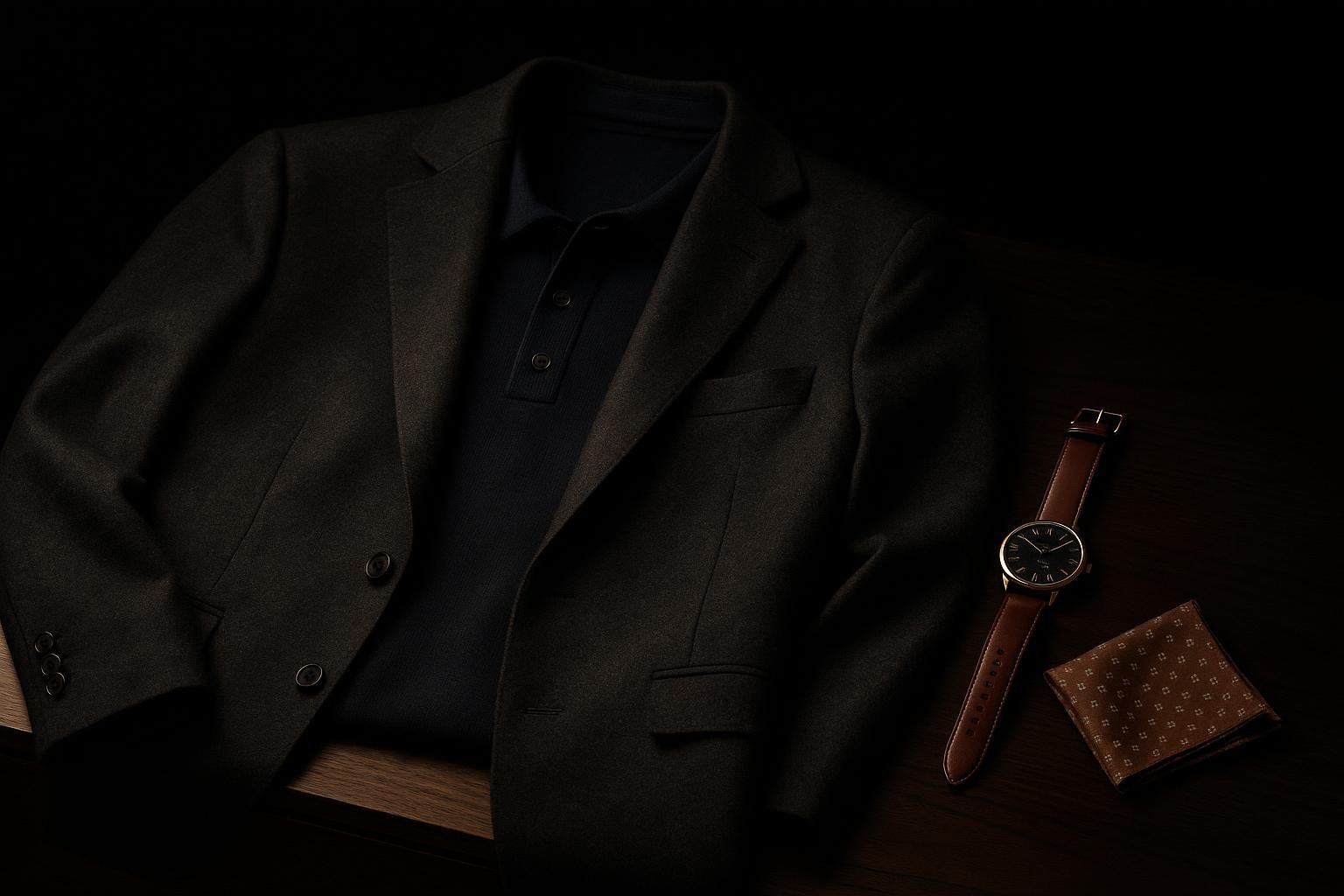
- Use the three-layer rule: breathable base, structured middle, weatherproof top.
- Stick to a tight palette (2 neutrals + 1 accent) for easy mixing.
- Choose trim-but-forgiving fits: tapered sleeves, room in the torso, clean hem lengths.
- Add texture contrast (knit, twill, suede) to make simple colors look intentional.
- Build a two-sneaker, one-boot, one-dress-shoe rotation to cover every fall plan.
Quick answer: the layering formulas and ground rules
You want a fall uniform that looks sharp without announcing itself. Here’s the short version of how to layer clothes men fall: use three layers max, keep your color palette tight, and choose trim-but-forgiving fits that skim, not squeeze. Aim for a breathable base, a structured middle, and a weather-ready top. Then lock in footwear that matches the formality.
Ground rules that work at 45–65°F
- Three-layer rule: Base (tee or knit), middle (shirt or light sweater), outer (jacket). Drop to two layers indoors, add a scarf when it’s windy.
- Color discipline: Pick 2 main neutrals (navy, charcoal, olive, tan, chocolate, black) + 1 accent (burgundy, rust, forest). Keep each outfit under three visible colors.
- Texture contrast: Pair smooth with napped: oxford + merino, twill + suede, denim + flannel. Texture builds depth without loud patterns.
- Trim-but-forgiving fits: Sleeves tapered, shoulders clean. Torso with 2–3" ease at the stomach. Hems that hit mid-fly (shirts) and cover the waistband (sweaters).
- Midsection camouflage: Avoid clingy knits and paper-thin tees as the only layer. Use a structured overshirt or light jacket to create a clean front plane.
- Footwear match: Sneakers for casual, chukkas/chelseas for smart casual, brogues/derbies for office. Leather or suede upgrades the look fast.
Fast checklist before you leave
- One focal point (jacket texture or shoe color). Everything else supports it.
- Visible layer edges: 0.5–1" tee at the collar, 0.25–0.5" shirt at the cuff.
- Jacket can close without pulling. No X-shaped strain across buttons or zipper.
- Socks echo the pants or shoes. Belt matches the shoes within one shade.
Plug-and-play outfit stacks: 1 and 2
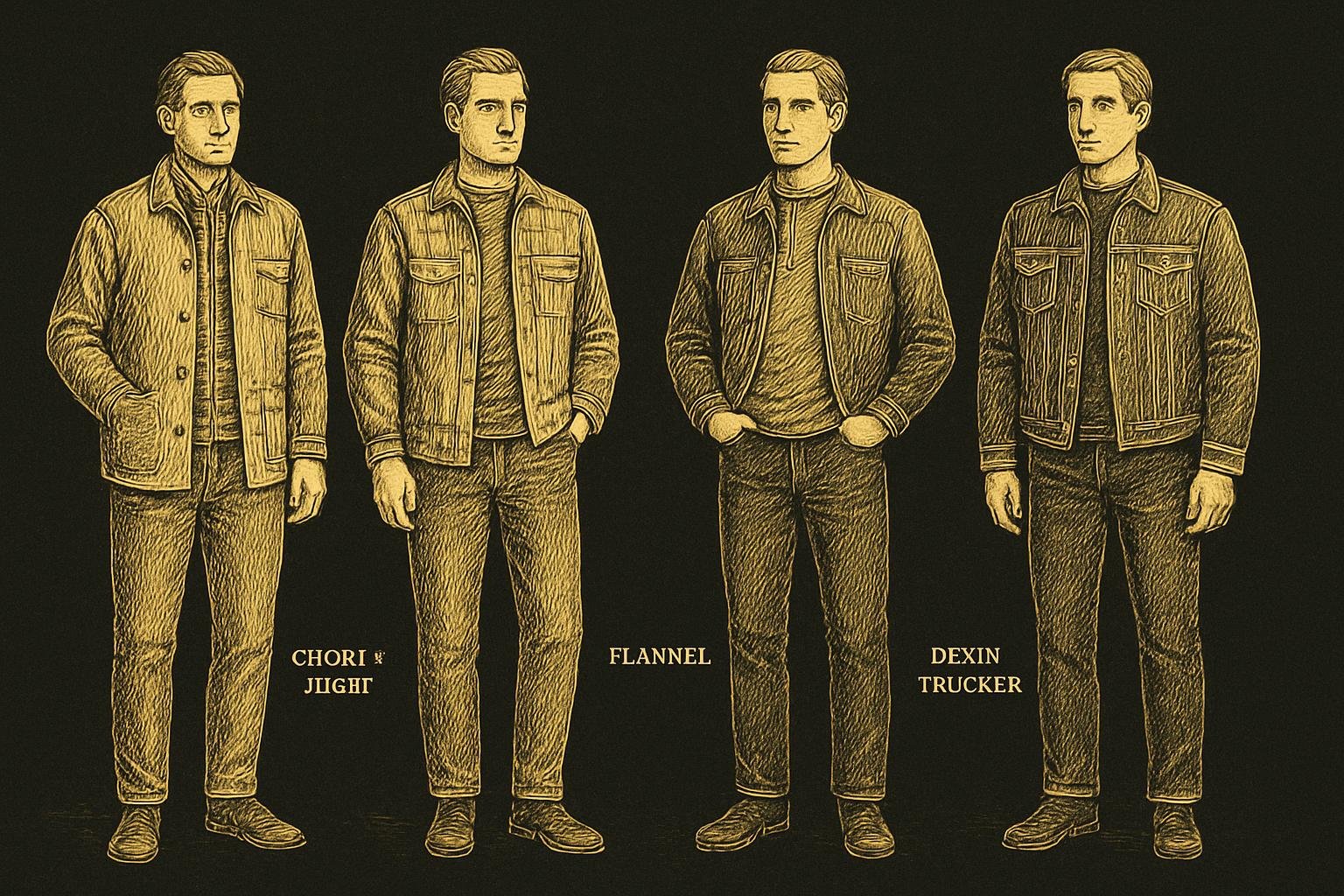
Stack 1: The refined flannel base
Where it fits: Office casual, dinner, school events.
- Base: Midweight cotton tee, crewneck, charcoal. Not tight, not baggy.
- Middle: Brushed cotton flannel shirt, navy check or solid navy. Keep the pattern subtle and the shirt untucked with a clean straight hem.
- Outer: Unstructured wool-blend chore jacket or soft-shoulder blazer, dark navy or charcoal.
- Pants: Wool-blend or cotton twill trousers, charcoal or tobacco, tapered to a no-break hem.
- Shoes: Suede chukkas, dark brown. Swap to leather derbies for office formality.
- Why it works: The flannel adds texture; the jacket creates a straight line over the midsection; the dark base recedes.
Stack 2: Denim + merino, grown-man weekend
Where it fits: Coffee, casual date, football watch party.
- Base: Long-sleeve tee or henley, ecru or light grey.
- Middle: Merino crewneck sweater, forest or burgundy. 1–2" ease at the stomach, rib hem just touching the belt line.
- Outer: Trucker jacket in dark indigo denim or brushed canvas olive.
- Pants: Dark rinse jeans, athletic taper. Avoid spray-on skinny and wide carpenter fits.
- Shoes: Clean leather sneakers, white or tan. Swap to rugged moc-toe boots for tailgates.
- Why it works: Merino drapes without clinging; the jacket’s vertical seams narrow the torso; light base brightens the face.
Fit notes for both: Shirt sleeves end at the wrist bone. Jacket covers the sweater hem by 1–2". If your flannel or sweater pulls at the buttons or waistband, size up one and tailor the sleeves.
Plug-and-play outfit stacks: 3 and 4
Stack 3: Office-to-dinner knit polo
Where it fits: Client meetings, nicer restaurants, smart casual Fridays.
- Base: Lightweight tee, light grey, to add opacity under the knit.
- Middle: Long-sleeve knit polo, deep navy or chocolate. Choose a collar that stands; avoid clingy viscose blends.
- Outer: Field jacket or quilted liner jacket, dark olive.
- Pants: Stretch wool blend or heavyweight chino, taupe or mid-grey.
- Shoes: Leather chelsea boots, dark brown. Add a matching leather belt.
- Why it works: The knit polo reads polished without a tie; the jacket adds structure and pockets; darker top halves slim the torso.
Stack 4: Gym-to-errands upgrade
Where it fits: Kid drop-off, farmers market, casual travel.
- Base: Performance tee, heathered charcoal. Slight stretch, not shiny.
- Middle: Cotton-linen overshirt, stone or navy, with two chest pockets (kept flat, not stuffed).
- Outer: Lightweight hooded parka or anorak, deep navy.
- Pants: Technical tapered joggers or commuter pants, black or deep olive, 10–11" leg opening at the hem.
- Shoes: Minimal trainers, black or grey. Avoid flashy logos.
- Why it works: The overshirt squares the shoulders; the parka covers the hip line; matte fabrics keep it adult.
Pro move: In any stack, if the middle and outer are both dark, keep the base light near your face to lift your skin tone in fall lighting.
For broader outfit context, see how these stacks sit inside smart casual in our guide to smart-casual outfits for men over 40.
Colors and textures that quietly do the work
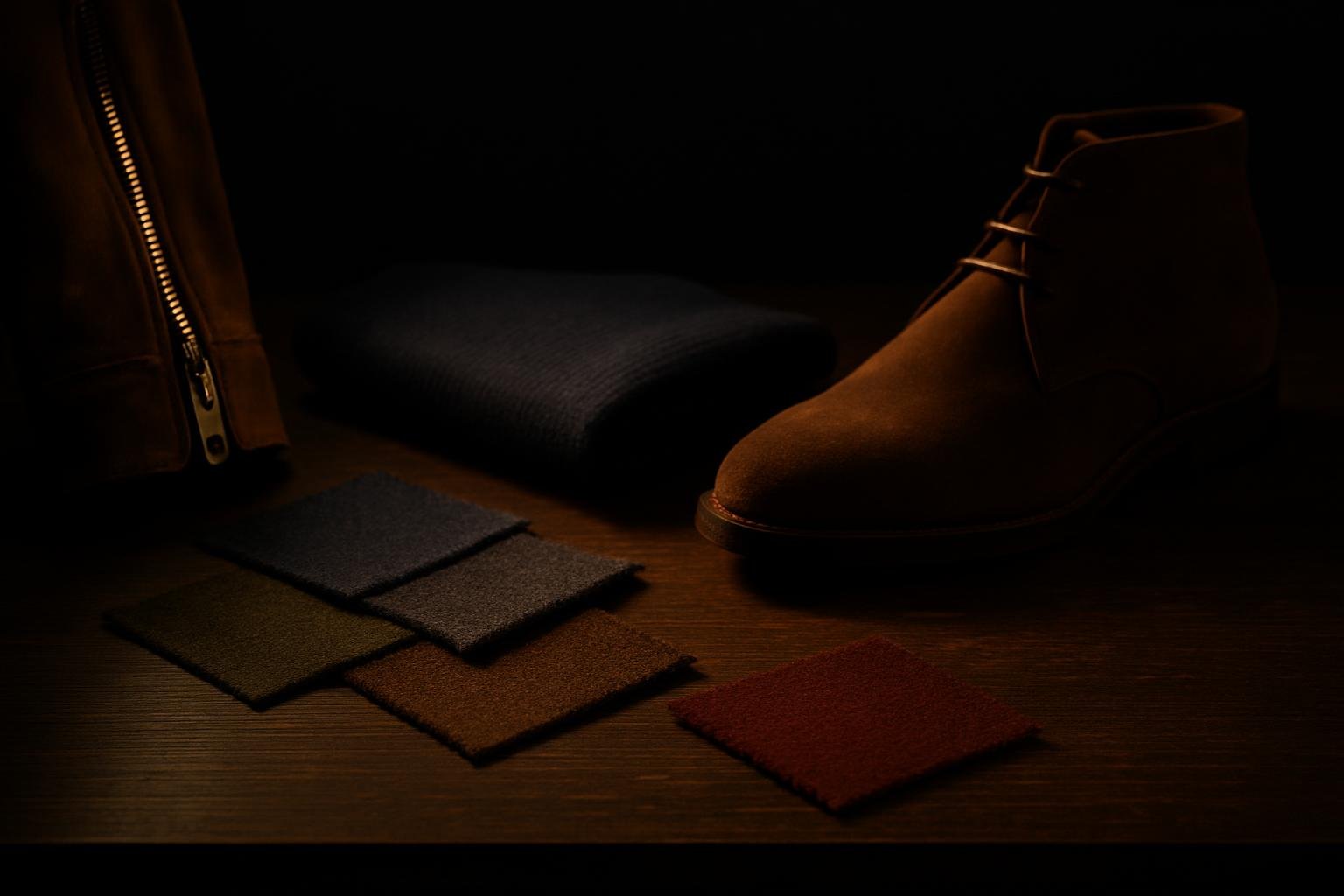
Most men overbuy blues and greys, then feel stuck. Build a simple fall palette that mixes freely and flatters in low-angle sun.
Choose your core neutrals
- Two primaries: Pick any two: navy, charcoal, olive, chocolate, tan, black. Navy + olive is the most forgiving for weekends. Charcoal + tan is office-friendly.
- One accent: Burgundy, rust, forest, or denim-blue. Keep accents to one garment per outfit.
- Light near the face: Ecru, light grey, or pale blue as a tee, oxford, or scarf brightens your expression without shouting.
Texture map (simple wins)
- Base smooth: Cotton jersey or merino base.
- Middle brushed: Flannel, brushed twill, or waffle knit.
- Outer structured: Wool blend, canvas, waxed cotton, or quilted liner.
Pattern guidance
- Keep it quiet: Mini herringbone, micro-check, thin rib. Large plaids can widen the torso; if you wear one, anchor it with a dark jacket.
- One pattern rule: Let only one layer carry a pattern. Everything else stays solid.
If you’re building from scratch, a tight palette is the backbone of a future capsule wardrobe.
Fit and proportion: trim-but-forgiving, not tight
A good layer hides noise and frames you. You don’t need to be a tailor; you need to ask for the right adjustments and buy the right lengths.
Upper-body fit targets
- Shoulders: Shoulder seam should land where your shoulder ends, not onto your arm. If it drops 0.5"+, size down or tailor.
- Chest/torso ease: Aim for 2–3" of room at the stomach in shirts and sweaters. If the buttons pull or knit clings, up one size and taper sleeves.
- Sleeves: Trim sleeves reduce visual bulk. Ask a tailor to slim the forearms slightly if they billow.
- Lengths: Untucked shirts hit mid-fly. Sweaters just kiss the belt. Jackets cover the sweater by 1–2" and the seat by one third to one half.
Pants that support the layers
- Rise: Medium rise sits at or just below the navel and keeps the waistband from cutting your midsection in half.
- Leg shape: Athletic taper: room in the thigh, gently narrowing to a 7–7.5" leg opening (14–15" circumference) depending on shoe size.
- Hem: No break or micro-break. Excess stacking makes the whole frame look shorter.
Tailor script to use
- “Take the sleeves in a touch from elbow to cuff—no sausage casing.”
- “Shorten the shirt to hit mid-fly when untucked.”
- “Taper the pants from knee to hem to a 7.25" opening; keep room in the thigh.”
Layering to minimize the midsection
- Use a structured middle (overshirt, knit polo, flannel) to create a clean front panel.
- Keep the darkest color on the outer or middle layer, not the pants alone.
- Choose two-way zips or unbutton the bottom two buttons when seated to prevent pulling.
- A scarf in a medium tone adds a vertical line and draws attention up without heat bulk.
If you want clear feedback on whether your current fits are landing, a Suvant image audit will score your photos across hair, face, skin, body, style, grooming, photos, and presence—and point to specific next moves. It’s quick to try at app.getsuvant.com, and the full plan includes exact deliverables like a barber brief and ranked quests.
Outerwear and footwear: a four-piece rotation that covers fall
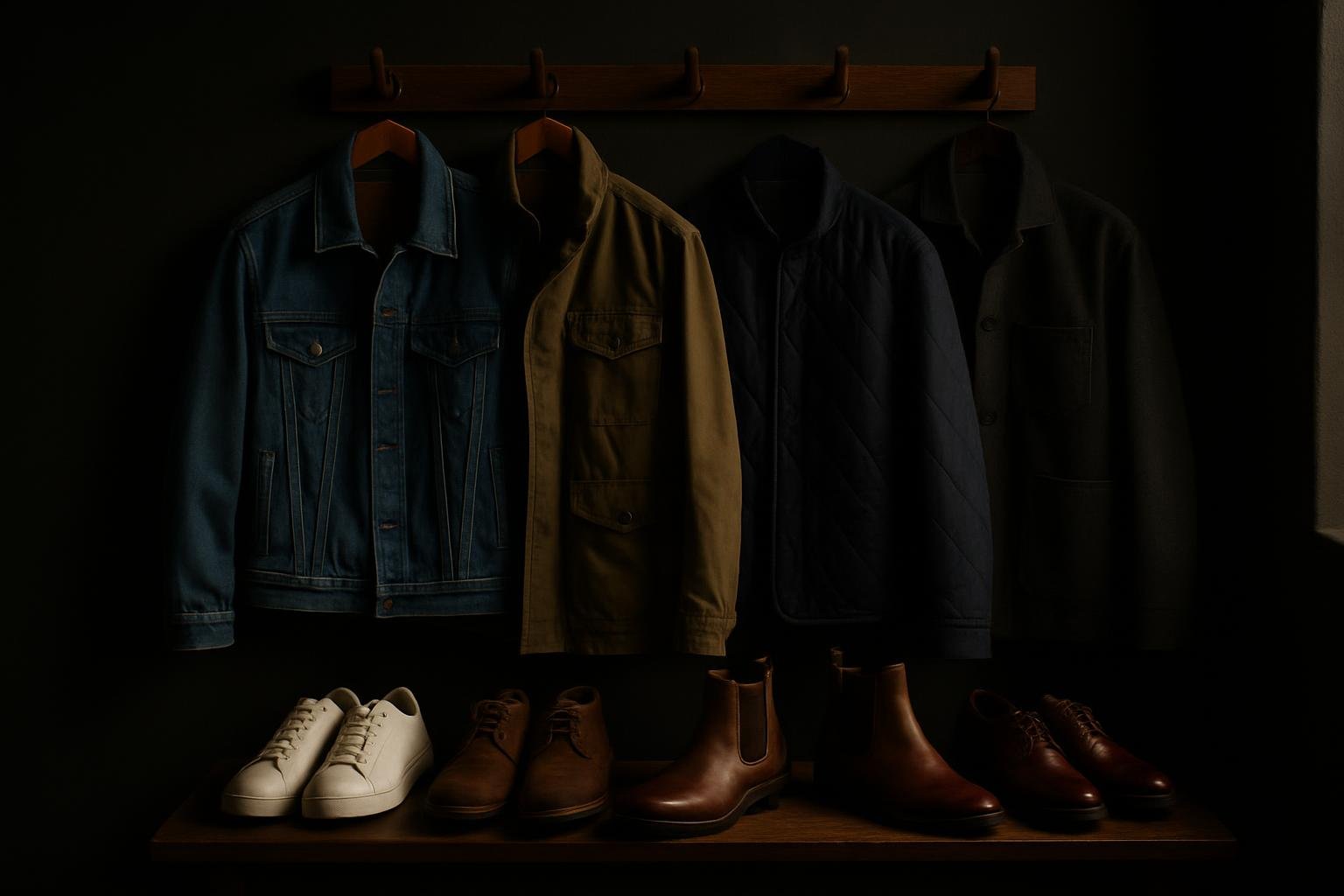
Outerwear and shoes set the tone. With four jackets and four shoe types, you can cover almost any fall plan without thinking hard.
Jackets (temperature guide)
- 45–55°F: Wool-blend chore jacket (navy or charcoal) or quilted liner (olive). Medium insulation, high mobility.
- 50–60°F: Canvas field jacket (olive or tan). Room for a sweater; blocks wind.
- 55–65°F: Denim trucker (dark indigo) or brushed cotton overshirt (stone). Light structure, easy to pack.
- Wet days: Lightweight hooded parka (navy or black). Keep the finish matte.
For more detail on silhouettes and when to wear them, read our guide to the best jackets for men over 40.
Shoes (four types, two colors)
- Leather sneakers: White and tan. Pair with jeans, chinos, and joggers.
- Suede chukkas: Dark brown and sand. Bridge casual and office.
- Chelsea boots: Dark brown or black. Dressy without laces.
- Derbies or brogues: Chocolate or oxblood. Office and dinners.
Sock and belt rules
- Socks echo pants to lengthen the leg line. With jeans, navy socks. With olive chinos, olive or dark grey.
- Belt within one shade of your shoes. No glossy belts with matte suede.
Build your rotation in 7 days (without blowing up your closet)
You don’t need a shopping binge. You need a plan and one week.
- Day 1—Palette pick: Choose 2 neutrals + 1 accent. Write them down. Purge anything that doesn’t play.
- Day 2—Base refresh: Buy two tees (light grey, ecru) and one henley (charcoal). Aim for 180–220 gsm cotton or a merino blend.
- Day 3—Middle layers: Add one flannel (navy), one merino crew (forest), one overshirt (stone). Try on with your bases.
- Day 4—Outerwear: Pick one jacket from your lifestyle lane (field, chore, trucker, or parka). Make sure it closes cleanly over layers.
- Day 5—Pants tune-up: Hem and taper one pair of chinos and one pair of dark jeans to no-break. Use the tailor script above.
- Day 6—Footwear: Add one pair of suede chukkas and clean your leather sneakers (magic eraser + gentle wipe). Match a brown belt.
- Day 7—Test drive: Build the four stacks above. Take mirror photos in daylight. Keep the two best, adjust the others.
Want a second set of eyes? Suvant’s free image audit gives you blunt scores with reasons, then turns into ranked quests. If you decide to go deeper, the full plan is $89/yr with a money-back guarantee.
Get the honest audit you've never gotten.
Three photos, eight scores, the real reasons behind each number, then a ranked plan to fix them one move at a time.
Get my free audit →