Jackets That Look Right After 40 (Beyond the Hoodie)
- Start with a field jacket, bomber, and lightweight down—those three cover 80% of real life.
- Fit beats fabric: nail shoulder width, sleeve length, and hem placement before color or brand.
- Matte fabrics, minimal hardware, and clean lines read adult; shiny, logo-heavy, and bulky reads mall-dad.
- Match silhouette to build: structure for softer middles, shorter lengths for shorter heights, taper for broad chests.
- Buy once, wear for years: set a 24-month upgrade schedule and maintain zips, seams, and water repellency.
The ranked short list: the five jackets that work after 40
If you want a clean win fast, choose from this order. These five cover work, dates, school pick-ups, and travel without reading as "trying too hard" or "gave up."
- Field jacket (unlined or lightly lined) — Most versatile. Four front pockets, stand collar or soft collar, cinchable waist on some. When: March–May, September–November; over knits or an Oxford. Why: The vertical pocket layout and slight structure neaten your torso. Good for: Most builds, especially if you want mid-body cleanup.
- Bomber/flight jacket — Knit collar/cuffs/hem, clean body. Suede or matte nylon/cotton reads adult. When: Spring/fall, casual dinners, travel. Why: Short length sharpens proportions and frames the shoulders. Good for: Shorter or average height, athletic or average builds.
- Trucker jacket — Cropped, two chest pockets, usually denim or suede. When: Weekends, smart-casual nights. Why: Shorter length gives shape; denim adds texture. Good for: Average to lean builds; size up and keep dark if you carry weight at the middle.
- Lightweight down/insulated jacket — Matte, narrow baffles. Packs small, blocks chill without bulk. When: Travel, school sports, casual commutes. Why: Warmth-to-weight champ. Good for: Every build as a midlayer or outer in mild cold.
- Rain shell — Unlined, seam-sealed, hooded, matte finish. When: Wet commutes, windy days, over a sweater or blazer. Why: Weather insurance that doesn’t scream outdoors catalog. Good for: Everyone; choose a trim cut.
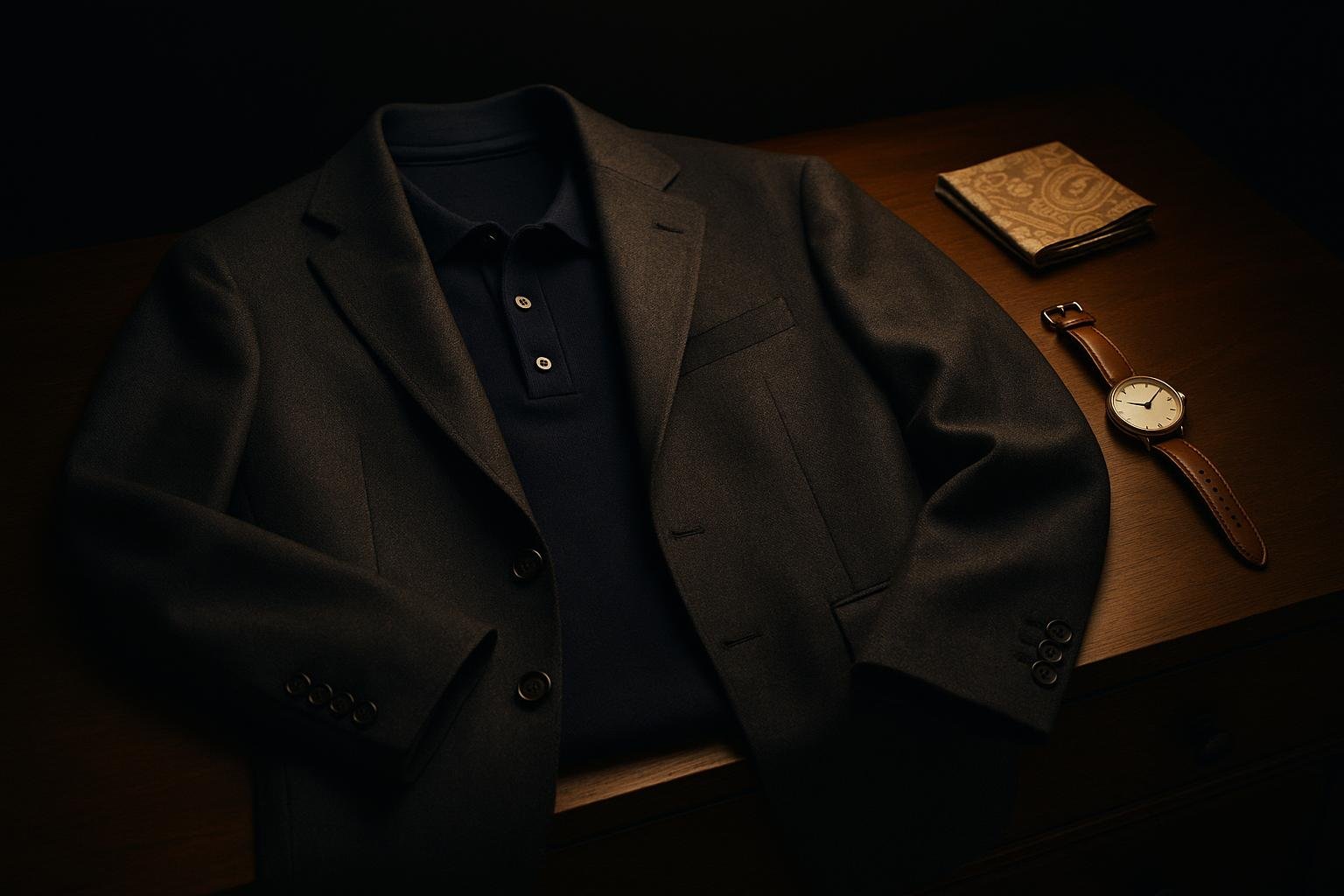
Honorable mention: an unstructured sport coat (cotton, hopsack wool, or jersey) for meetings and dinners. If you already have that covered, the list above handles the rest of life. If you don’t, see our guide to sport coat fit.
Fit checkpoints: 30-second tests that make any jacket look sharp
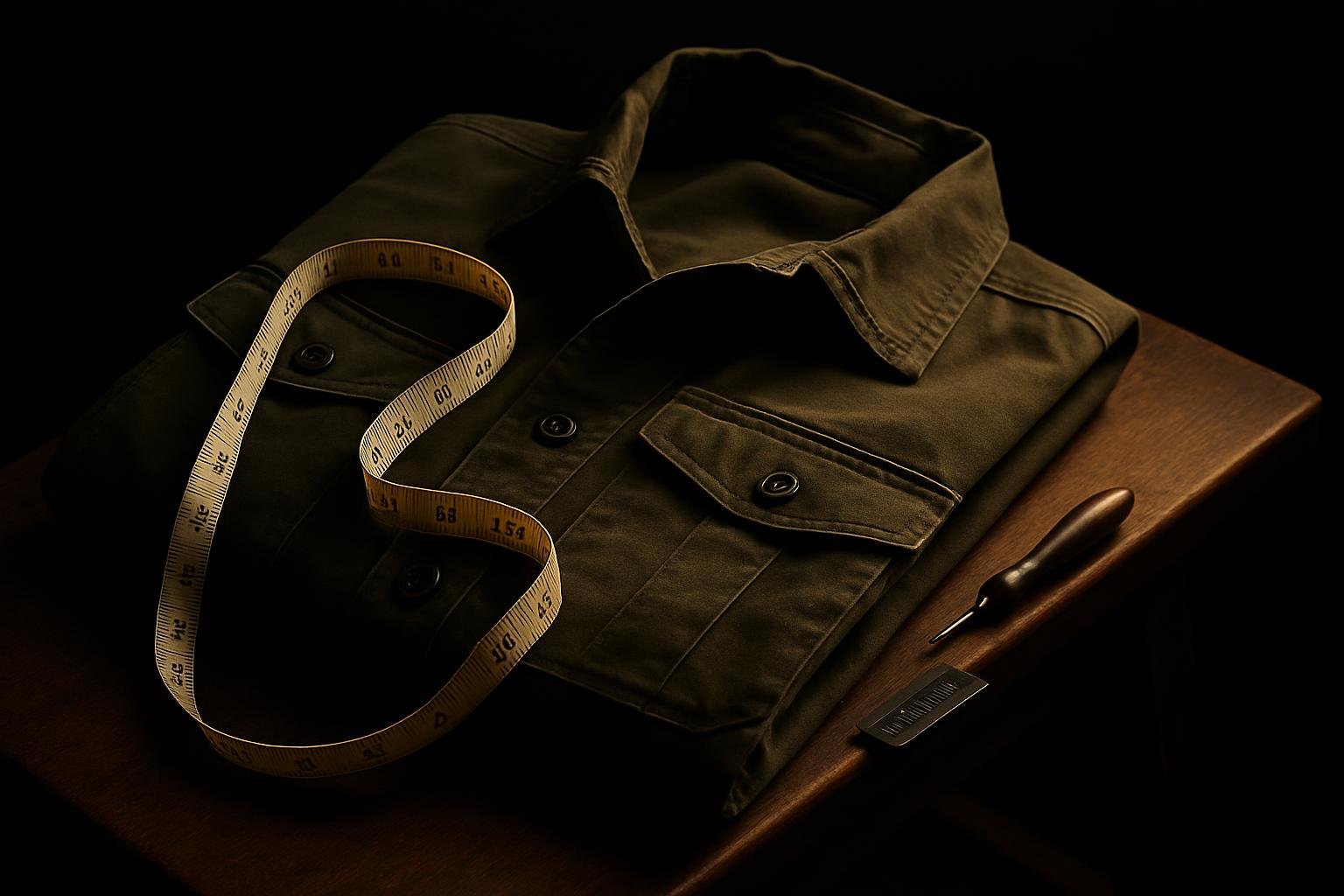
Before color or fabric, lock the fit. Use these fast checks in a mirror or changing room. If two sizes are close, choose the one that passes more checkpoints.
- Shoulders: Seams should sit right at your shoulder edge. No divots or pulling. If the seam is on your upper arm, size down. If it sits on your neck, size up.
- Chest/zip: Zip or button fully and cross your arms. If the zipper waves or buttons pull into an "X," it’s too tight. If you can grab more than 2 inches of extra fabric at the side, it’s too big.
- Sleeves: Cuff should end at the wrist bone (the bump at your pinky side). With knit cuffs, they can sit a hair higher. Aim for 0–0.5 inch of shirt cuff visible on non-knit cuffs.
- Body length: Hem should land around mid-fly (halfway between waist and crotch) on field jackets and shells. Bombers and truckers should end near the top of the front pockets.
- Neck/collar: Stand collars should close comfortably without digging. Bomber collars shouldn’t flare out wider than your jawline.
- Movement: Reach forward like you’re typing. You should move without shoulder lift or back pulling. If it binds, try a size up or a pattern with action pleats.
What a tailor can fix (and what they can’t):
- Can usually shorten sleeves (no zippers) and nip side seams slightly.
- Can not move shoulders or easily change body length. Get those right off the rack.
Quick script in-store: “Can we try the regular and one size down? I’m checking shoulder seam and sleeve to wrist bone. If we land between sizes, can sleeves be shortened?”
Match the jacket to your build: clean wins by body type
Right silhouette does half the work. Use these simple matches. If you’re between categories, follow the first that addresses your main concern.
- Broader chest/shoulders, softer middle: Field jacket with a light internal or external drawcord to shape the waist. Look for vertical seams/pockets. Avoid elasticized hems that grip the stomach.
- Tall and slim: Bomber or trucker to add visual weight and shorten the torso. Medium-high collar helps balance a long neck. Avoid long, unbroken shells that exaggerate length.
- Shorter (under ~5'9"): Bomber or cropped trucker. Keep lengths above pocket openings, choose minimal pockets. Avoid long parkas or big flap pockets that drop the eye.
- Stocky or big & tall: Field jacket with simple pockets and a matte fabric. Choose set-in shoulders over raglan if you want more structure. Avoid tight knit hems and high-contrast piping.
- Lean/athletic: You can wear all five. Keep baffle width narrow on down; choose sueded or matte finishes to avoid looking too sporty if you want polish.
Color that flatters most men after 40: navy, charcoal, olive, tobacco brown, and stone. Matte beats shiny. High-chroma colors (fire-engine red, electric blue) are harder to pair and age a look fast.
Where Suvant helps: If you’re unsure which silhouette balances your frame, a Suvant image audit can flag shoulder line, hem length, and bulk, then turn that into a ranked plan with exact next moves. Upload three photos, get scored across eight categories, and leave with a barber-style brief for shopping.
Avoid the mall-dad traps: what to skip and what to choose instead
Small details separate “grown and sharp” from “weekend errand uniform.” Use this swap list.
- Skip: shiny polyester with big logos. Choose: matte cotton, nylon, or wool blends with minimal branding.
- Skip: oversized baffles on puffer jackets. Choose: narrow, consistent baffles that sit close to the body.
- Skip: elastic hem that balloons the midsection. Choose: straight hem or subtle internal drawcord you can fine-tune.
- Skip: contrast stitching and decorative zips. Choose: tonal stitching and two to three purposeful pockets.
- Skip: overly distressed denim truckers. Choose: dark indigo or ecru denim, or suede for dressier nights.
- Skip: too-long sleeves bunching at the hands. Choose: sleeves ending at the wrist bone; get them shortened if the cuff construction allows.
- Skip: hiking shells with bright trim for city wear. Choose: matte rain shell in navy, olive, or black with clean lines.
Fast polish add-ons: swap plastic buttons for matte horn-style on field jackets, brush suede regularly, and steam out creases instead of ironing synthetic shells.
What to look for: features by jacket type (and easy outfits)
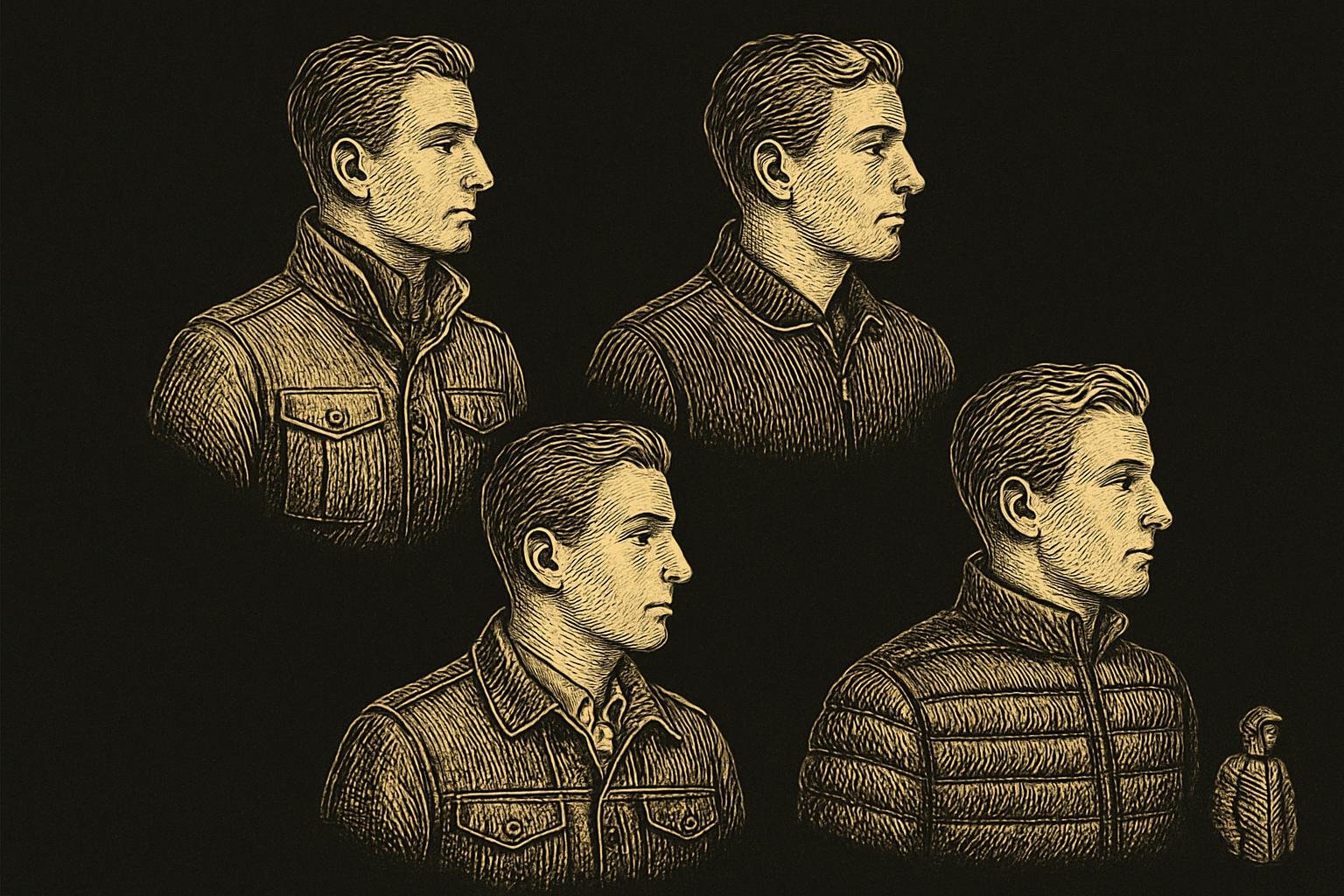
Here’s exactly what to check on each style, plus plug-and-play outfits you can wear tomorrow.
Field jacket
- Fabric: Cotton canvas, cotton-nylon, or lightweight wool. Water-resistant finish helps without sheen.
- Features: Two chest + two hand pockets; optional internal drawcord; two-way zipper with storm placket.
- Fit notes: Shoulders clean, hem mid-fly. If layering over a sweater, test with it on.
- Wear it with: Oxford + dark chinos + leather sneakers (work casual). Merino crew + jeans + chukka boots (dinner). See ideas in smart casual outfits.
Bomber/flight jacket
- Fabric: Suede for dressy; matte nylon/cotton for daily.
- Features: Minimal pocketing; knit collar/cuffs/hem that sit flat.
- Fit notes: Ends at top of pockets; slight room in chest; no belly cling.
- Wear it with: Polo + trousers + white leather sneakers. Tee + black jeans + Chelsea boots.
Trucker jacket
- Fabric: Denim (dark or ecru) or suede. Avoid extreme fades.
- Features: Simple chest pockets; hand-warmer pockets are a plus.
- Fit notes: Cropped but not tight. If you have a belly, size for the stomach and keep it unbuttoned.
- Wear it with: Chambray + olive chinos + desert boots. Knit polo + grey jeans + court sneakers.
Lightweight down/insulated
- Fabric: Matte shell; narrow baffles or sheet insulation.
- Features: Two hand pockets, internal pocket, elastic binding at cuffs.
- Fit notes: Trim, not stuffed. Fits under a shell or topcoat.
- Wear it with: Hoodie substitute under field jacket, or over a henley with joggers for travel.
Rain shell
- Fabric: Seam-sealed, matte. Avoid high-gloss.
- Features: Adjustable hood that cinches, two-way zip, covered pockets.
- Fit notes: Enough room for a thin down jacket underneath; hem covers blazer if you wear one.
- Wear it with: Button-down + wool trousers + waterproof sneakers; or tee + jeans + boots. Pair with the shoes in our shoe guide.
Care basics: Brush suede weekly; re-wax or re-proof cotton/nylon every season you wear it heavily; warm wash technical shells per label to restore water repellency; hang jackets on wide hangers to protect shoulders.
Build a 3‑jacket capsule that covers 80% of life
If you’re starting fresh, lock these three first. Then add a fourth for weather in your city.
- Olive or navy field jacket (unlined/lightly lined): your everyday smart-casual layer.
- Suede or matte nylon bomber (dark neutral): short, clean, date-friendly, works with jeans or trousers.
- Narrow-baffle lightweight down (charcoal or navy): warmth that layers under the other two or handles shoulder seasons solo.
Regional fourth: Rain shell for wet climates, or a lined field jacket for colder ones.
Color plan: Keep the first two in different neutrals (e.g., olive field, navy bomber). Add the insulated piece in a third neutral (charcoal). Everything will mix.
Seasonal rotation: Spring/fall: field + bomber. Summer nights: bomber or trucker. Winter: down under field, or shell over down. If you also wear tailoring, an unstructured sport coat can live alongside this system.
Where Suvant fits: If you want a ranked, tailored list for your face, hair, skin, body, style, grooming, photos, and presence, Suvant’s free image audit turns your photos into a clear plan and shop-ready briefs. The full plan adds quests, XP, and monthly re-audits so you can iterate without guesswork.
How to shop in 60 minutes (and leave with the right one)
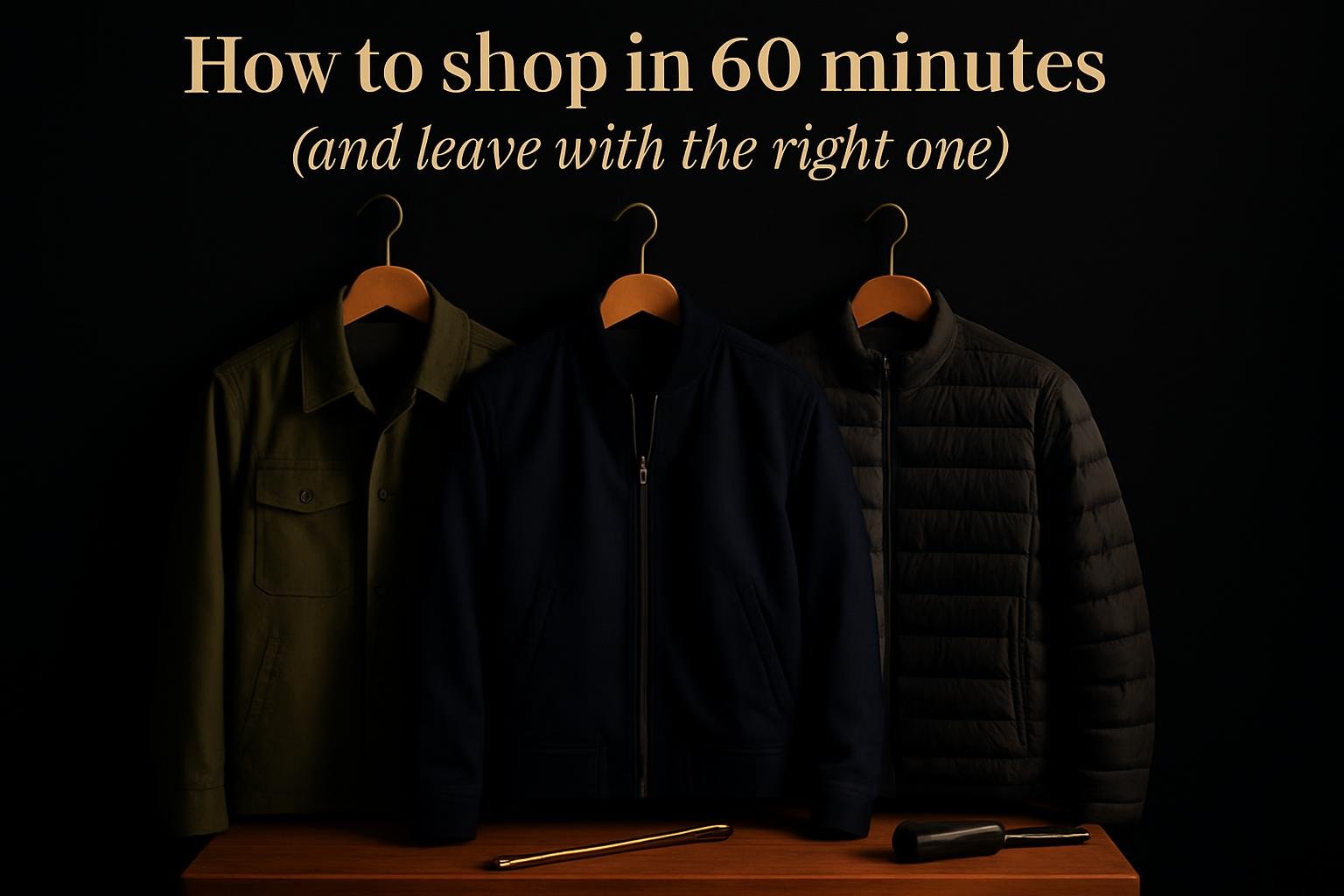
Walk in with a checklist and a script. Leave with one jacket you’ll actually wear.
- Pre-pick your target: Choose one style from the ranked list. Decide color and budget range.
- Bring a base layer: Wear the sweater or mid-layer you plan to use. If you wear a watch, wear it—cuffs need to clear it.
- Grab two sizes: Your usual and one down (or one up if broad-chested). Try both, zipped.
- Run the checkpoints: Shoulder seam at edge; sleeves at wrist bone; hem at mid-fly or top of pockets (style-dependent); no chest pulling.
- Move: Reach forward, raise arms halfway, sit down. No binding or collar flare.
- Mirror test: Snap two photos front/side. Bad surprises show up in photos first.
- Tailor feasibility: Ask: “Can sleeves be shortened if needed? Any room to take in sides 0.5 inch?”
- Decide with the rule of three: If you can list three real outfits you’ll wear this month with it, buy. If not, pass.
Storage and maintenance: Hang on a wide-shoulder hanger, empty pockets, brush weekly, and spot-clean. For shells, launder per label and tumble dry low to revive water repellency.
Upgrade schedule: Every 24 months, reassess your most-worn jacket for frayed cuffs, tired color, or outdated details. Replace the heaviest-usage layer first and keep the old one for yardwork.
Want a head start on building the rest around your jackets? Bookmark our upcoming capsule wardrobe guide so everything plays well together.
Quick reference: cheat sheets by scenario
Decide fast. Pair the right jacket with the right outfit for the setting.
- Coffee date: Suede bomber + knit polo + dark jeans + clean leather sneakers.
- Office casual: Olive field jacket + Oxford + charcoal chinos + brown derbies.
- Rainy commute: Matte rain shell over lightweight down + wool trousers + waterproof sneakers.
- Travel day: Lightweight down + tee + performance 5‑pocket + slip-on sneakers; field jacket in the carry-on.
- Fall game night: Denim trucker + merino crew + black/grey jeans + boots.
If you want a second opinion before you buy, the Suvant audit is free and takes about two minutes at app.getsuvant.com. If you like the plan it builds, the full version is $89/yr with a money-back guarantee.
Get the honest audit you've never gotten.
Three photos, eight scores, the real reasons behind each number, then a ranked plan to fix them one move at a time.
Get my free audit →