Chest Hair After 40: Trim It, Don’t Erase It
- Start at 8–10 mm for the chest, 6–8 mm for the centerline, and 4–6 mm for stomach/shoulder blend—then adjust 1–2 mm next session.
- Trim dry, shower after, then cool rinse and unscented moisturizer to prevent itch and redness.
- Define a natural U-shaped chest edge one finger below the collarbone and blend into shoulders and the neck—not a hard line.
- Use short strokes with the grain first, then across the grain to even bulk without causing ingrowns.
- Maintain every 2–4 weeks; note your guard settings in your phone so your look stays the same.
The bottom line: keep it, tidy it, blend it
You don’t need a bare chest to look sharp after 40. You need control. The clean, masculine target: keep coverage, lower bulk, and blend edges so hair doesn’t climb your collar or spill over a V-neck. Here’s the quick plan.
- Guards: Start at 8–10 mm (3/8 in) for the main chest, 6–8 mm down the centerline, and 4–6 mm for the stomach and shoulder blend. If you’re very dense, open at 12 mm once, then refine.
- Direction: First pass with the grain in short, overlapping strokes. Second pass lightly across the grain to even the canopy. Skip against-the-grain on the chest to reduce irritation.
- Edges: Shape a soft U one finger below the collarbone. Taper into the neck and shoulders—not a hard border. Clean random strays on the upper chest and near the armpit crease.
- Routine: Trim dry. Shower after. Cool rinse. Pat dry. Apply a light, unscented body moisturizer. Total time: 15–20 minutes every 2–4 weeks.
- Adjust: If it still looks puffy in a tee, drop 1–2 mm next session. If it reads patchy, go up 1–2 mm and focus on blending rather than removing more.
That’s the shape. Now let’s get specific on tools, guards, and the exact moves.
Tools and guards that matter
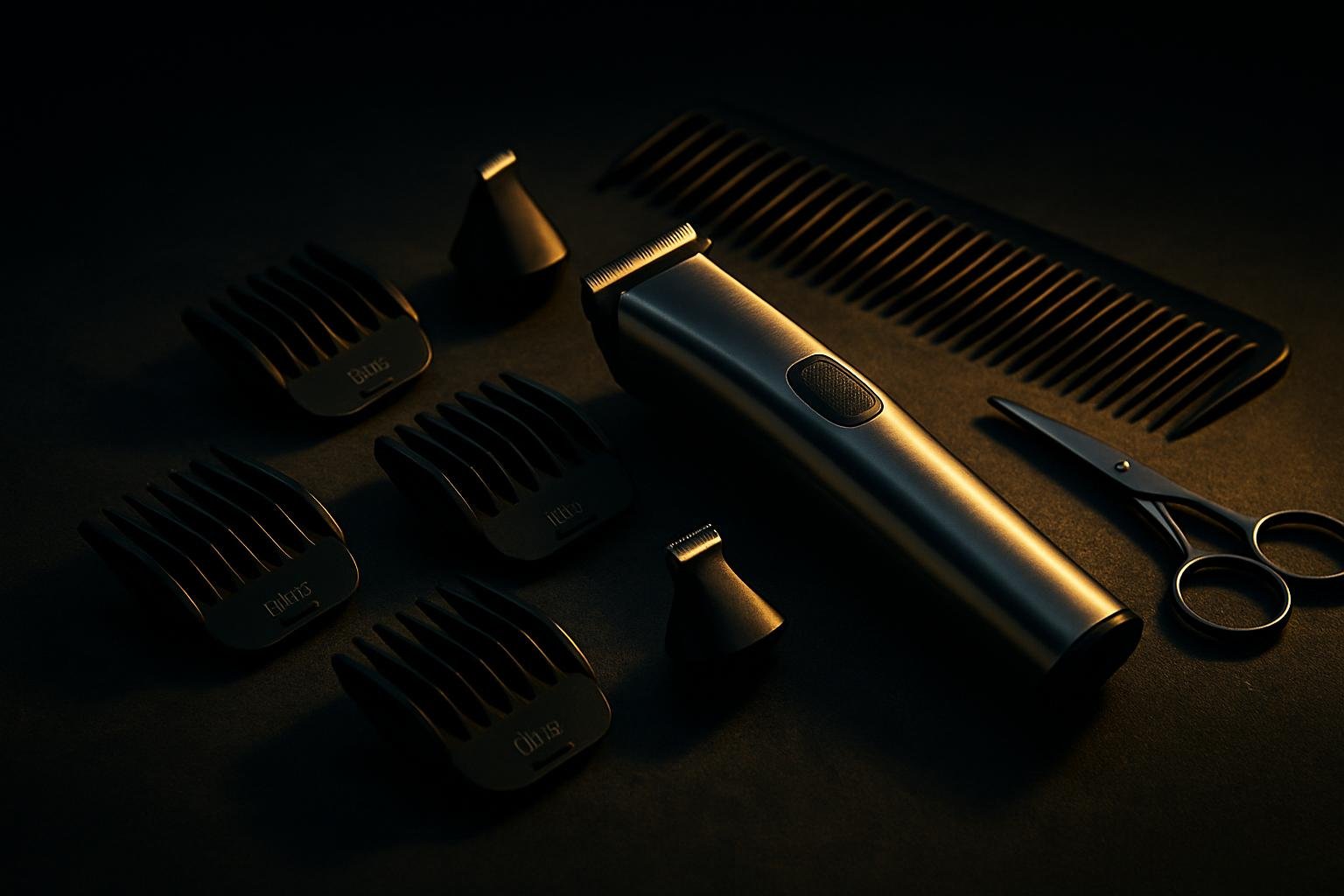
You don’t need a drawer of gadgets. You need one reliable body trimmer with secure guards and a few simple add-ons.
- Body trimmer with guards: Must offer fixed guards from 4–12 mm and a comfortable body-sized head (30–35 mm wide) that won’t bite skin folds. A wet/dry option is fine, but you’ll trim dry.
- Detail trimmer or the same unit’s smaller head: For tight spots: around nipples, sternum notch, and armpit edges.
- Comb and scissors: Lift-and-snips for long, curly tufts that can snag. You’ll comb, then trim—never yank.
- Mirror setup: Front mirror plus a hand mirror for shoulder blending. Good light makes the difference between tidy and tiger stripes.
- Aftercare basics: Unscented body wash, cool rinse, and a light, fragrance-free moisturizer. Optional: a talc-free body powder if you run humid and want friction control.
If you need help choosing a tool, we broke down the real differences in the right body hair trimmers for men over 40.
Map your chest like a barber
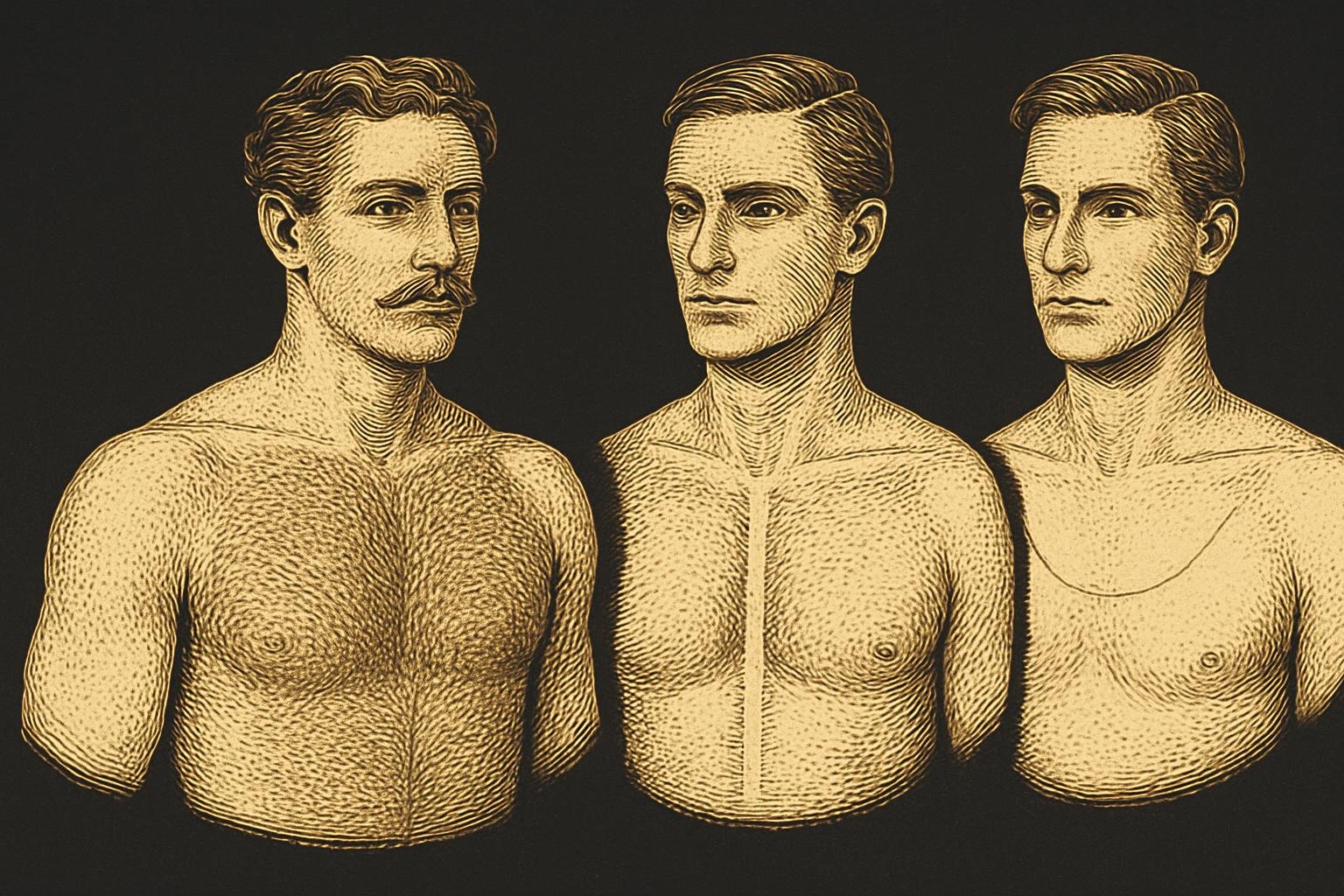
Treat your chest like a haircut. Different zones, different goals, one blended look. Stand relaxed in front of a mirror and identify your density and direction.
- Zones: 1) Main chest panels (left/right pecs), 2) Centerline (sternum, from the notch to the upper abs), 3) Upper chest edge (below the collarbone to the neck), 4) Shoulder and armpit blend (where chest hair feathers out), 5) Stomach and trail (above the navel down).
- Default lengths: Pecs at 8–10 mm. Centerline at 6–8 mm so the middle doesn’t look like a ridge. Stomach at 4–6 mm so it tucks cleanly into the waistband. Shoulders at 4–6 mm just to de-bulk, not bald.
- Growth direction: Most men grow down and slightly outward on the pecs, straight down at the sternum, and outward over deltoids. Note your own pattern so your first pass follows it.
- Edge planning: Aim for a soft U-shaped edge roughly one finger below the collarbone. If hair climbs the neck, gradate from 6–8 mm into 4–6 mm up toward the throat, then switch to a few scissor snips for strays instead of carving a hard line.
Write your guard plan in your notes app. Consistency is what makes this look intentional, not accidental.
A step-by-step trim routine that avoids irritation
This is a 15–20 minute circuit. Keep strokes short. Let the guard do the work.
- Dry and detangle (2 minutes): Work on dry hair. Comb chest hair in its natural direction. If any curls are longer than 20–25 mm (¾–1 in), lightly snip tips so they won’t catch under the guard.
- Main chest pass (5 minutes): Guard at 8–10 mm. Short, overlapping strokes with the grain on both pecs. Keep the trimmer flat—don’t dig corners in.
- Centerline refine (2 minutes): Drop to 6–8 mm. Run one controlled pass down the sternum from the notch to the upper abs. This reduces the “mohawk” effect without hollowing out the center.
- Blend to stomach (3 minutes): Set 4–6 mm. Starting about two finger-widths below the pecs, make light strokes downward to the navel. Feather your last inch of strokes so there’s no step line under T-shirts.
- Shoulder and armpit blend (3 minutes): Still at 4–6 mm. Work from the outer pec toward the shoulder head with very light pressure. For the armpit crescent, use a detail head just to knock bulk back—don’t clear it to skin with a shaver.
- Edge the upper chest (2 minutes): Switch to 6–8 mm. Follow a soft U one finger below the collarbone, then tilt the trimmer slightly away at the edge for a natural taper. Snip any single long strays above that line with scissors instead of chasing them bare.
- Second pass across grain (2 minutes): Back to your main chest guard. Lightly skim across the grain (sideways) on the pecs to even the canopy. Don’t go against grain unless you know your skin tolerates it.
- Clean-up and check (1 minute): Step back. Raise and relax your arms a few times. If a line appears when you move, soften it with two light blending strokes.
Aftercare: Step into a warm (not hot) shower to clear cut hairs. End with a cool rinse. Pat dry. Apply a thin layer of unscented body moisturizer. If you’re prone to friction, dust a talc-free powder on the under-pec fold in summer.
Want a second set of eyes? Suvant’s image audit will flag edge lines, bulk, and blending issues and turn that into exact next steps—right down to guard settings. It’s free to start at app.getsuvant.com.
Smart edges, not sharp lines

Edges make or break a natural look. Here’s how to draw them so they disappear.
- Upper chest edge: Trace a soft U about one finger (1–1.5 cm) below the collarbone from shoulder to shoulder. Keep it at 6–8 mm. Instead of a hard stop, lift the trimmer’s heel the last 5–10 mm of each stroke to taper.
- Neck approach: If hair climbs toward the throat, step down to 4–6 mm for the top 2–3 cm, then leave isolated strays and snip them. Avoid carving a straight shelf across the upper chest; it shows under polos.
- Nipple zone: Use the detail head with a guard at 6–8 mm. Circle around the areola with very light pressure. Don’t press metal onto thin skin; it’s easy to nick.
- Sternum notch: The hollow at the base of your neck can puff visually. Two light strokes at 6 mm straight down from the notch, then blend outward with 8 mm so the center doesn’t look scooped.
- Armpit crescent: Keep hair there short enough not to peek from the front—usually 4–6 mm at the front edge only. Don’t clear the pit to skin with a foil shaver; it spikes on regrowth.
- Stomach and trail: From the lower pec line to the navel: 4–6 mm. Below the navel, if you like a defined trail, stay at 4–6 mm down the center and feather to 6–8 mm at the sides so it doesn’t look drawn on.
When in doubt, blend down in 1–2 mm steps rather than drawing a border. Your eye reads smooth transitions as natural—and natural is the goal.
Maintenance and troubleshooting
A good trim should last 2–4 weeks depending on how fast you grow and how tight you keep it. Put it on your calendar. Log your guards in your notes so you can replicate the look.
Common issues and fixes
- Patchy look after trimming: You likely went too short on one zone. Go up 1–2 mm next time on that area and spend extra time blending the borders with lighter pressure.
- Itch or redness the next day: Trim dry, then shower and apply a light, unscented moisturizer. Keep shirts clean the first 24 hours. If you overworked an area, let it rest a week before re-trimming.
- Ingrowns or bumps: Avoid against-the-grain passes on the chest. Rinse cool, keep the area dry for a few hours post-trim, and don’t wear tight, abrasive fabrics right after. For technique that reduces bumps, see our neck-focused guide—most principles apply: prevent razor bumps.
- Snagging long curls: Comb first. If hair is longer than 20–25 mm, point-snips with scissors before you put a guard down. Never force the trimmer through a knot.
- Visible step line under tees: That’s a blending issue. Revisit the line with the next-longer guard and feather the boundary in 1–2 cm strokes, lifting off at the end.
Keep your trimmer clean and the blades lightly oiled as the maker recommends. Dull blades tug and irritate.
How it reads in clothes and photos
Your trim should disappear under clothes and only show by choice. Two quick checks:
- T-shirt test: Put on your most-worn crew and V-neck. Raise your arms overhead, then relax. If hair jumps the collar, reduce that zone by 1–2 mm next session and extend your blend 2–3 cm higher.
- Bathroom selfie check: Good light, camera at chest height, neutral face. Take a front and 45° angle shot. Zoom in on the upper chest edge and shoulder blend. You’re looking for smooth transitions, not perfectly even density everywhere.
- Pool shirtless moments: If you’re shirtless socially, keep the centerline 1–2 mm shorter than the pecs to reduce the visual ridge on the sternum. If you prefer a fuller look, flip that rule and keep everything at one guard.
If you want a blunt read on how your grooming plays on camera, Suvant’s image audit scores hair, grooming, and presence from three photos and hands you ranked next moves. The full plan turns those into quests with exact deliverables, backed by a money-back guarantee.
Finishing touch tip: nose and ear strays will steal attention faster than chest hair ever will. Keep them in check with this quick routine: nose and ear hair maintenance.
Get the honest audit you've never gotten.
Three photos, eight scores, the real reasons behind each number, then a ranked plan to fix them one move at a time.
Get my free audit →