Backgrounds That Make Your Dating Photos Work
- Clean, simple, and a few steps of depth behind you beats busy scenery every time.
- Neutral walls, textured stone, greenery, and water are reliable backgrounds year‑round.
- Stand 4–10 feet from your background to blur it; remove 5–7 visual distractions before you shoot.
- Use muted, solid colors that contrast your shirt and hair; skip bright reds, neons, and heavy patterns behind you.
- Pick backgrounds that hint at your life without turning into props: bike rack, vinyl shelf, coffee bar—one cue is enough.
The best and worst backgrounds: the quick answer
Your background should do three jobs: stay quiet, flatter your coloring, and create depth so you are the focus. Here’s the fast list.
Best backgrounds (use these today)
- Neutral walls with texture: light gray, warm white, beige, soft olive, or muted navy. Brick, stone, or wood with tight grain.
- Greenery: hedges, ivy walls, tall grasses, or trees 6–20 feet behind you. Filtered foliage reads alive but not loud.
- Water and sky: a lake or marina with distant horizon; stand near railings, not right on the edge.
- Architectural lines: clean stairwells, modern concrete, matte metal panels, parking garage walls with soft light.
- Single-interest corners: a tidy bookshelf, a single framed artwork, a bike on a wall rack—one clear cue, not a collage.
Backgrounds to avoid (save yourself the reshoot)
- Clutter fields: open kitchens with dishes, messy garages, busy bars, or crowded sidewalks.
- High-contrast chaos: graffiti walls, neon signs, LED displays, store logos, license plates, traffic.
- Patchy light: sun-dappled leaves behind you create leopard spots. Aim for even shade.
- Close wall shots: your shoulder pressed to a wall flattens the image. Give yourself space.
- Bright saturated backdrops: hot red, neon green, royal purple, and bold patterns fight your face for attention.
Rule of thumb: If you can name ten objects behind you in two seconds, it’s too busy. Move three steps, reframe, or change the angle.
12 reliable locations that always work
Pick one, spend 20 minutes, and you’ll leave with keepers. Each spot includes quick setup tips.
- North-facing building wall: Even shade all day. Stand 5–8 feet off the wall; shoot at chest or eye height.
- Parking garage level with open side: Soft light, neutral concrete. Face the open side; keep cars 15+ feet behind.
- Public library exterior: Stone or brick with consistent tone. Avoid signage; frame columns or a single span of wall.
- City park hedge: Solid green backdrop. Step 6–10 feet forward to soften leaves into a wash of color.
- Footbridge over water: Clean railing lines and depth. Angle 15–30° so the railing leads behind you.
- Marina or lake path: Distant boats blur nicely. Avoid noon glare; aim golden hour or overcast.
- University campus walkway: Neutral architecture, tidy landscaping. Shoot on weekends for fewer bodies in frame.
- Modern office plaza: Matte panels, planters, and stone. Keep any brand logos out of the crop.
- Alley with clean brick: Look for uniform color and no dumpsters. Shoot down the alley for depth; avoid overhead wires.
- Stadium or arena concourse (off-hours): Repeating concrete and railings. Face the brightest open side; keep posters out.
- Botanical garden perimeter: Simple shrubs and paths. Use paths as leading lines, keep signage out.
- Quiet coffee shop exterior wall: Painted brick or stucco. Shoot before opening hours; no foot traffic, no menus.
Work the scene: take 3–5 frames each at full-body, 3/4, and head-and-shoulders. Shift left or right by one step between frames to eliminate stray poles or trash cans.
Indoor setups you can build today
No studio needed. Use what you have and clean the frame. For step-by-step at-home shooting advice, see this home photo guide.
Simple living room corner
- Background: Plain wall with one plant or one framed print. Muted tones: warm white, light gray, beige.
- Distance: Stand 4–7 feet from the wall to create depth.
- Light: Face a window; turn off overheads to avoid mixed color casts.
- Declutter: Remove remotes, blankets, cables, mugs. Five items out of frame = cleaner photo.
Bookshelf with negative space
- Background: 60–70% books, 30–40% empty shelf. Avoid spine rainbows; group by tone (dark, medium, light).
- Placement: Angle the shelf 10–15° to add layers; stand 5 feet in front.
- Props: One object max (plant, camera, globe). No team banners or branded swag.
Kitchen island, but make it calm
- Background: Clear counters except one bowl of lemons or a cutting board.
- Avoid: Fridge magnets, mail stacks, dish racks in frame. If you can’t move it, crop it.
- Light: Use window or under-cabinet lights only; turn off the rest to keep color consistent.
Home office wall
- Background: Matte paint (no glare), single floating shelf with 2–3 items.
- Framing: Shoot waist-up; keep monitor edges and cables out.
- Pro move: Hang a neutral curtain 2–3 feet behind your chair to create a faux studio wall.
Tip: If your walls are bold or busy, clip a matte queen-size sheet (light gray, beige, muted olive) across two stands or doorframes. Steam it for 5 minutes. Instant clean background.
Colors and textures that flatter your skin and hair
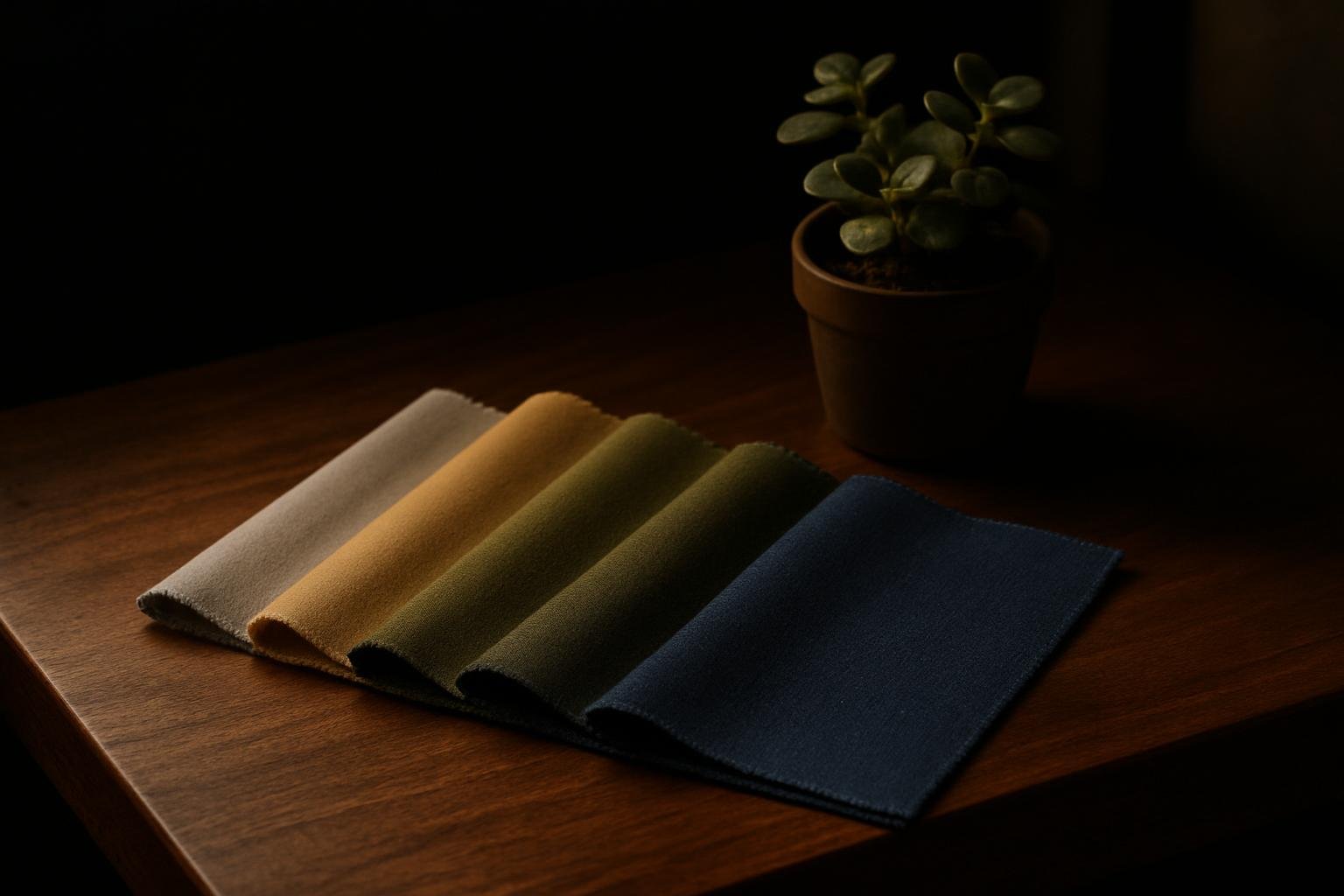
The right backdrop tone makes your skin look even and your hair defined. Go muted and slightly darker or lighter than your shirt for separation.
Safe, flattering background colors
- Light to medium grays: Works with every skin tone. Avoid glossy paint that reflects.
- Warm whites and beiges: Great for cooler complexions; adds warmth without yellowing teeth.
- Muted olives and sages: Flatter most complexions; especially good with brown hair and eyes.
- Soft navies and denim blues: Define lighter hair and fair skin; pair with a lighter shirt.
- Earth textures: Brick, limestone, cedar, weathered wood. Keep it uniform and not crumbling.
Colors and patterns to skip behind you
- Neons and saturated primaries: They steal attention and cast color onto your skin.
- High-contrast patterns: Checkered tile, bold wallpaper, wide stripes—too much movement.
- Pure black backdrops: Can swallow dark hair and jackets unless rim-lit; risky outdoors.
Match background to hair and shirt
- Dark hair: Choose mid-tone backdrops (light gray, sage, brick). Avoid black or very dark navy walls.
- Light or gray hair: Pick slightly darker backdrops (medium gray, navy, cedar). Avoid white walls that wash you out.
- Bald or clipped close: Mid-tone matte backdrops avoid reflections. Stand 6–8 feet from the wall for soft falloff.
- Shirt contrast: If your shirt is dark, go lighter by 2–3 stops; if the shirt is light, go 2–3 stops darker.
Keep texture tight and small. Large stones or big wood planks can create odd lines behind your head; use smaller, consistent texture that reads as tone from a few feet away.
A 10-minute declutter and framing checklist
Do this before you take a single photo. Set a timer for 10 minutes.
- Clear five: Remove the five most obvious items: laundry pile, dishes, cords, paper stacks, random shoes.
- Hide brands and text: Turn labels outward from the frame or move them out entirely. No readable logos.
- Check head halo: Step into frame and scan behind your head for poles, doorframes, lamp stems. Nudge left/right by one step.
- Depth check: Make sure there’s 4–10 feet behind you. If not, move forward and reframe.
- Color balance: Turn off overhead lights. Use one light source (window) to avoid mixed color casts.
- Ground sweep: Pick up three floor-level distractions: power strip, trash can, rug corner.
- Test shot and zoom: Take one, zoom to 100%, and find three small distractions to fix fast.
Two quick scripts when you need help
- Ask a friend to move a car: “Can we slide your car one spot? It’s reflecting in my background. Two minutes and I’m done.”
- Clear a cafe table politely: “Hey, I’m taking a quick portrait against that wall—mind if I move these menus for five minutes? I’ll put everything back.”
Small moves clean the frame faster than big relocations. Start with what’s directly behind your head and shoulders.
Seasonal and weather-proof background ideas
Great backgrounds exist in any season or weather. Here’s a quick menu.
Spring
- Fresh hedges and ivy walls: Soft greens flatter winter skin tones.
- Overcast days: Ideal. Even sky gives you studio lighting outside.
- Avoid: Patchy sun under new leaves—move fully into shade.
Summer
- North sides of buildings: Shade without squinting.
- Waterfronts at golden hour: Warm light, clean horizons. Keep sun 30–60° off your shoulder.
- Avoid: High noon with reflective glass or white sand that blows out highlights.
Fall
- Uniform brick and stone: Complements earth-tone jackets and flannels.
- Muted foliage backdrops: Stand several feet from trees so leaves blend to color.
- Avoid: Mixed orange/red trees right behind your head—too loud.
Winter
- Concrete and matte metal walls: Crisp, minimal, timeless with coats and scarves.
- Snowy parks: Use trees or buildings for contrast; avoid pure white walls of snow.
- Plan B indoors: Library wall, parking garage, clean lobby corner.
For light specifics to pair with these backgrounds, see our guide to the best lighting for dating photos.
Common background mistakes and 60-second fixes
- Too close to the wall: Step forward four big steps. Instant depth, better separation.
- Tree growing from your head: Rotate your body 15° and reframe so the trunk exits the frame.
- Busy street behind you: Turn 90° to face a blank wall or hedge; keep traffic out entirely.
- Fridge chaos in frame: Move two magnets, a flyer, and a calendar. Or crop above the fridge line.
- Reflective glass behind you: Shift until you can’t see yourself in it, or tilt the camera 5° to redirect reflections.
- Harsh lines cutting your neck: Lower the camera two inches so railings and table edges sit at mid-torso or lower.
- Signs and logos: Reframe tighter. If you can read it, it’s stealing attention.
- Patchy light speckles: Back up into full shade or step fully into sun; mixed zones are the enemy.
One minute of movement can rescue a great expression from a bad background. Don’t toss the shot—fix the frame.
How Suvant helps you pick backgrounds—and what to do next
If you want a second set of eyes, Suvant gives you a blunt, useful read on your photos. Upload three shots to get a free image audit scored across face, hair, skin, body, style, grooming, photos, and presence—plus the reasons behind each number. The plan then turns into quests with exact deliverables, like a location and framing checklist you can follow the next time you shoot.
Inside the full plan, you’ll see ranked next moves and can track XP, streaks, and monthly re-audits to sharpen your gallery over time. It’s built with input from barbers, wardrobe stylists, and portrait photographers. The plan is $89/yr with a money-back guarantee, and it runs as a web app at app.getsuvant.com.
If you’d rather DIY, keep going with these: learn simple framing in how to pose for photos and see age-smart examples in dating profile photos for men over 40. Use one outdoor spot and one indoor spot from this guide. Get three looks each, 5–7 frames per look, and you’ll have a tight gallery by the weekend.
Get the honest audit you've never gotten.
Three photos, eight scores, the real reasons behind each number, then a ranked plan to fix them one move at a time.
Get my free audit →