Beards After 40: Styles That Sharpen Your Face
- Pick a style by face shape and density: short, neat beards beat big volume for most men over 40.
- Set your neckline one finger above the Adam’s apple and keep cheek lines clean for a deliberate look.
- Know your lengths: 2–3 mm light shadow, 6–8 mm heavy stubble, 10–12 mm short beard.
- Blend or embrace gray; keep edges sharp and the mustache tidy to avoid a tired look.
- Trim weekly, wash 2–3x/week, oil lightly daily, and brush to train growth.
What works after 40 (quick answer)
After 40, the best beard makes your face look sharper and more intentional. That usually means controlled length, clean edges, and a mustache that doesn’t cover your lip. Big, bushy beards can read older or sloppy unless they’re expertly shaped. Start small, then add length if you earn it.
Quick picks by maintenance level
- Lowest fuss: Stubble at 2–3 mm (light shadow) or 6–8 mm (heavy stubble). Looks modern, hides blotchy shave irritation, and suits most face shapes.
- Office-proof short beard: 10–12 mm with a boxed outline and tapered sideburns. Clean neckline, soft cheek line.
- Defined goatee zone: Circle beard or Van Dyke at 8–10 mm when cheeks are patchy but chin and mustache grow strong.
Pick by face shape
- Round face: Keep sides tighter (4–6 mm) and let the chin run longer (10–12 mm). Avoid full, even volume on the cheeks.
- Long/oblong face: Add some cheek width (8–10 mm), keep the chin a touch shorter (6–8 mm). Skip long goatees.
- Square face: Slightly softer corners help. Round the beard’s jaw corners and avoid razor-sharp right angles.
- Receding hairline or shaved head: Short boxed beard or heavy stubble balances the dome. Keep edges immaculate.
Salt-and-pepper reality
- Gray looks great with precision: Sharp lines + tidy mustache = deliberate. Blurry edges make gray read unkempt.
- Patchy gray: Shorten to stubble (2–5 mm) or fade the cheeks down into skin; keep the chin 1–2 mm longer.
Bottom line: for most men over 40, a short boxed beard (10–12 mm) or heavy stubble (6–8 mm) is the sweet spot. They frame your face without adding age.
Lines that matter: neckline, cheeks, mustache
A good beard after 40 lives or dies on linework. Get these three right and you look dialed even at 6 mm.
Neckline (one rule)
- Set it one finger above your Adam’s apple. Place your index finger horizontally on top of the Adam’s apple; where your finger sits is your line.
- Curve the line up to meet under each ear, following the natural U of your jaw—not a straight shelf.
- Trim below the line to 0–1 mm with a trimmer or razor. The skin under should read clean, not stubbly.
Cheek line
- Natural but tidy: If you have a decent cheek line, follow the lowest consistent hairs and shave stray wisps above.
- Patchy cheeks: Drop the line slightly and fade the edge: 3 mm at the line, 6–8 mm just below, then your beard length. This softens patch contrast.
Mustache and lip
- Expose the lip: Trim the mustache so the top of the upper lip is visible. Use scissors to nick the line weekly.
- Thickness guide: Match mustache length to beard or 1–2 mm shorter to keep it crisp if it grows wiry.
Guard and length cheat sheet
- 2–3 mm: Light stubble, daily to every-3-day maintenance.
- 4–5 mm: Medium stubble, trims every 3–4 days.
- 6–8 mm: Heavy stubble, trims weekly.
- 10–12 mm: Short beard, trims every 1–2 weeks.
- 13–20 mm: Medium beard, trims every 2–3 weeks (only if your density supports it).
Exact at-home steps (15 minutes, weekly)
- Comb beard dry and down. Set trimmer to your target length (e.g., 8 mm) and go with the grain first, then against.
- Reduce sides if needed (e.g., cheeks at 6 mm, chin at 8–10 mm) for shape.
- Detail the neckline: mark one finger above Adam’s apple, clean below to 0–1 mm.
- Define cheek line: shave stray hairs above; if patchy, taper the first 1–2 cm using shorter guards.
- Mustache: trim bulk to match or slightly shorter; snip lip line with scissors.
- Brush, then a tiny drop of oil (2–3 drops), and a pea of balm if you need control.
If you’d rather hand the decisions to a pro, bring a tight brief: “Short boxed beard, 10–12 mm on chin, 6–8 mm on cheeks, soft rounded corners, neckline one finger above Adam’s apple, lip line exposed, natural cheek line cleaned.”
Pick your style by face shape and density
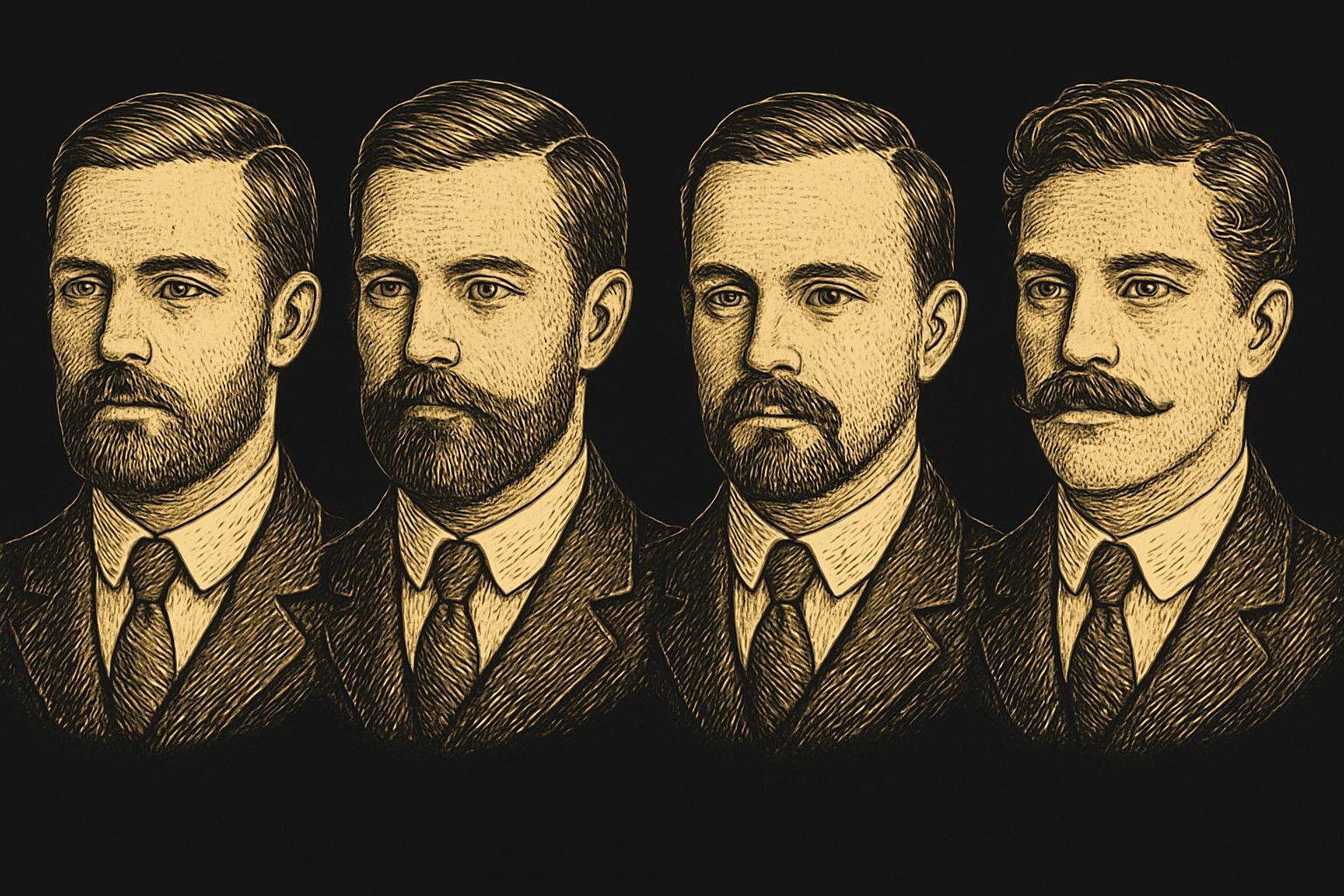
Use your growth pattern and face shape to choose a style you can maintain. Here are the reliable options for men 40+ and when to use them.
Heavy stubble (6–8 mm)
- Use it when: Growth is decent but patchy in the high cheeks; you want low maintenance with edge.
- Why it works: Adds jaw definition without bulk. Gray looks intentional at this length.
Short boxed beard (10–12 mm)
- Use it when: You can grow the chin and jaw evenly. Great with business dress or smart casual.
- Shape notes: Taper sideburns, round jaw corners slightly, keep the neck tight.
Corporate short beard (8–10 mm, tighter cheeks)
- Use it when: You want conservative polish. Cheeks 6–8 mm, chin 8–10 mm.
- Shape notes: Soft natural cheek line, visible lip, no flyaways.
Goatee family (8–10 mm)
- Circle beard: Mustache connects to chin via corners. Use when cheeks are patchy but chin is strong.
- Van Dyke: Mustache and pointed chin beard, not connected. Use when you want more edge and have clean growth at the chin center.
Mustache + stubble (2–4 mm cheeks, 5–8 mm mustache)
- Use it when: Your mustache is a highlight. Keep cheeks short so the mustache leads.
- Shape notes: Expose the lip; consider a slight natural curve rather than a hard line.
Styles to skip for most men over 40
- Thin chin strap: Ages you and highlights skin texture. If you love definition, do a short boxed beard instead.
- Untamed big beard: If density is uneven or gray is wiry, you’ll look tired. Keep it shorter and sharper.
Pair your beard with a modern haircut. If it’s been a while, see our guide to best haircuts for men over 40 for clean, age-appropriate options.
Gray and patch strategy: make it look intentional
Gray isn’t the problem; fuzziness is. Aim for contrast and control so gray reads like texture, not neglect.
If you’re going gray
- Keep edges sharper: Defined neckline and cheek line make salt-and-pepper look deliberate.
- Reduce frizz: A tiny bit of balm tames wiry silver. Warm it in your palms first, then brush through.
- Color? Subtle blending can work, but over-darkening looks fake fast. Talk to a barber colorist if you go there. For the bigger decision, see going gray: keep it or dye it.
If growth is patchy
- Shorten the cheeks: 3–5 mm on the top 1–2 cm of the cheek, then 6–8 mm below, then your chin length. This gradient hides gaps.
- Lead with the chin: Keep the chin 1–2 mm longer than the sides for structure.
- Goatee when needed: If cheeks won’t fill, go circle beard or Van Dyke and keep surrounding stubble at 2–3 mm.
Daily finish (2 minutes)
- After a shower, pat dry, add 2–3 drops of oil to soften, then brush to train growth downward.
- Use a cool or low-heat blow-dryer and a brush for 30–45 seconds if your beard puffs. Finish with a pea of matte balm for hold.
Keep the mustache tidy. A clean lip line instantly lifts the whole face, especially with gray.
Maintenance and tools: a grown man’s routine
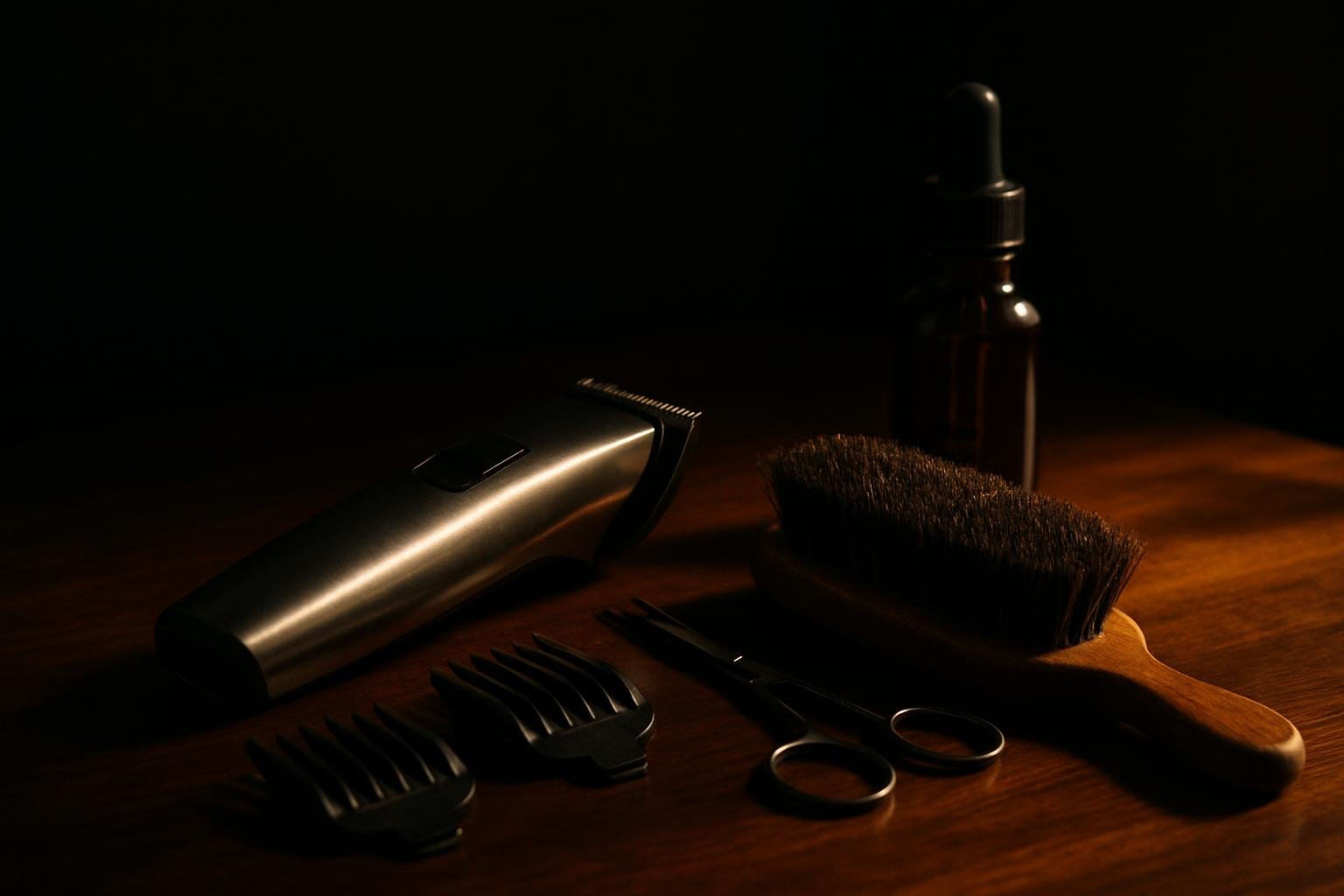
Consistency beats hero sessions. Here’s a simple program that keeps you sharp without eating your weekend.
Weekly trim plan
- Sunday (10–15 min): Full trim to set length (e.g., 8 mm stubble or 10–12 mm short beard). Reset neckline and cheek line. Snip mustache lip line.
- Wednesday (5 min): Edge cleanup only: neckline to 0–1 mm, shave stray cheek hairs, quick mustache check.
Wash and condition
- Wash 2–3x/week with a gentle beard wash. Daily washing can dry you out.
- Rinse on non-wash days and use 2–3 drops of oil afterward for softness and sheen (not grease).
Brush and train
- Daily: 30–60 seconds with a boar-bristle brush to lay hairs and distribute oil.
- Cowlicks: Blow-dry on low while brushing the direction you want. Stop when it’s just set, not fluffy.
Toolkit checklist
- Adjustable trimmer with guards: must cover 2–12 mm reliably.
- Detail trimmer or shavette for crisp neck and cheek edges (0–1 mm).
- Beard scissors for the mustache line and strays.
- Boar-bristle brush and a fine comb.
- Light beard oil and a matte or low-shine balm.
Eyebrows frame everything above the beard. Keep them tidy—don’t thin them out. Comb up, trim only the tips that poke. If you need a drill, see our guide to eyebrow grooming for men.
Show it well: photos, barber brief, and progress
Presentation sells the beard you worked for. A few tweaks change how it reads in real life and in photos.
Photos that flatter your beard
- Light: Face a window. Side light at 45° brings out texture and jawline.
- Angle: Chin slightly down, camera at eye level. Don’t shoot from below; it thickens the neck.
- Grooming check: Brush, then a fingertip of balm on flyaways. Wipe the lip line clean.
Barber brief you can say word-for-word
“I’m going for a short boxed beard. Let’s keep the chin 10–12 mm, cheeks 6–8 mm, rounded corners at the jaw, neckline one finger above the Adam’s apple, natural cheek line cleaned, and lip line exposed. Taper the sideburns into my haircut.”
Track and refine
- Take the same photo every two weeks: straight on, window light, neutral expression. You’ll see if a length change helps.
- Adjust one variable at a time: try +2 mm on the chin or -2 mm on the cheeks for a month before changing something else.
If you want an outside eye, the Suvant audit gives you a blunt read on your grooming, face, and photos after you upload three pictures. It turns into quests with exact deliverables—like a barber brief you can hand over—so you’re not guessing. It’s at app.getsuvant.com. The audit is free; the full plan is annual with a money-back guarantee.
Ready to rethink the whole head? Pair your beard refresh with a modern cut: haircuts for men over 40 is a straightforward place to start.
Get the honest audit you've never gotten.
Three photos, eight scores, the real reasons behind each number, then a ranked plan to fix them one move at a time.
Get my free audit →