Polo Shirts That Make You Look Put-Together at 40+
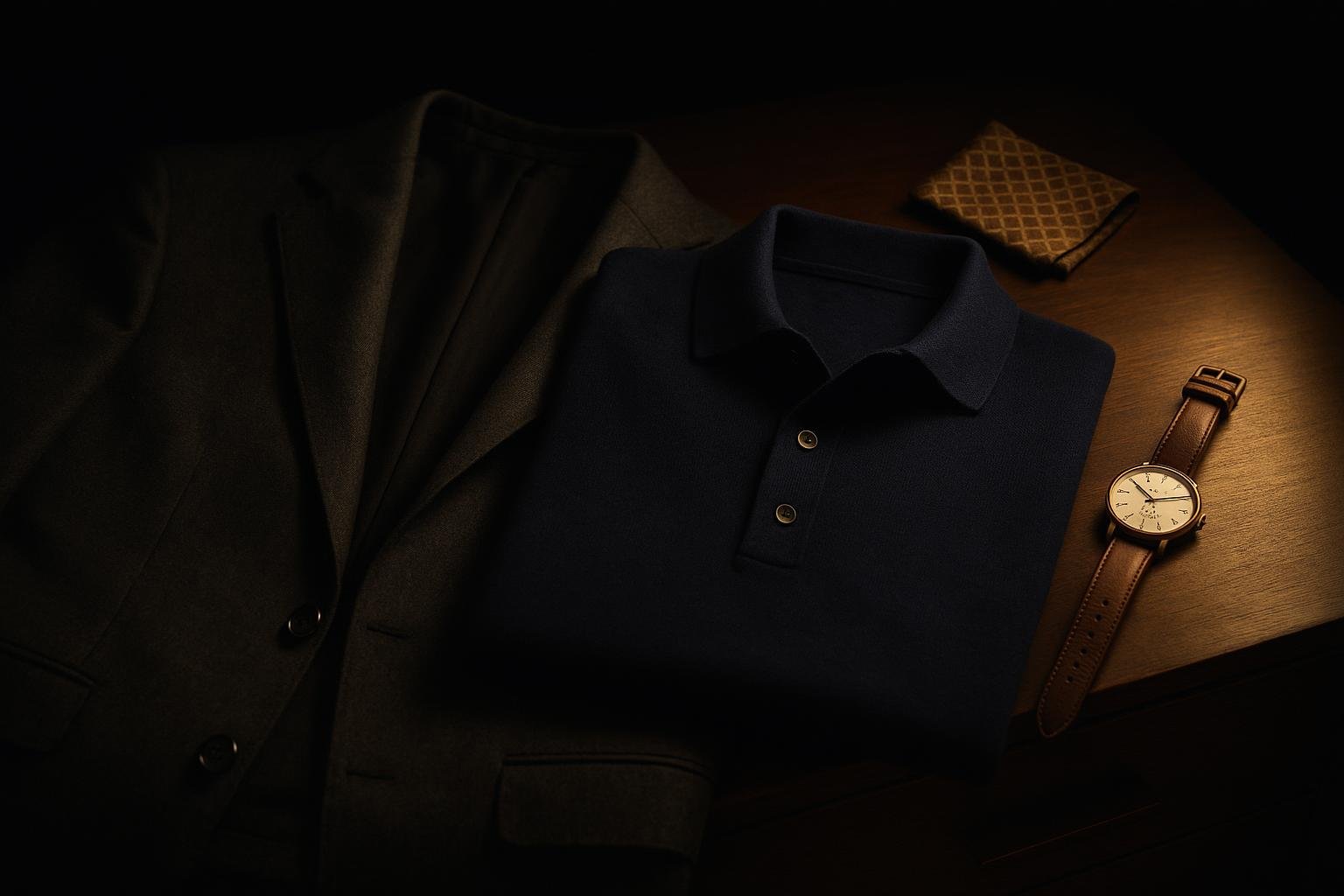
- Choose a semi-fitted polo with 3–5 inches of waist ease, sleeves ending mid-bicep, and a hem that hits mid-fly.
- Go for structured collars (self-fabric with a stand or button-down) and a 2–3 button placket to sharpen the face and chest line.
- Piqué cotton (200–240 gsm) hides texture, jersey blends drape, and merino dress polos elevate under a blazer.
- Solid, low-contrast colors beat loud logos; dark or muted tones visually trim the midsection.
- Pair with dark jeans or tailored shorts, clean sneakers or loafers, and decide to tuck based on rise and belt line.
What makes a great polo over 40
You want a polo that cleans up your lines without squeezing you. At 40+, the best polo balances structure at the collar, drape through the torso, and sleeves that respect your arms without cutting off circulation. Here’s the short list you can shop against today.
- Fit: Semi-fitted. Aim for 3–5 inches of ease at the waist (difference between your belly measurement and the shirt’s). Shoulder seam should sit right on the edge of your shoulder bone.
- Sleeves: End at mid-bicep, 1–2 fingers of room around the arm. Sleeve opening roughly 11–14 inches in circumference depending on your arm size.
- Hem: Mid-fly in front, slightly longer back with side vents. If you raise your arms, your waistband shouldn’t flash.
- Collar: Structured knit collar with a stand, or a button-down polo collar. It should stand on its own, not pancake.
- Placket: 2–3 buttons, opening to the top of the chest. Leave the top button open; avoid deep, floppy openings.
- Fabric: Midweight piqué cotton (200–240 gsm) to hide texture, or cotton-modal jersey for smooth drape. For dressier settings, fine-gauge merino or cotton-silk "dress polos" hold shape under a blazer.
- Colors: Navy, charcoal, olive, stone, and soft earth tones. Low-contrast micro-stripes are fine. Skip loud logos and high-contrast tipping if your goal is lean and timeless.
If your middle is thicker or your shoulders are broad, prioritize a polo with side vents, a bit of stretch (2–5% elastane), and a collar that stands up. That combination balances your frame and keeps attention up near your face.
Fit and silhouette: exact numbers to use
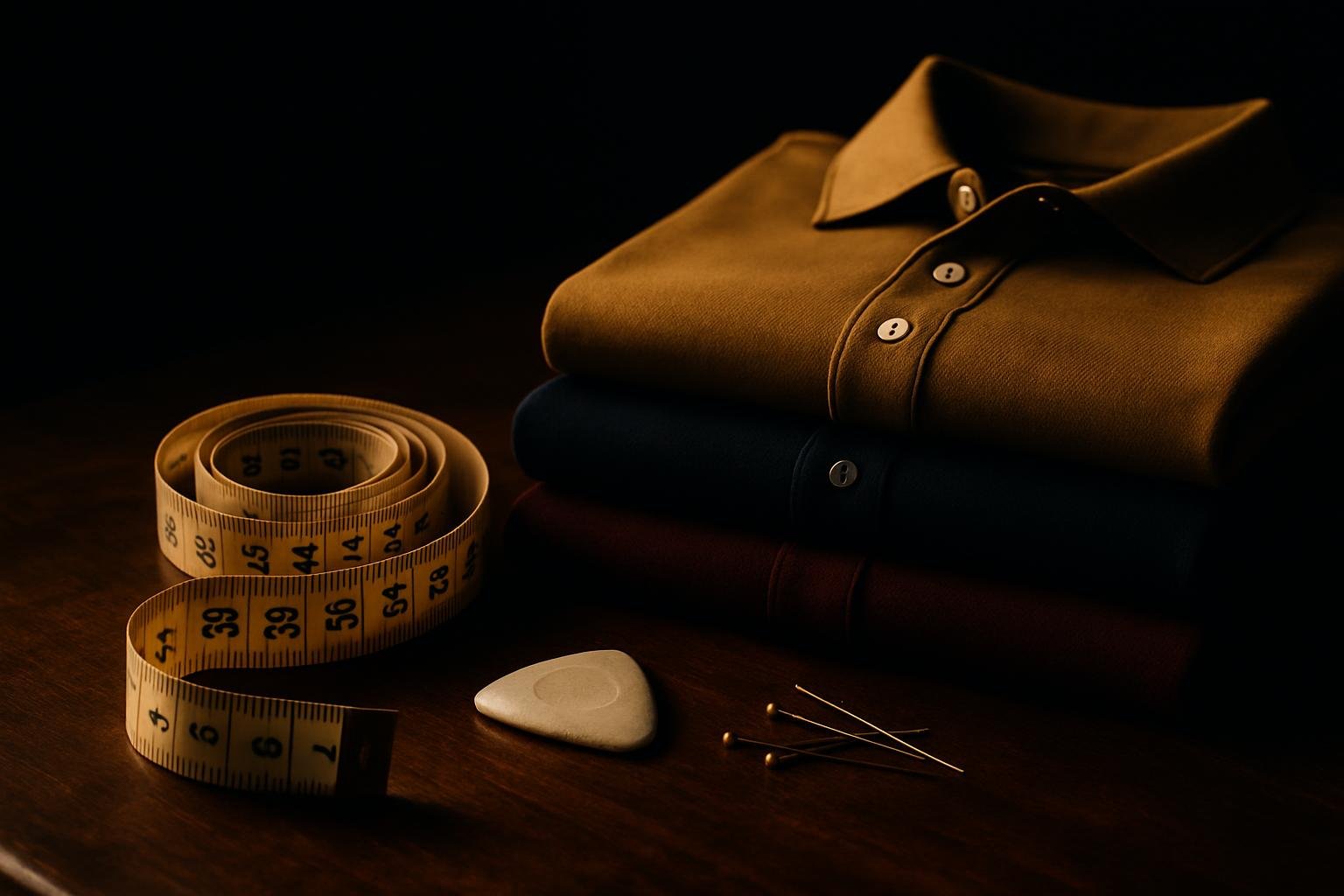
Measure once, shop fast forever. Grab a soft tape and a polo you like as a baseline.
- Shoulders: Measure shoulder seam to shoulder seam on a flat polo. Target: match your own shoulder width within ±0.5 inch. Too narrow pulls the placket; too wide drops the seam down your arm.
- Chest and waist ease: Measure your belly at the navel. Add 3–5 inches for the polo’s body width. Example: 42-inch belly → 45–47-inch polo circumference (22.5–23.5 inches laid flat). This skims without clinging.
- Length: Front hem should hit mid-fly; back tail can be 1–1.5 inches longer. If you plan to tuck, add another 1–1.5 inches.
- Sleeves: Mid-bicep length looks strongest. Opening should be snug enough to kiss the arm but not leave an imprint. If the sleeve flares, a tailor can taper 0.5–0.75 inch per side.
- Side vents: Look for 1.5–2-inch vents. They let the front drape clean over a belly and keep the back covered when you sit or reach.
Broader shoulders, thicker middle: Choose raglan or set-in sleeves with a slight forward pitch, a straight (not slim) body, and a split hem. Avoid extreme slim fits or long, tunic-like hems. If in between sizes, size up and have a tailor take in the sleeve and side seams slightly.
5-minute try-on test:
- Reach forward: buttons shouldn’t pull into an "X" at the chest.
- Raise arms: waistband stays covered.
- Pinch test: you can pinch 1–1.5 inches of fabric at the belly and sleeve without a full handful.
- Mirror check: collar stands without puckering; placket lies flat.
Fabric that flatters: piqué, jersey, and dress knits
Fabric choice decides whether a polo hides or highlights every bump. Use weight and texture to your advantage.
- Piqué cotton (200–240 gsm): The waffle-like knit adds body and hides torso texture. Best everyday pick. Look for minimal shine and a collar made from the same knit with extra reinforcement.
- Cotton-modal or cotton-viscose jersey (180–210 gsm): Smoother and cooler, good drape over a thicker middle. Ensure the fabric isn’t paper-thin; hold it to light—if you see your hand clearly, it’s too sheer.
- Merino or fine-gauge cotton "dress polos" (16–24 gauge): Clean under a blazer. They hang straight and sharpen the V of the chest. Wear a breathable undershirt if you run warm.
- Performance blends (poly/elastane): Useful in heat, but avoid shiny finishes and cling. Look for matte knits, bonded collars, and underarm gussets.
Collar structure from fabric: Seek a self-fabric collar with a stand (a separate band that helps it sit up). Some polos use hidden collar stays or a light fusible to prevent curl. Press on the collar—if it collapses flat, skip it.
Care to keep shape: Cold wash, gentle cycle, button the top button before washing, lay flat or hang on thick hangers. Press the collar with low heat and steam. Avoid the dryer for piqué; a quick 10-minute tumble on low to de-wrinkle, then air dry, keeps the collar crisp.
Want a second opinion on whether your current polos are helping or hurting you? Suvant’s free image audit scores your photos across style and grooming and tells you the exact reasons behind each number, then turns that into ranked next moves. It’s at app.getsuvant.com.
Collars and plackets that sharpen your face
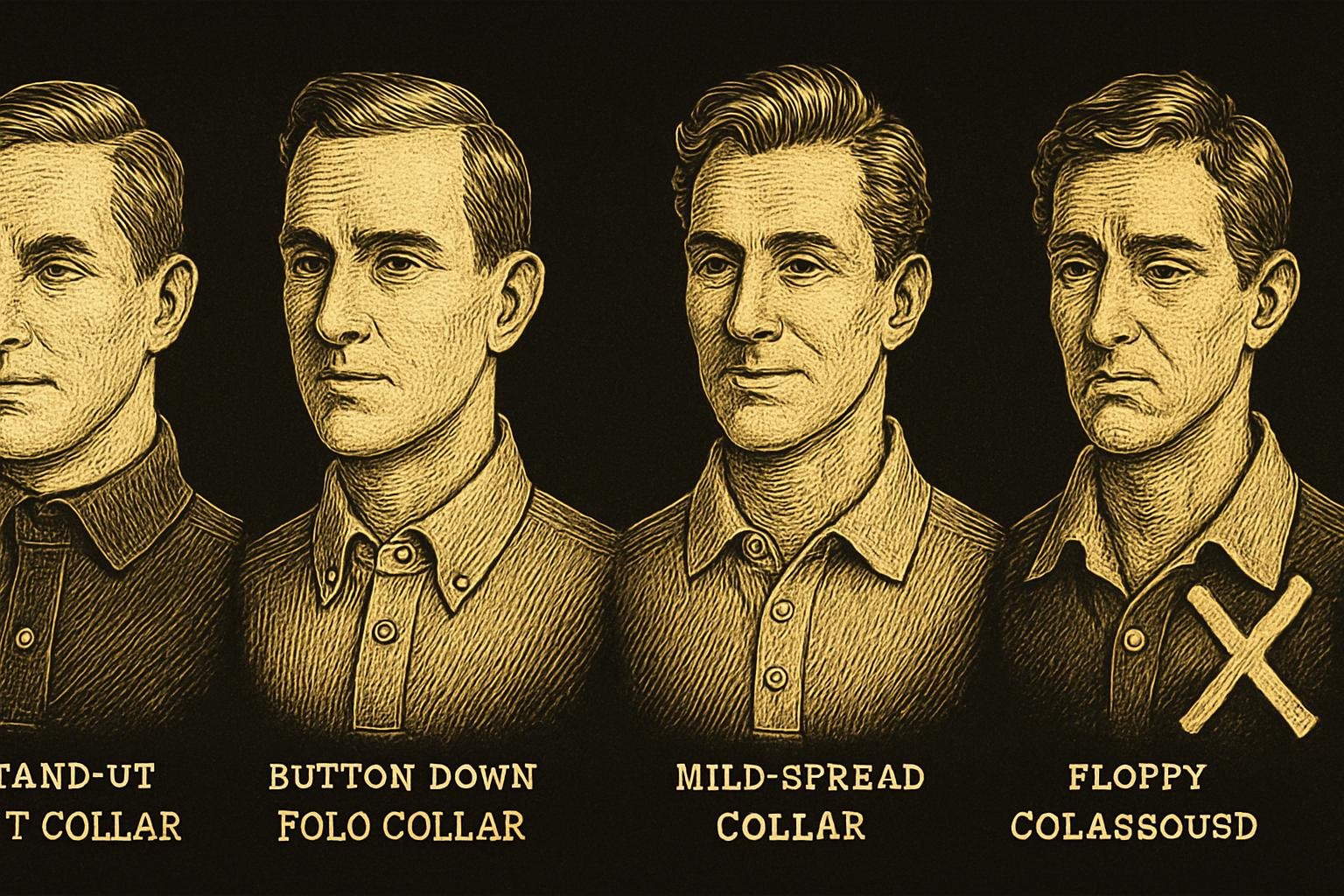
A good collar lifts the eye to your face and gives your upper body shape. If your neck is thicker or your jawline softer, a standing collar and firm placket do more than any logo ever could.
- Stand-up knit collar: A self-fabric collar with a separate stand resists curling. The edge should sit 1.25–1.75 inches high. Works on most necks.
- Button-down polo collar: Tiny buttons at the tips keep it anchored under jackets. Great for broader shoulders because it frames the chest.
- Placket length: Two to three buttons, 4–6 inches of opening. Too long slides attention down the torso; too short can feel choked. Leave the top button open unless you’re under a blazer.
- Spread vs point: A mild spread (collar tips 4–5 inches apart when laid flat) creates a stronger V. Avoid ultra-cutaway styles on casual polos—they fight the placket.
Skip: Flimsy curl-prone collars, zip polos with shiny hardware for daytime, and ribbed baseball-style collars if you want a sharper, grown look.
Colors, patterns, and logos: what reads sharp
Color does two jobs: it sets the mood and manages contrast around your midsection. Keep it simple, then add interest with texture, not shouting.
- Core rotation (5 polos): Navy, charcoal, olive, stone (light gray-beige), and a muted color you like (dusty blue, forest, burgundy). These cover work-casual, dinners, and weekends.
- Flattering rule of thumb: Darker or mid-tone solids read leaner through the belly. If you’re fair-skinned, avoid high-contrast ultra-black; charcoal is more forgiving.
- Patterns: Low-contrast micro-stripes or small jacquard textures add interest without adding width. Avoid chest stripes that cut the torso in half.
- Logos: If present, keep them small and tonal. A big chest icon dates the shirt and drags focus.
- Tipping and contrast collars: Subtle tipping is fine. High-contrast collars feel preppy-costume; if you like them, keep the rest quiet.
Building a small, high-rotation wardrobe? See our take on a streamlined closet here: capsule wardrobe for men over 40.
How to wear a polo with jeans and shorts
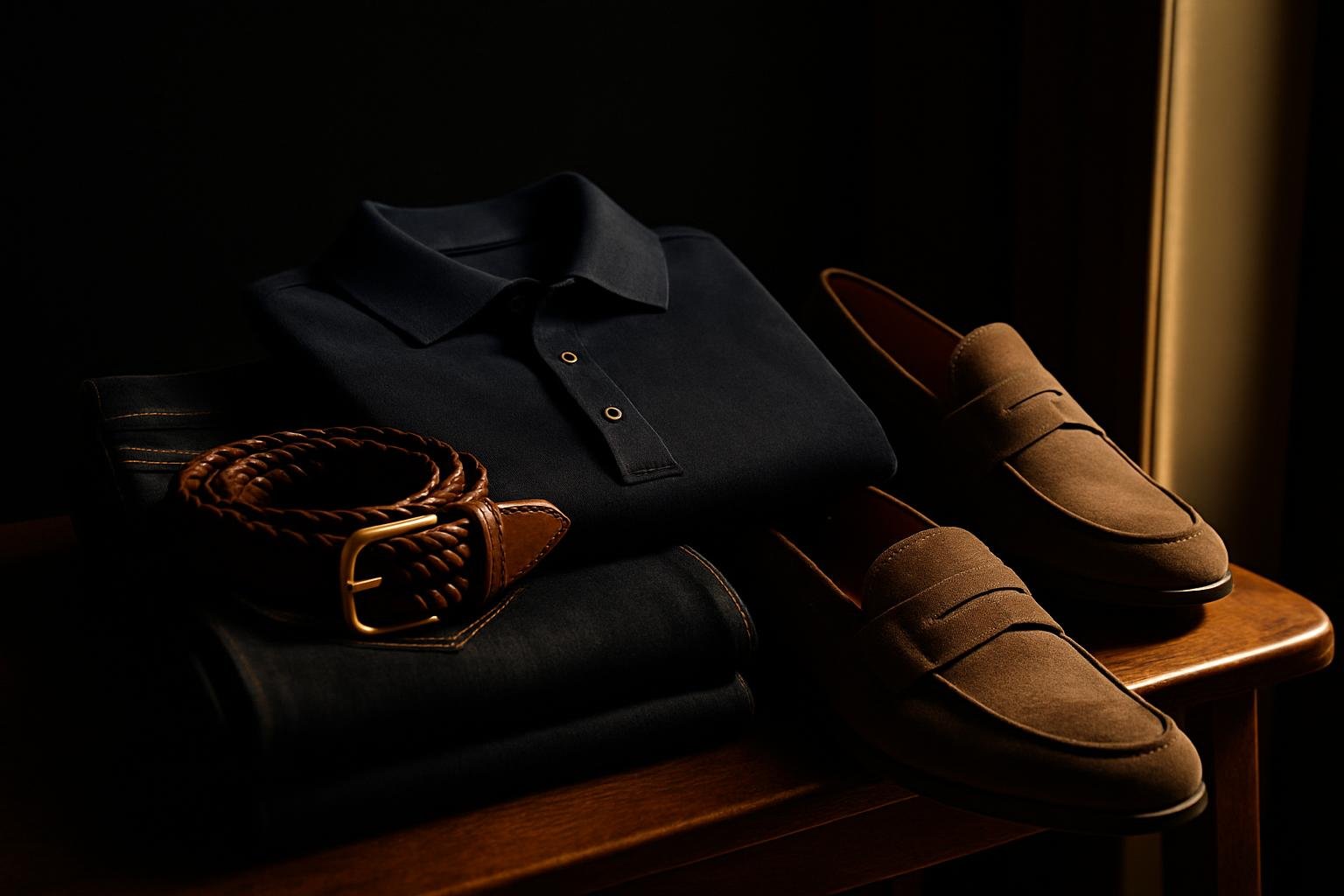
You can dress a polo up or down without guessing. Use these pairings when you don’t want to overthink it.
With jeans
- Dark straight or slim-straight jeans: Clean navy polo + dark indigo jeans + brown suede loafers or white leather sneakers. Add a brown belt that matches footwear. Optional: lightweight overshirt or unstructured blazer.
- Mid-wash weekend: Olive or charcoal polo + mid-wash jeans + gray or tan sneakers. If the jeans are roomy, keep the polo semi-fitted to balance.
- Tuck or not: With mid/high-rise jeans and a solid belt, a full tuck looks sharp. With low-rise, skip the tuck or do a front tuck—no bunching at the sides.
With shorts
- Tailored 7–9 inch inseam shorts: Navy or stone polo + olive or khaki shorts + loafers, drivers, or clean sneakers. Hem should land above the knee cap. If your thighs are big, go 9 inches and a relaxed leg opening.
- Golf/heat days: Matte performance polo + chino shorts + minimal running-style sneakers. Keep the polo collar structured so it doesn’t collapse with sweat.
- Don’t: Cargo pockets stacked with gear, flip-flops in city settings, or gym shorts unless you’re actually training.
Layering: A polo under an unstructured blazer or knit bomber elevates dinner without going formal. Choose a dress polo (fine-gauge) so the collar sits clean. For more outfit formulas, see our guide to smart casual outfits for men over 40 and what to wear on a low-stress first meet: first date outfits over 40.
Shopping checklist, try-on routine, and simple scripts
Use this to speed up store visits and returns.
One-page checklist
- Self-fabric collar with stand or button-down collar; passes the pinch test (doesn’t collapse).
- Piqué 200–240 gsm or cotton-modal jersey 180–210 gsm; matte finish, no shine.
- Side vents 1.5–2 inches; hem hits mid-fly.
- 2–3 button placket; buttons lie flat, no gaping.
- Body ease: belly + 3–5 inches; sleeve ends mid-bicep, slight taper.
- Solid or low-contrast pattern; minimal, tonal logo.
In the fitting room (3 minutes)
- Button the top two, then unbutton the top one. Check the collar from the side—still standing?
- Reach, raise, sit. Watch for pulling and ride-up.
- Phone photo, front and side. If the belly outline shows clearly, size up or switch fabric.
Simple scripts
- In-store: “I need a semi-fitted polo with a collar that stands up. Side vents, midweight piqué or a jersey blend, not shiny. This is my belly measurement—what gets me 3–5 inches of ease?”
- Tailor: “Taper the sleeves 0.5 inch and clean up the side seams a touch; don’t shorten the hem past mid-fly.”
- Online note to self: If between sizes, order two; keep the one with a cleaner collar and less belly cling. Return the other within the window.
Want ranked next steps beyond polos—hair, grooming, photos, and what to buy next? Upload three pictures to Suvant’s free audit at app.getsuvant.com. If you like the clarity, the full plan with monthly re-audits and quest checklists is $89/yr with a money-back guarantee.
Get the honest audit you've never gotten.
Three photos, eight scores, the real reasons behind each number, then a ranked plan to fix them one move at a time.
Get my free audit →